



Moltbot reveals the future of AI agents. This article explains why that future breaks at enterprise scale and what’s actually required to deploy agentic AI in production.
This is why projects like Moltbot are suddenly everywhere.
Moltbot is not just another chatbot. It represents a clear shift in how AI is evolving. From short conversations to continuous memory. From isolated prompts to real execution. From apps you open to agents that live alongside you.
And that is exactly why enterprises should pay attention.
Not to copy it.
Not to deploy it.
But to understand what it reveals. And where it breaks.
Moltbot is an open-source, self-hosted AI assistant designed primarily for individual users and power users.
Instead of living inside a browser tab, Moltbot connects AI models directly to messaging platforms like WhatsApp, Telegram, Slack, or Discord. It can maintain long-term memory, execute actions, automate workflows, and interact with files, systems, and APIs.
At a high level, Moltbot enables:
This is not conversational AI as we knew it.
This is agentic AI in its rawest form.
And that matters.
Moltbot matters because it proves something fundamental.
The future of AI is not chat.
This aligns with what many enterprises are already discovering painfully. Traditional chatbots fail at scale. They don’t persist context. They don’t integrate deeply. They don’t drive outcomes.
If this sounds familiar, it’s the same problem explored in Why Chatbots Fail at Enterprise Scale and What Enterprises Actually Need Instead.
Moltbot shows the opposite extreme. Maximum freedom. Maximum autonomy. Maximum power.
And that’s where the problem begins.
Let’s be clear and intellectually honest. Moltbot gets several things absolutely right.
Short-term chats are a dead end. AI needs memory. Persistent context is what turns AI from a tool into a collaborator.
This is a core principle behind modern enterprise agents, including voice and chat agents deployed via platforms like Wittify.
Messaging-native AI is not a gimmick. It’s inevitable.
This same principle powers enterprise deployments of AI on WhatsApp, Instagram, Messenger, X, and web chat, as discussed in X (Twitter) in 2026: The Most Critical Communication Channel for Governments and Enterprises in the GCC & MENA.
Read also: Why WhatsApp Is Becoming the Primary Sales Channel in the Middle East in 2026.
Execution is the real unlock. Scheduling. Ticket creation. CRM updates. Knowledge retrieval. Escalation.
Without action, AI is entertainment.
With action, AI becomes infrastructure.
Moltbot proves this clearly.
Everything that makes Moltbot exciting for individuals makes it unusable for enterprises.
This is not a philosophical difference. It’s operational reality.
There is no native concept of:
In enterprise AI, these are not “nice to have”. They are mandatory. This is why governance-first thinking is emphasized in How Responsible AI Prevents Reputational Damage in Global Enterprises.
Personal AI thrives on freedom. Enterprise AI must operate inside defined workflows.
Agents cannot act outside approved boundaries. They must escalate, log, and defer when necessary.
This is the opposite of open-ended autonomy.
Every action taken by an AI agent must be traceable, explainable, and reversible.
This is non-negotiable in regulated industries and government environments. It’s also why enterprise platforms invest heavily in logging, monitoring, and QA pipelines.
Self-hosting alone does not equal compliance.
Enterprises care about:
These are foundational concerns addressed in enterprise AI platforms, not personal assistants.
This is not about superiority.
It’s about fitness for purpose.
Most AI comparisons are shallow. They compare features.
That’s the wrong lens.
Moltbot is a personal AI assistant.
Wittify is an AI operating system for organizations.
Personal AI optimizes for autonomy.
Enterprise AI optimizes for control, accountability, and scale.
This distinction explains why many companies fail when they attempt to “build it themselves”, a pattern explored in Building AI In-House Is Not a Strategy. It’s a Trap.
Enterprises do not deploy AI for novelty. They deploy it for outcomes.
The most successful enterprise AI deployments focus on:
This is why metrics-driven frameworks like The AI ROI Blueprint: Measuring the Real Business Value of Voice Agent smatter more than demos.
There is another blind spot in global AI tooling.
Language is not just translation.
It’s tone, dialect, culture, and trust.
Arabic enterprise AI is not solved by adding Arabic text support.
Dialectal Arabic, voice interactions, culturally appropriate responses, and region-specific compliance are foundational. This is explored deeply in: Why Arabic Is Not Just Another Language for Voice AI.
Wittify was built Arabic-first. Not as an afterthought. As a core design decision.
That matters more than most people realize.
Moltbot is excellent for:
Enterprise platforms are built for:
Trying to use one as the other is how AI initiatives quietly fail.
Moltbot shows us where AI is heading.
From chat to action.
From sessions to continuity.
From tools to agents.
But enterprises don’t need more possibility.
They need reliability.
One explores the future.
The other makes it operational.
Understanding that difference is what separates AI experiments from AI systems that actually scale.
If you are looking for an enterprise-grade conversational AI system , then Wittify should be your go-to strategy.
.jpeg)
Most contact centers still rely on sample-based QA. The real issue is not speed. It is visibility across every interaction, channel, and agent. Sample-based QA no longer gives contact centers the visibility they need. Here is why modern teams need broader insight across human and AI-led interactions.
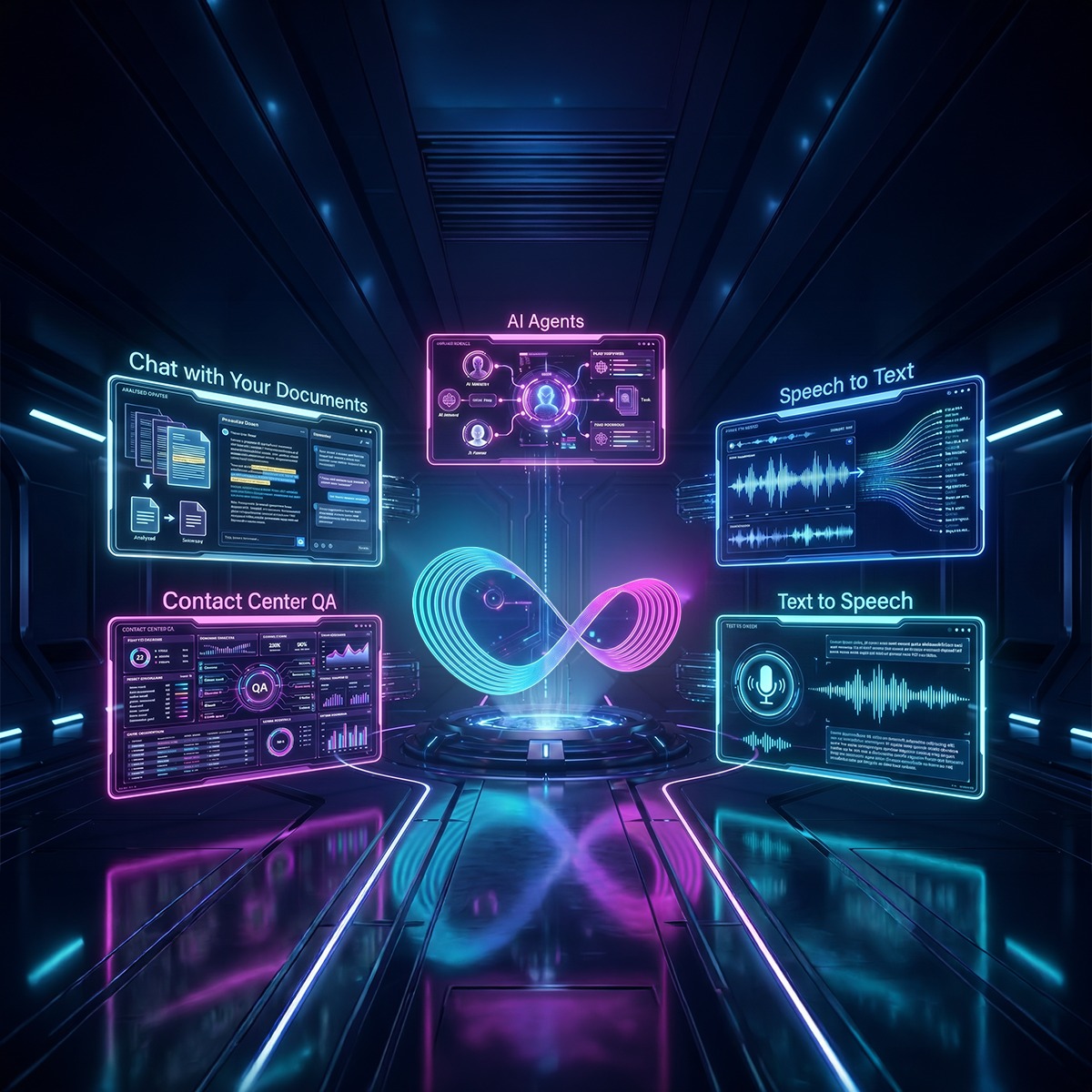
Wittify began with AI Agents that could act. Today, they listen across Arabic dialects, sound human, review 100% of conversations, and cite every answer from your data. Here’s how Wittify’s five products evolved into an accountable enterprise AI stack.

Google has launched Gemini's Personal Intelligence feature across the Arab world, connecting Gmail, Photos, and personal apps for tailored AI experiences. Here's what this means for Arabic-speaking users and enterprise conversational AI in the MENA region.
Wittify.ai is a pioneering AI company specializing in the development of AI agents and applications aimed at automating and streamlining customer engagement activities and processes across various industries. Our mission is to empower businesses by enhancing their customer experience operational efficiency and enabling innovation through intelligent automation.

Information security management system
Business Continuity Management System
Quality Management System

Personal Data Protection Law Compliance
Personal Data Protection Law Compliance
General Data Protection Regulation Compliance


.png)


