


--The-Most-Critical-Communication-Channel-for-Governments.png)
In 2026, X is the public source of truth in the GCC & MENA. This article explains why X matters for governments and enterprises, and how managing X Direct Messages with AI is critical for trust, speed, and accountability.
In many parts of the world, X is still seen as “just another social network.”
In the Middle East and similar regions, that perception is dangerously outdated.
In 2026, X (Twitter) is no longer a marketing channel.
It is no longer a place for casual engagement or brand personality.
It has become something far more important:
The public source of truth.
When a policy changes, a regulation is announced, or an incident unfolds, people do not wait for press releases or website updates.
They go to X.
They look for:
For governments and large enterprises, this shift has profound implications.
In Western markets, X often competes with platforms like LinkedIn, Instagram, or TikTok for attention.
In the GCC and MENA region, X plays a very different role.
It is:
In many cases, an announcement on X becomes the announcement.
Websites, emails, and press conferences follow later.
To understand why X matters so much in 2026, it helps to understand how its role has evolved.
Phase 1: Social Conversation
Short updates, opinions, and public dialogue.
Phase 2: Media Amplification
Journalists, analysts, and influencers adopted X as their primary distribution channel.
Phase 3: Official Communication
Governments and institutions realized X offered:
Phase 4 (Today): Trust Infrastructure
X has become a real-time verification layer for society.
If something is not addressed on X, people assume:
For governments and large enterprises, X presents a paradox.
On one hand:
On the other hand:
This creates a critical operational problem:
Manual engagement does not scale, and automation done wrong destroys trust.
Unlike private messaging channels, X is a public arena.
Every response is:
On X:
What matters most is not friendliness.
It is clarity, accuracy, and timeliness.
Most organizations still treat X as a social media task.
They rely on:
These tools were built for content publishing, not for public dialogue at scale.
In 2026, X requires something else entirely:
A communication system, not a posting tool.
This is exactly the gap Wittify was built to address, inside X Direct Messages (DMs).
Wittify does not automate public tweets or replies.
It focuses on the most sensitive and high-impact surface on X:
Private, one-to-one Direct Messages.
For governments and enterprises, X DMs are where:
Wittify is an enterprise-grade AI communication layer for X DMs, designed for high-stakes interactions where mistakes carry real consequences.
Not chatbots.
Not auto-replies.
Not social inbox tools.
AI communication agents, purpose-built for X Direct Messages.
With Wittify, organizations can deploy AI agents that:
The goal is not to speak more.
The goal is to respond correctly, consistently, and on time, in private, high-risk conversations.
Generic automation fails in X DMs for one reason:
The stakes are higher than public replies.
A single DM can:
Wittify’s agentic AI systems are designed specifically for this environment. They:
This is essential for:
WhatsApp is private and informal
Email is structured and slow
Call centers are reactive
X DMs are different.
They are:
That makes them one of the most sensitive communication surfaces an organization has.
Leading governments and enterprises will not ask:
“Should we be active on X?”
They will ask:
“How resilient is our Direct Message communication on X?”
They will invest in:
Not to speak louder.
But to speak with authority and confidence.
In 2026, X is not about engagement metrics.
And X Direct Messages are not “just another inbox.”
They are where:
Organizations that treat X DMs as a social media inbox will struggle.
Organizations that treat them as critical communication infrastructure — supported by agentic AI — will lead.
.jpeg)
Most contact centers still rely on sample-based QA. The real issue is not speed. It is visibility across every interaction, channel, and agent. Sample-based QA no longer gives contact centers the visibility they need. Here is why modern teams need broader insight across human and AI-led interactions.
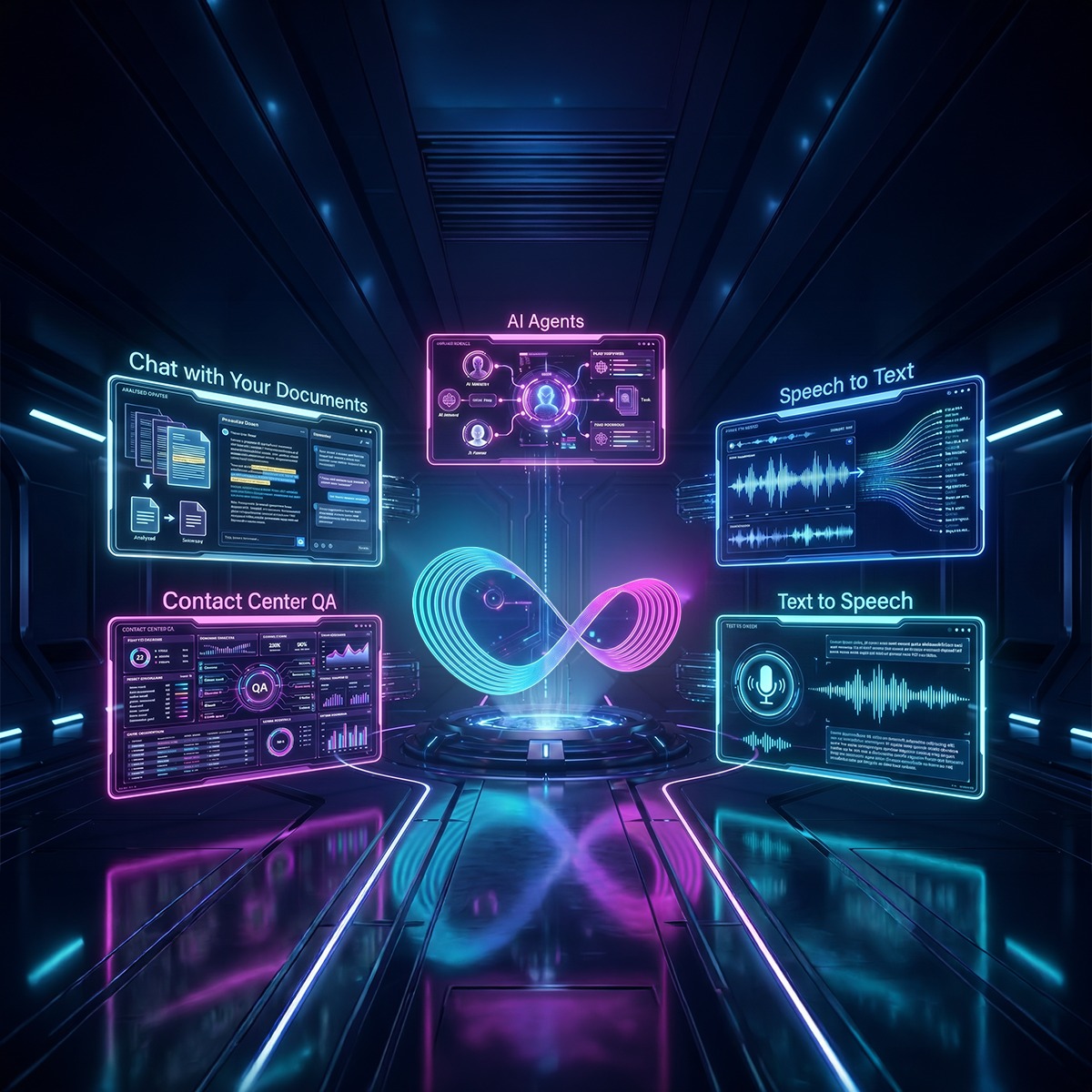
Wittify began with AI Agents that could act. Today, they listen across Arabic dialects, sound human, review 100% of conversations, and cite every answer from your data. Here’s how Wittify’s five products evolved into an accountable enterprise AI stack.

Google has launched Gemini's Personal Intelligence feature across the Arab world, connecting Gmail, Photos, and personal apps for tailored AI experiences. Here's what this means for Arabic-speaking users and enterprise conversational AI in the MENA region.
Wittify.ai is a pioneering AI company specializing in the development of AI agents and applications aimed at automating and streamlining customer engagement activities and processes across various industries. Our mission is to empower businesses by enhancing their customer experience operational efficiency and enabling innovation through intelligent automation.

Information security management system
Business Continuity Management System
Quality Management System

Personal Data Protection Law Compliance
Personal Data Protection Law Compliance
General Data Protection Regulation Compliance


.png)


