



AI agent “social networks” look exciting, but they blur accountability and create risky feedback loops. This post argues enterprises need governed AI: role-based agents, scoped permissions, audit trails, and human escalation, delivering reliable outcomes under control, not viral autonomy experiments.
Over the past weeks, a new idea has gone viral in the AI world.
A "social network for AI agents."
On platforms inspired by Reddit-style communities, AI agents post, comment, debate, and interact with each other. Humans mostly watch from the sidelines. The concept has sparked fascination, discomfort, and controversy in equal measure.
One of the most talked-about examples is tied to MoltBot (previously ClawdBot), whose experiment pushed the idea of agent-to-agent social interaction into the mainstream conversation.
But beneath the novelty lies a much more important question:
Is this actually the future of AI agents. Or a distraction from what real-world AI requires?
From an enterprise and government perspective, the answer is uncomfortable but clear.
At a surface level, the idea is simple.
Instead of AI agents responding only to humans, they are allowed to:
The promise is emergent intelligence.
The fear is emergent behavior.
To be precise, these systems do not demonstrate consciousness or independent intent. They are still models executing prompts and scripts. What they do create, however, is the illusion of autonomy at scale.
And that illusion is exactly where the controversy begins.
The backlash is not irrational. It is rooted in real operational concerns.
When agents talk to agents, responsibility becomes unclear.
Who owns the output?
Who is liable if something goes wrong?
Who stops the system when behavior drifts?
In a human organization, authority and accountability are explicit. In uncontrolled agent networks, they are not.
Allowing agents to reinforce each other's responses creates feedback loops.
Those loops do not produce wisdom. They produce amplification.
Without constraints, logging, and supervision, small errors turn into systemic noise very quickly.
Most agent social experiments lack:
This is tolerable in a demo. It is unacceptable in production.
This is where the conversation becomes grounded.
No bank, ministry, telco, or regulated enterprise will deploy AI agents that:
In regulated environments, intelligence without control is a liability.
What looks innovative on social media becomes operationally reckless the moment real users, real data, and real consequences are involved.
That is why agent social networks remain experiments, not deployments.
The most misleading narrative around these platforms is the idea that intelligence emerges from freedom.
In reality, production intelligence emerges from constraints.
Airplanes fly safely not because pilots are free to do anything, but because systems, rules, and procedures exist. The same applies to AI.
Agent-to-agent chatter does not create better outcomes.
Clear objectives, bounded knowledge, and enforced rules do.
Unconstrained agents do not solve business problems. They generate interesting screenshots.
At Wittify, we take a fundamentally different position.
AI agents are not social beings. They are operational systems.
That means:
In real deployments, intelligence is not measured by how creative an agent sounds.
It is measured by how reliably it delivers outcomes under strict control.
This is why enterprises choose governed AI over experimental autonomy every time.
Public agent social networks will continue to exist. They are useful as research sandboxes and media spectacles.
But they are not the future of enterprise AI.
The future belongs to agents that are:
In other words, boring by internet standards.
And essential by operational ones.
The controversy around AI agents talking to each other is not a warning about intelligence gone rogue.
It is a reminder that without governance, AI does not scale responsibly.
The future of AI is not agents socializing.
It is agents delivering measurable value, safely, under control.
And that future will be built by platforms that prioritize structure over spectacle.
Ready to deploy governed, enterprise-grade AI agents that stay accountable and auditable? Visit Wittify to see how we can help.
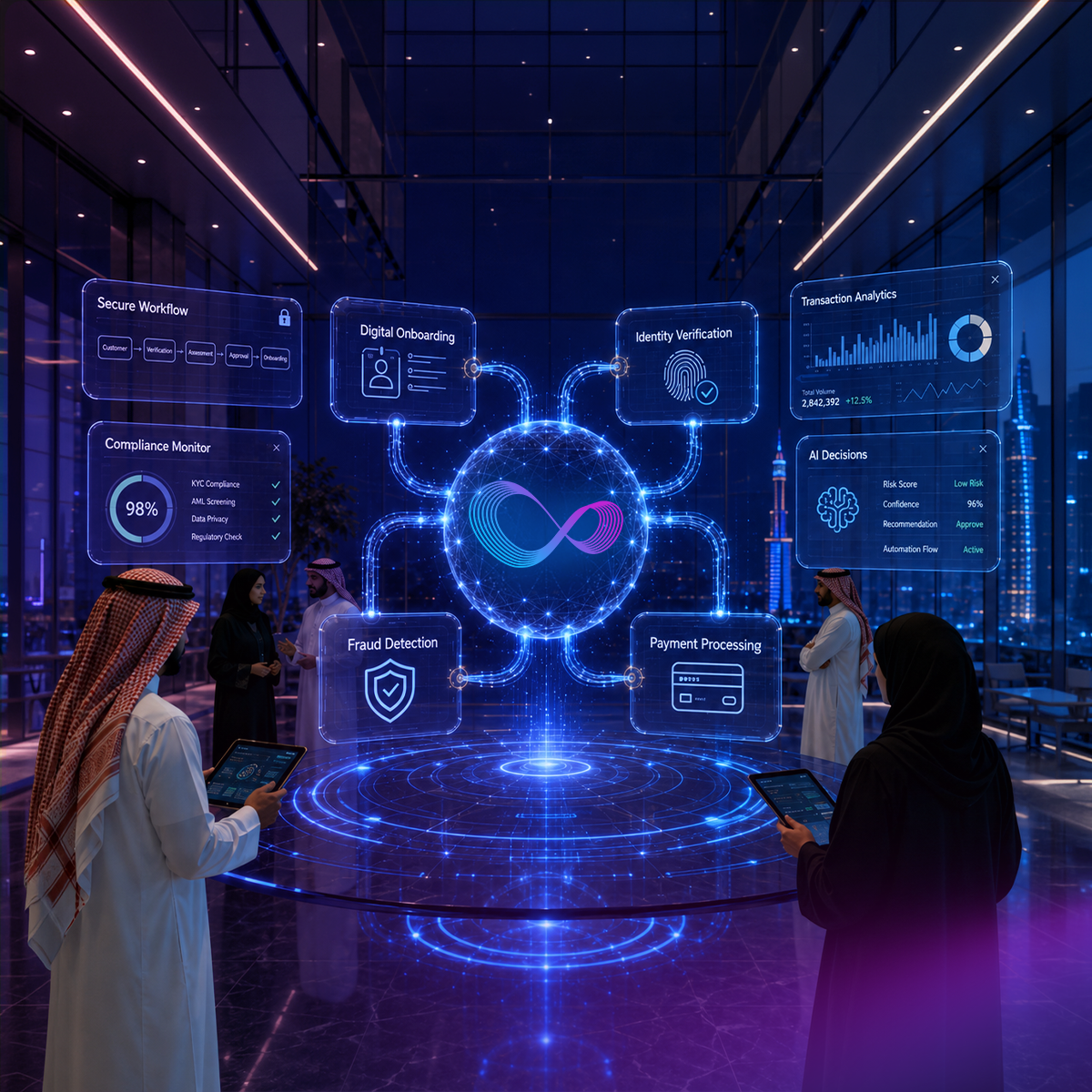
Discover how AI is transforming fintech customer experience in 2026 — from KYC and fraud alerts to Arabic-first support across MENA financial markets.

Most CX automation deployments stall before daily operational use. This guide covers 10 CX automation best practices, from escalation design to omnichannel continuity, with specific guidance for multilingual and Arabic-first contact centers.

Explore how AI is transforming telecom customer experience. Compare top platforms including NICE CXone and Arabic-first alternatives built for MENA telecom operators.
Wittify.ai is a pioneering AI company specializing in the development of AI agents and applications aimed at automating and streamlining customer engagement activities and processes across various industries. Our mission is to empower businesses by enhancing their customer experience operational efficiency and enabling innovation through intelligent automation.

Information security management system
Business Continuity Management System
Quality Management System

Personal Data Protection Law Compliance
Personal Data Protection Law Compliance
General Data Protection Regulation Compliance


.png)


