



Chatbots break at enterprise scale. Learn why they fail across voice, compliance, and revenue—and what AI agents replace them with in 2026.
For years, chatbots were sold as the silver bullet for customer support: lower costs, faster responses, and 24/7 availability. For small businesses, they sometimes work.
But at enterprise scale, chatbots don’t just fail—they quietly become a liability. This article explains why traditional chatbots break down in complex environments and the new technology taking their place.
Most chatbots are built to answer isolated questions, but enterprises don’t operate in isolation. They operate in a web of ongoing conversations, multiple departments, and revenue-sensitive interactions.
A chatbot can answer "What are your business hours?" but it collapses when the conversation turns into:
The Difference: Chatbots match patterns; they don't reason. This is exactly why enterprises are moving toward AI Agents instead of simple bots.
Most chatbot platforms were born in a text-only world. However, enterprise reality includes voice calls, call centers, and IVR systems where escalations must happen in real time.
Chatbots are "deaf" to critical signals:
When you separate your chat automation from your voice intelligence, you create a disconnected experience and angry customers. Legacy IVR is dying—not because voice is obsolete, but because it lacks centralized intelligence.
At enterprise scale, the risk isn't just "wrong answers." It’s saying the wrong thing, at the wrong time, to the wrong customer.
Chatbots often don't know when to stop talking. They lack the guardrails to recognize:
Key Takeaway: Enterprises don’t need AI that talks more; they need AI that knows when to stop.
Chatbots are usually marketed as support cost reduction tools. Enterprises, however, look at the bigger picture:
A chatbot that deflects tickets but misses upsell opportunities or mishandles high-value customers is a net loss. Leading organizations are now reframing AI from a cost center to a revenue engine.
Enterprises operate across Voice, WhatsApp, Email, and Social Messaging. Most chatbots are channel-specific, meaning each channel becomes a separate "brain" with no shared memory.
Without a single intelligence layer, omnichannel support becomes chaos. You lose the unified customer view that is vital for consistent decision-making.
At scale, AI must respect data residency, access controls, and regional regulations. Most platforms were built for speed, not governance. This is why enterprises in regulated markets—especially in Saudi Arabia and the UAE—often hit a wall with standard vendors.
The future isn't "better chatbots"—it’s AI Agents. Unlike their predecessors, Enterprise AI Agents:
Chatbots didn’t fail because AI failed; they failed because enterprises outgrew them. If your organization still treats AI as a siloed cost-cutting tool, the problem isn’t your vendor; it’s the model itself.
Ready to evolve? See what enterprise-grade AI agents look like in practice.
.jpeg)
Most contact centers still rely on sample-based QA. The real issue is not speed. It is visibility across every interaction, channel, and agent. Sample-based QA no longer gives contact centers the visibility they need. Here is why modern teams need broader insight across human and AI-led interactions.
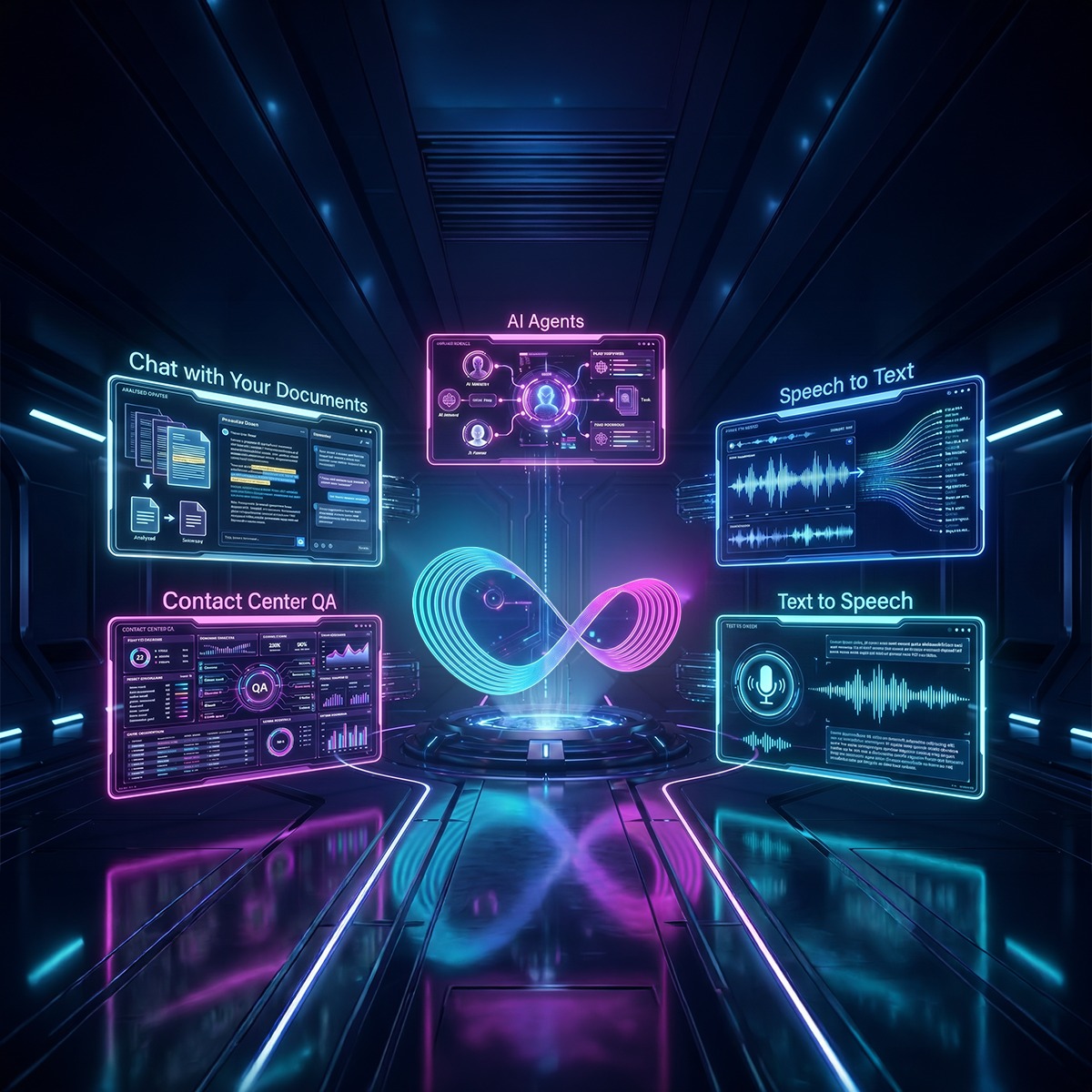
Wittify began with AI Agents that could act. Today, they listen across Arabic dialects, sound human, review 100% of conversations, and cite every answer from your data. Here’s how Wittify’s five products evolved into an accountable enterprise AI stack.

Google has launched Gemini's Personal Intelligence feature across the Arab world, connecting Gmail, Photos, and personal apps for tailored AI experiences. Here's what this means for Arabic-speaking users and enterprise conversational AI in the MENA region.
Wittify.ai is a pioneering AI company specializing in the development of AI agents and applications aimed at automating and streamlining customer engagement activities and processes across various industries. Our mission is to empower businesses by enhancing their customer experience operational efficiency and enabling innovation through intelligent automation.

Information security management system
Business Continuity Management System
Quality Management System

Personal Data Protection Law Compliance
Personal Data Protection Law Compliance
General Data Protection Regulation Compliance


.png)


