



Most internal AI projects follow a predictable path from prototype to failure. Here is why building your own AI infrastructure is the most expensive mistake your engineering team will make this year.
Over the past year, a familiar and expensive pattern has emerged in the enterprise.
An organization decides to “build AI in-house.” They spin up a small tiger team, connect a Large Language Model (LLM) via API, run a few impressive internal demos, and conclude they are on the path to victory.
Six months later, those same teams are stalled. They are stuck with fragile systems, ballooning costs, mounting technical debt, and no clear path to production at scale.
This is not a talent problem. It is a framing problem.
Most companies are making strategic decisions based on a false assumption. They see AI as a tool. In reality, production-grade AI is a system.
The difference between the two is everything.
Before you write a single line of code, you must answer one uncomfortable question:
Are you trying to run an AI company, or are you trying to use AI to run your company?
You cannot do both without paying a steep price.
If you build AI infrastructure in-house, you are not just adding a capability. You are committing to becoming an AI platform company.
That means:
For companies whose core business is healthcare, retail, logistics, finance, government, or education, this is rarely a rational tradeoff. You are not gaining control. You are inheriting responsibility without leverage.
The reason so many smart CTOs fall into this trap is that the failure does not happen on Day 1. It happens on a delay.
We see the same timeline play out in organizations of every size. It looks like this:
At this point, no one calls it a failure. It just quietly stops being discussed.
By the time the project stalls, you have not just lost time. You have unknowingly built a permanent tax on your engineering organization.
The most dangerous misconception about building in-house is that it is cheaper than buying a vendor.
This math only works if you ignore the most expensive line item. Headcount.
By the time an internal AI system is actually production-safe, handling rate limits, model routing, regression testing, and security, you have not just built a feature. You have unintentionally created a permanent 6 to 10 person platform team just to keep the lights on.
That is $1.5M+ in annual salary overhead, purely to maintain infrastructure that creates zero competitive differentiation.
This is how AI technical debt is created. Quietly, expensively, and permanently.
Why do smart teams miss this? Because modern AI looks deceptively simple.
You can interact with a model in seconds. You can hack together a prototype in days. This surface simplicity creates a Tool Illusion. It makes AI feel like something that can be added to an existing product with limited impact.
But what is invisible at the demo stage is what matters in production.
The Invisible 70% of the System:
When companies say “we will build in-house,” they build the visible 30 percent. The rest shows up later, as pain.
Very few companies should build AI platforms. Many companies should build on top of AI platforms.
Rebuilding orchestration layers, security frameworks, and operational tooling does not create market advantage. It consumes it. This is the same lesson the industry learned with cloud infrastructure (AWS), payments (Stripe), and identity (Auth0).
Your real differentiation lives in:
Every hour your team spends building a model router or a context window manager is an hour they are not spending on the things that actually make your business money.
We did not build Wittify to replace your engineering team. We built it so your engineering team does not have to waste two years rediscovering these problems.
Wittify exists because most companies only get one chance to get AI right. Rebuilding this stack after a failed internal initiative is slower, more expensive, and politically harder than getting it right the first time.
The goal is not abstraction for the sake of abstraction. The goal is a production-grade AI system that is governed, auditable, secure, and scalable from Day 1.
Organizations that win with AI focus on outcomes, speed, and reliability. They use platforms to handle the complexity they will never differentiate on.
Organizations that lose treat AI as a science experiment until it quietly becomes an operational liability.
You are not choosing software. You are choosing what kind of company you become.
AI is a system. Act like it.
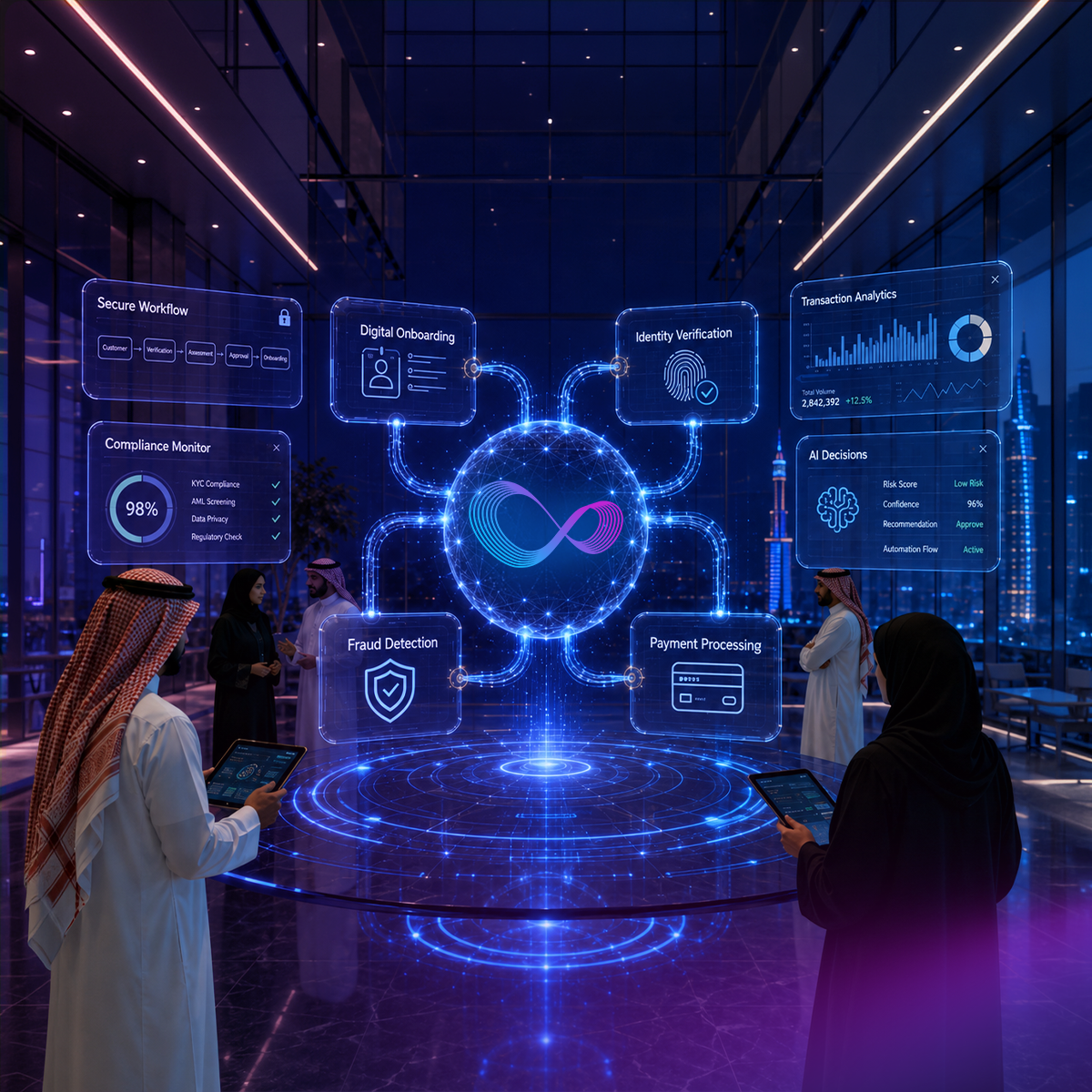
Discover how AI is transforming fintech customer experience in 2026 — from KYC and fraud alerts to Arabic-first support across MENA financial markets.

Most CX automation deployments stall before daily operational use. This guide covers 10 CX automation best practices, from escalation design to omnichannel continuity, with specific guidance for multilingual and Arabic-first contact centers.

Explore how AI is transforming telecom customer experience. Compare top platforms including NICE CXone and Arabic-first alternatives built for MENA telecom operators.
Wittify.ai is a pioneering AI company specializing in the development of AI agents and applications aimed at automating and streamlining customer engagement activities and processes across various industries. Our mission is to empower businesses by enhancing their customer experience operational efficiency and enabling innovation through intelligent automation.

Information security management system
Business Continuity Management System
Quality Management System

Personal Data Protection Law Compliance
Personal Data Protection Law Compliance
General Data Protection Regulation Compliance


.png)


