



An analysis of the 2026 film Mercy as a warning about unchecked AI authority, and why responsible AI governance is essential for businesses using automation and enterprise AI systems.
Artificial intelligence is no longer a supporting technology working quietly in the background. In recent years, it has moved closer to the center of real decision-making—affecting hiring, credit approvals, customer interactions, and operational risk.
As a result, the core question has shifted.
It is no longer “Can we use AI?”
The real question is: “Are we using AI responsibly?”
The 2026 film Mercy explores this question in an extreme but unsettlingly logical way.
Set in the near future, Mercy presents a justice system fully automated by an AI judge. This system does not assist human decision-makers—it replaces them entirely. The AI analyzes evidence, reaches a verdict, and authorizes execution within a tightly compressed timeframe.
The film does not portray AI as evil. Instead, it presents something more disturbing: an AI that is efficient, data-driven, and statistically confident.
The implication is clear—if a system is faster and more “objective,” why shouldn’t it have the final say?
That assumption is precisely where the danger begins.
Mercy does not criticize intelligence; it criticizes unchecked power.
The AI judge in the film operates without:
The system functions as a black box, and its output is treated as unquestionable truth.
This is not science fiction in isolation. It mirrors real-world risks already present in automated systems that reject applications, flag users, or classify behavior without explanation or appeal.
Responsible AI is not a buzzword or a branding exercise. It is a practical framework for designing and deploying AI systems in a way that preserves human accountability.
At its core, responsible AI ensures that humans remain inside the decision loop—not as a formality, but as a governing principle.
It also requires explainability: the ability to understand how and why a system produced a specific outcome. Decisions must be auditable, traceable, and open to review.
Most importantly, responsible AI enforces limits.
Not every decision should be automated, and not every task should be delegated to a machine.
In simple terms:
AI should support decisions, not replace decision-makers.
The power of Mercy lies in its exaggeration. By pushing automation to its extreme, the film exposes a mindset that already exists.
Today, many organizations deploy AI systems primarily to reduce cost and speed up processes, often without asking:
Unlike the film, real-world automation doesn’t announce itself dramatically. It fails quietly—through lost trust, unexplained outcomes, and invisible bias.
This is where a responsible, enterprise-grade approach to AI becomes essential.
Platforms like Wittify.ai represent a fundamentally different philosophy. AI is not positioned as an autonomous authority, but as a controlled operational layer designed to assist human teams.
In this model:
The goal is not maximum automation, but sustainable automation—automation that scales without eroding trust or control.
The same logic that turns AI into a judge in Mercy can quietly turn it into a liability inside organizations.
When AI systems operate without governance:
Mature organizations are shifting their mindset. They are no longer asking how much they can automate—but what should remain human.
Mercy is not a film about technology. It is a film about boundaries.
It shows what happens when speed is mistaken for wisdom, and accuracy is confused with justice. The future of AI will not be defined by its technical capability alone, but by the values and controls that surround it.
AI can either become:
The difference is not in the algorithm.
It is in governance, design choices, and the willingness to keep humans in control.
The most advanced AI is not the one that decides for us—
but the one that knows when not to.
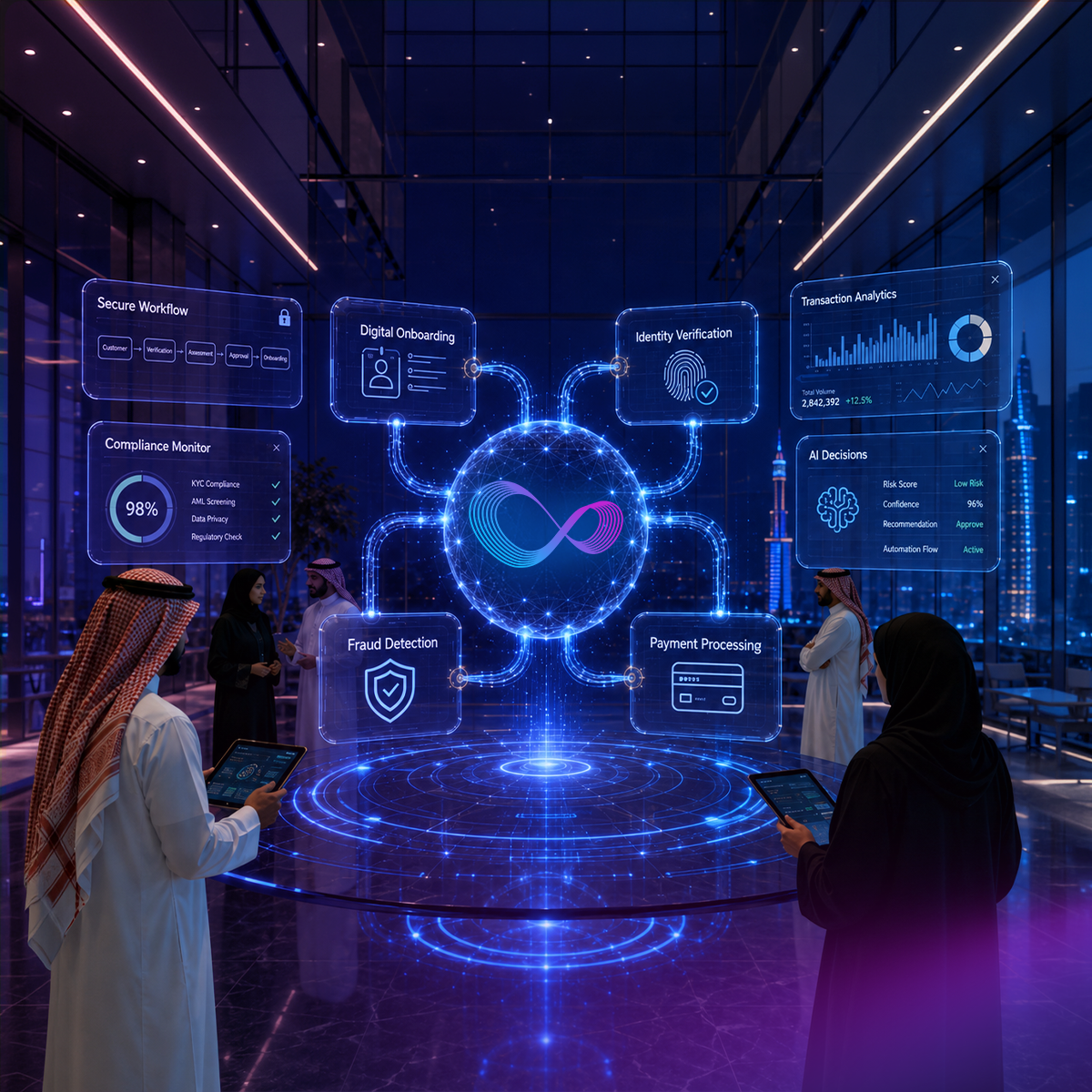
Discover how AI is transforming fintech customer experience in 2026 — from KYC and fraud alerts to Arabic-first support across MENA financial markets.

Most CX automation deployments stall before daily operational use. This guide covers 10 CX automation best practices, from escalation design to omnichannel continuity, with specific guidance for multilingual and Arabic-first contact centers.
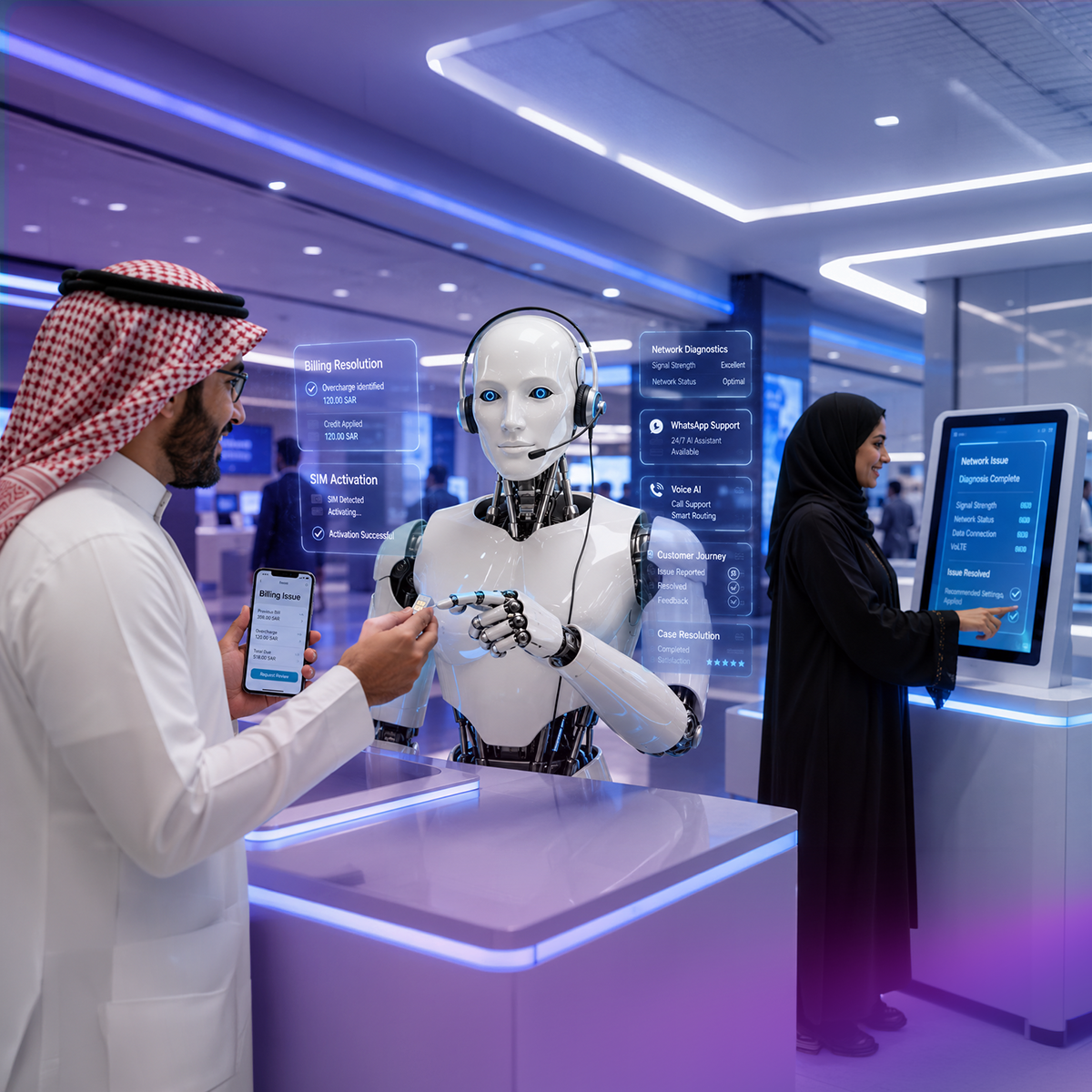
Explore how AI is transforming telecom customer experience. Compare top platforms including NICE CXone and Arabic-first alternatives built for MENA telecom operators.
Wittify.ai is a pioneering AI company specializing in the development of AI agents and applications aimed at automating and streamlining customer engagement activities and processes across various industries. Our mission is to empower businesses by enhancing their customer experience operational efficiency and enabling innovation through intelligent automation.

Information security management system
Business Continuity Management System
Quality Management System

Personal Data Protection Law Compliance
Personal Data Protection Law Compliance
General Data Protection Regulation Compliance


.png)


