



Discover how AI voice agents are revolutionizing customer service in 2026. This post breaks down the technical anatomy of STT, LLM, and TTS, explaining why modern NLP outperforms rigid IVR systems to deliver seamless, human-like, and empathetic brand experiences.
As the global economy shifts toward total digital automation, the market has become saturated with tools claiming to be "all-in-one" solutions for artificial intelligence. However, for a business aiming for long-term growth and technical stability, there is a vast and dangerous difference between a basic visual chatbot and a top no-code ai agent builder.
In 2026, selecting the wrong platform doesn't just waste your initial investment—it creates technical debt and leads to "The Pilot Trap," which we explored in Scaling Your AI Enterprise AI Voice Agent. Many organizations find themselves stuck with a system that works for 10 users but collapses under the weight of 10,000. To help you navigate this crowded landscape, we have identified the critical pillars that define a benchmark-setting builder capable of supporting an elite digital workforce.
An AI is only as good as the information it can access. Most standard builders rely on the general knowledge of a Large Language Model (LLM), which often leads to "hallucinations"—situations where the AI confidently provides false information. A top no-code ai agent builder must support advanced RAG.
This technology allows the agent to "read" your company’s internal documents in real-time. Whether it is a 300-page insurance policy, a live inventory list, or a complex set of internal SOPs, the AI uses this data to ground its answers. This ensures that when a customer asks a complex question, the agent provides an answer based on your specific data, not generic internet knowledge. In industries like Healthcare or Financial Services, where accuracy is legally mandated, RAG is not an optional feature; it is a necessity.
In voice applications, every millisecond counts. If there is a noticeable gap between a customer speaking and the agent responding, the "human" illusion is broken, and friction sets in. Customers today expect a level of fluidity that traditional IVR systems simply cannot provide.
Achieving this speed requires a sophisticated orchestration of STT, LLM, and TTS—the technical layers we detailed in The Anatomy of an AI Voice Agent: How Modern NLP Outperforms Traditional IVR. A top no-code ai agent builder utilizes edge computing to ensure that this "round-trip" time remains under 800ms. This speed is what makes the agent feel like a natural participant in the conversation rather than a lagging computer program. For enterprises handling high call volumes, this low latency is the difference between a satisfied customer and a hung-up call.
For enterprises operating in the MENA region, basic Arabic support is insufficient. You need a platform that understands nuances—from formal Modern Standard Arabic to specific dialects like Khaleeji, Levantine, or Egyptian—without losing the intent of the speaker.
A top no-code ai agent builder is built from the ground up to handle these linguistic complexities. It should recognize when a user shifts between formal and informal language and respond accordingly. This ensures your brand doesn't sound like a "foreign" robot, but rather a local partner that understands the culture and context of its audience.
The most significant differentiator in 2026 is the ability to act. A standard builder might allow you to create a bot that answers FAQs. A top no-code ai agent builder allows you to build an agent that executes.
This means the agent can talk to your Salesforce CRM, update a shipment status in SAP, or book a medical appointment in your EHR system directly. This ability to integrate with marketing automation platforms like Marketo and HubSpot is what transforms a tool into a true digital employee. As we discussed in Chatbot Versus AI Agent, the goal is to remove manual steps from the customer journey. If your builder cannot connect to your existing tech stack through deep API integration, it is essentially a dead-end for your operational efficiency.
In an era of strict data privacy, especially with regulations like the NDMO in Saudi Arabia or the GDPR in Europe, where your data lives matters. A top-tier builder offers flexible deployment options, including Sovereign Cloud or On-Premise solutions. This ensures that sensitive customer data never leaves the national borders, fulfilling legal requirements that standard cloud builders often ignore.
Evaluating the market requires looking beyond flashy interfaces and focusing on the core technical pillars of RAG, latency, and native execution. By prioritizing these features, you ensure that your digital workforce is not just a temporary experiment, but a scalable business asset that delivers genuine ROI.
Ready to see a benchmark-setting platform in action? Experience how Wittify can transform your operations with the market's leading no-code AI agent technology today.
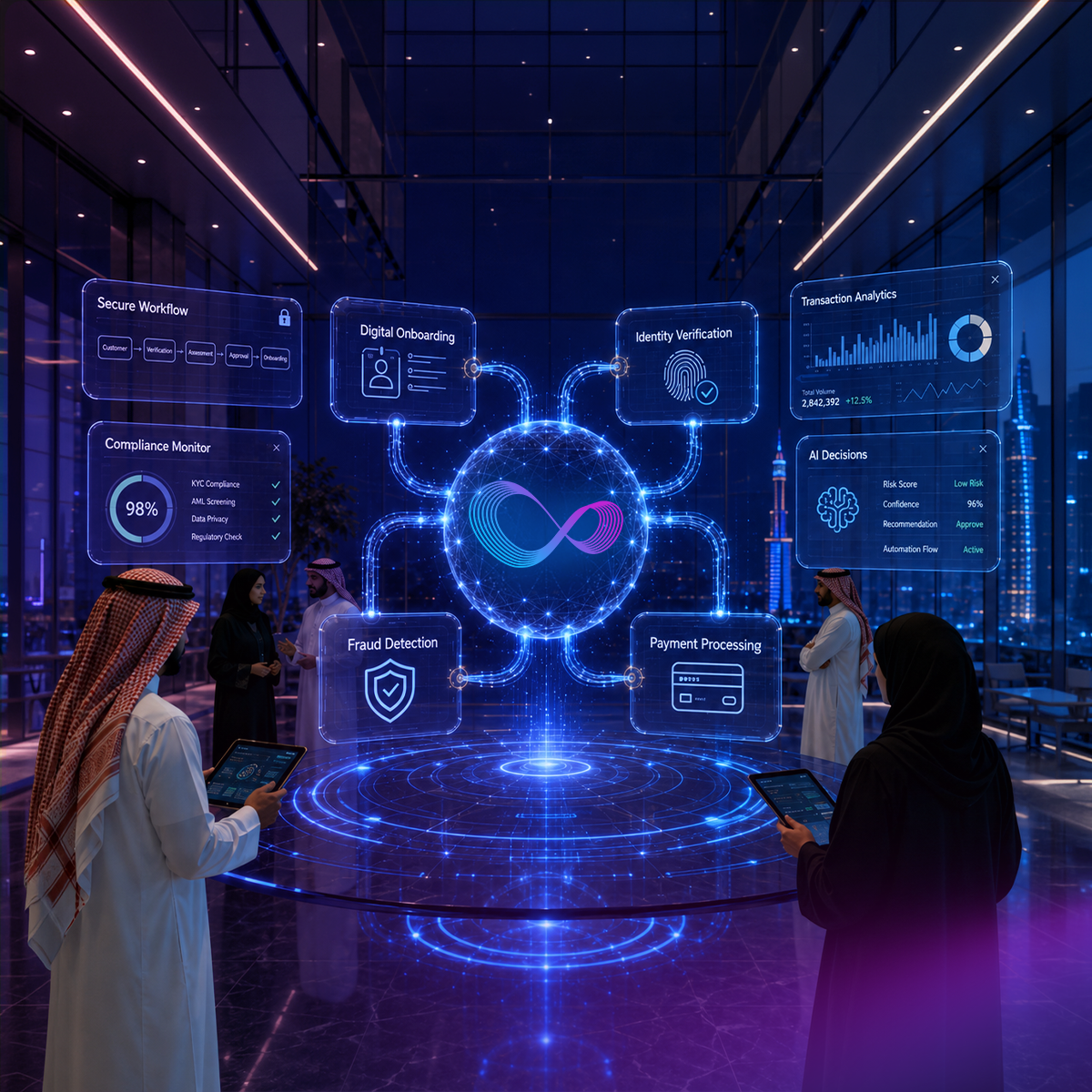
Discover how AI is transforming fintech customer experience in 2026 — from KYC and fraud alerts to Arabic-first support across MENA financial markets.

Most CX automation deployments stall before daily operational use. This guide covers 10 CX automation best practices, from escalation design to omnichannel continuity, with specific guidance for multilingual and Arabic-first contact centers.

Explore how AI is transforming telecom customer experience. Compare top platforms including NICE CXone and Arabic-first alternatives built for MENA telecom operators.
Wittify.ai is a pioneering AI company specializing in the development of AI agents and applications aimed at automating and streamlining customer engagement activities and processes across various industries. Our mission is to empower businesses by enhancing their customer experience operational efficiency and enabling innovation through intelligent automation.

Information security management system
Business Continuity Management System
Quality Management System

Personal Data Protection Law Compliance
Personal Data Protection Law Compliance
General Data Protection Regulation Compliance


.png)


