



Understand the critical shift from chatbots versus ai agents. While chatbots provide reactive, script-based answers, AI agents use reasoning to execute proactive tasks. Learn how upgrading to agentic workflows transforms customer support into an autonomous, revenue-generating engine.
In the high-stakes landscape of 2026, the terminology we use to describe automation is undergoing a fundamental shift. For years, the term "chatbot" was used as a catch-all phrase for any interface that allowed a human to communicate with a machine. However, as enterprise needs become more sophisticated, a clear divide has emerged: the chatbot versus ai agent debate. Understanding this distinction is no longer just a technical exercise; it is a critical requirement for any leader looking to drive real operational efficiency.
To understand the future, we must look at where we started. Traditional chatbots were designed as "reactive" tools. They sit on a website or a messaging channel, waiting for a specific trigger—usually a keyword or a button click—to launch a pre-defined script. These systems are limited by their programming; they can only ever be as smart as the person who wrote the flow chart.
If you have ever interacted with a bot that said, "I didn't understand that, please choose from the options below," you have experienced the inherent limitations of a legacy chatbot. These systems act as digital filing cabinets. They can provide information if you know exactly what to ask for, but they lack the cognitive "mind" to handle nuance or deviations. While they were a significant step up from static FAQ pages, they often lead to "looping hell," where customers feel more frustrated after the interaction than before.
An AI agent is fundamentally different. Unlike a chatbot, an agent is "agentic"—meaning it possesses the power to reason, plan, and execute. When we look at the chatbot versus ai agent comparison, the agent acts more like a digital employee than a simple piece of software.
As we explored in The Anatomy of an AI Voice Agent: How Modern NLP Outperforms Traditional IVR, modern agents use Large Language Models (LLMs) to understand context, sentiment, and intent. This allows them to be proactive. An AI agent doesn't just wait for you to ask a question; it understands the goal behind the query. If a customer says, "I'm arriving late," a chatbot might simply reply with the hotel's check-in hours. An AI agent, however, will recognize the intent, offer to hold the room, ask if the guest needs a late-night room service menu, and update the property management system (PMS) automatically.
The true ROI of an ai agent lies in its ability to execute. In the chatbot versus ai agent paradigm, the chatbot is an informer, while the agent is a doer. This execution happens through deep API integrations. Whether it is in the healthcare sector or e-commerce, an agent doesn't just tell the user how to do something; it does it for them.
This level of proactive action is what allows businesses to scale without hiring more staff, moving from a static support model to a dynamic digital workforce. Achieving this level of sophistication often requires a top no-code ai agent builder to ensure that the logic is sound and the integrations are seamless. By moving from reactive replies to proactive actions, businesses can finally unlock the "infinite scale" that defines modern automation.
The shift from chatbots to agents is the shift from "answering" to "acting." In 2026, customers no longer want to be told how to do something; they want it done for them. By deploying agents, you remove friction from the customer journey and significantly increase the ROI of your automation strategy.
Ready to move beyond basic chat? Discover how Wittify’s AI agents can proactively grow your business and automate complex workflows today.
.jpeg)
Most contact centers still rely on sample-based QA. The real issue is not speed. It is visibility across every interaction, channel, and agent. Sample-based QA no longer gives contact centers the visibility they need. Here is why modern teams need broader insight across human and AI-led interactions.
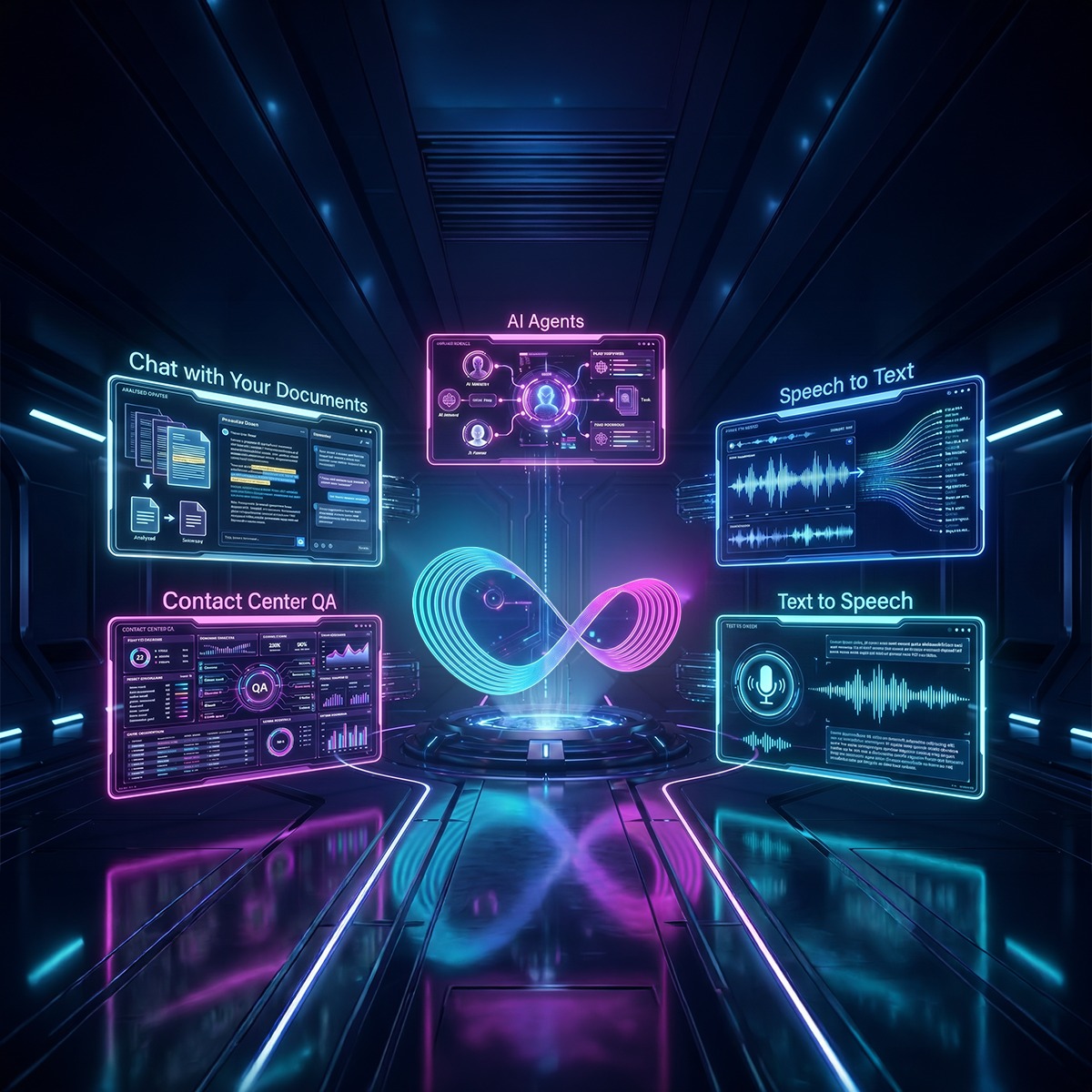
Wittify began with AI Agents that could act. Today, they listen across Arabic dialects, sound human, review 100% of conversations, and cite every answer from your data. Here’s how Wittify’s five products evolved into an accountable enterprise AI stack.

Google has launched Gemini's Personal Intelligence feature across the Arab world, connecting Gmail, Photos, and personal apps for tailored AI experiences. Here's what this means for Arabic-speaking users and enterprise conversational AI in the MENA region.
Wittify.ai is a pioneering AI company specializing in the development of AI agents and applications aimed at automating and streamlining customer engagement activities and processes across various industries. Our mission is to empower businesses by enhancing their customer experience operational efficiency and enabling innovation through intelligent automation.

Information security management system
Business Continuity Management System
Quality Management System

Personal Data Protection Law Compliance
Personal Data Protection Law Compliance
General Data Protection Regulation Compliance


.png)


