


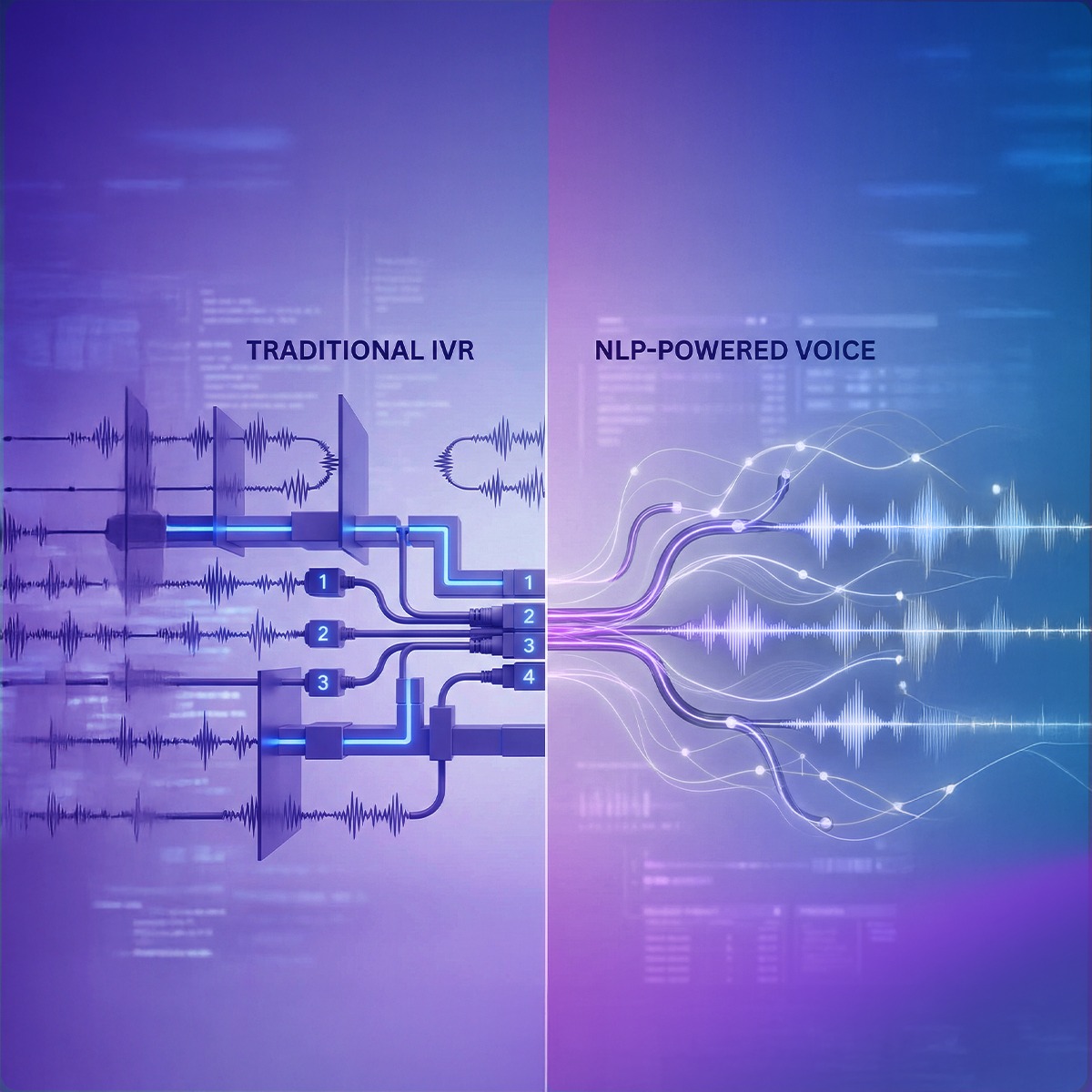
Discover how AI voice agents are revolutionizing customer service in 2026. This post breaks down the technical anatomy of STT, LLM, and TTS, explaining why modern NLP outperforms rigid IVR systems to deliver seamless, human-like, and empathetic brand experiences.
In the rapidly evolving landscape of 2026, the gap between "good" and "great" customer service is no longer measured by how quickly a call is answered, but by how naturally it flows. For decades, the Interactive Voice Response (IVR) system was the gold standard for call center efficiency. However, as customer expectations have shifted toward instant, frictionless, and human-like interactions, the traditional "Press 1 for Sales" menu has become a symbol of corporate friction.
Enter the AI voice agent. Unlike its rigid predecessors, the modern AI voice agent isn't just a routing tool—it is a sophisticated digital employee capable of understanding nuances, emotion, and intent. To understand why this technology is currently disrupting the enterprise sector, we must look under the hood at its "anatomy" and see how modern Natural Language Processing (NLP) is officially retiring the legacy IVR. Understanding these individual components is the first step before tackling the complexities of From Vision to Volume: Scaling Your AI Enterprise AI Voice Agent, where we discuss how to manage these technologies at a massive scale.
A modern AI voice agent is not a single piece of software; it is a high-speed orchestration of three core technologies working in a continuous loop. This "chained pipeline" happens in milliseconds, creating the illusion of a seamless, real-time conversation.
The process begins with Speech-to-Text (STT), often referred to as Automatic Speech Recognition (ASR). In 2026, STT has reached a level of maturity where it can filter out background noise—like a crying baby or wind on a highway—and accurately transcribe speech regardless of heavy regional accents or dialects.
Unlike old IVRs that required you to speak like a robot to be understood, modern STT captures the "messiness" of human speech, transcribing it into a digital format that the AI can actually process.
Once the speech is turned into text, the Large Language Model (LLM) takes over. This is where the magic happens. While a traditional IVR follows a "if this, then that" decision tree, an LLM understands context and intent.
If a customer says, "I’m calling because my card was declined at the grocery store, and I’m really embarrassed," a legacy system would get stuck on the word "grocery." An AI voice agent, however, identifies the intent (payment failure), the sentiment (frustration/embarrassment), and the context (urgency). It doesn't just route the call; it formulates a helpful, empathetic response.
Finally, the Text-to-Speech (TTS) engine converts the AI’s written response back into audio. We have officially moved past the "uncanny valley" of robotic, stuttering voices. Today’s neural TTS uses prosody generation to add human-like rhythm, intonation, and pauses. It can sound warm, professional, or even apologetic depending on the customer's mood, making the interaction feel remarkably human.
The transition from IVR to an AI voice agent isn't just a technical upgrade; it's a fundamental shift in the customer experience (CX) philosophy.
Traditional IVRs force customers to adapt to the machine. You have to listen to a list of options, wait for the right one, and hope your problem fits into a pre-defined bucket. If it doesn't, you're stuck in "looping hell."
An AI voice agent flips this dynamic. It adapts to the human. Customers can speak naturally, interrupt the agent, or change the subject mid-sentence. The NLP layer handles these "multi-turn" conversations with ease, allowing for a 1.8-minute average call duration compared to the 4.5-minute struggle typical of legacy systems.
A touch-tone menu cannot tell if you are in a hurry or in tears. Modern AI voice agents use real-time sentiment analysis to detect the caller's emotional state. If the AI detects high levels of distress, it can instantly soften its tone or prioritize a "warm handoff" to a human specialist, passing along the full transcript so the customer doesn't have to repeat themselves.
Most people view IVR as a "wall" designed to keep them away from a human. An AI voice agent is a "bridge." Because it can handle thousands of calls simultaneously with 95% accuracy, there is zero wait time. In 2026, "holding for the next available representative" is becoming a relic of the past. Enterprises are seeing First Call Resolution (FCR) rates jump from 35% with IVR to over 75% with AI agents.
For the enterprise, the "human-like" quality of an AI voice agent isn't just a vanity metric—it’s a massive driver of ROI.
The anatomy of an AI voice agent is built for a world that values time and empathy. By combining the "ears" of STT, the "mind" of an LLM, and the "voice" of TTS, businesses are finally able to provide the level of service that was once only possible with a massive army of human agents.
Traditional IVR taught us how to be efficient. Modern AI voice agents are teaching us how to be helpful. As we move through 2026, the question is no longer whether you should automate your voice channel, but whether your automation sounds like a machine—or like a partner.
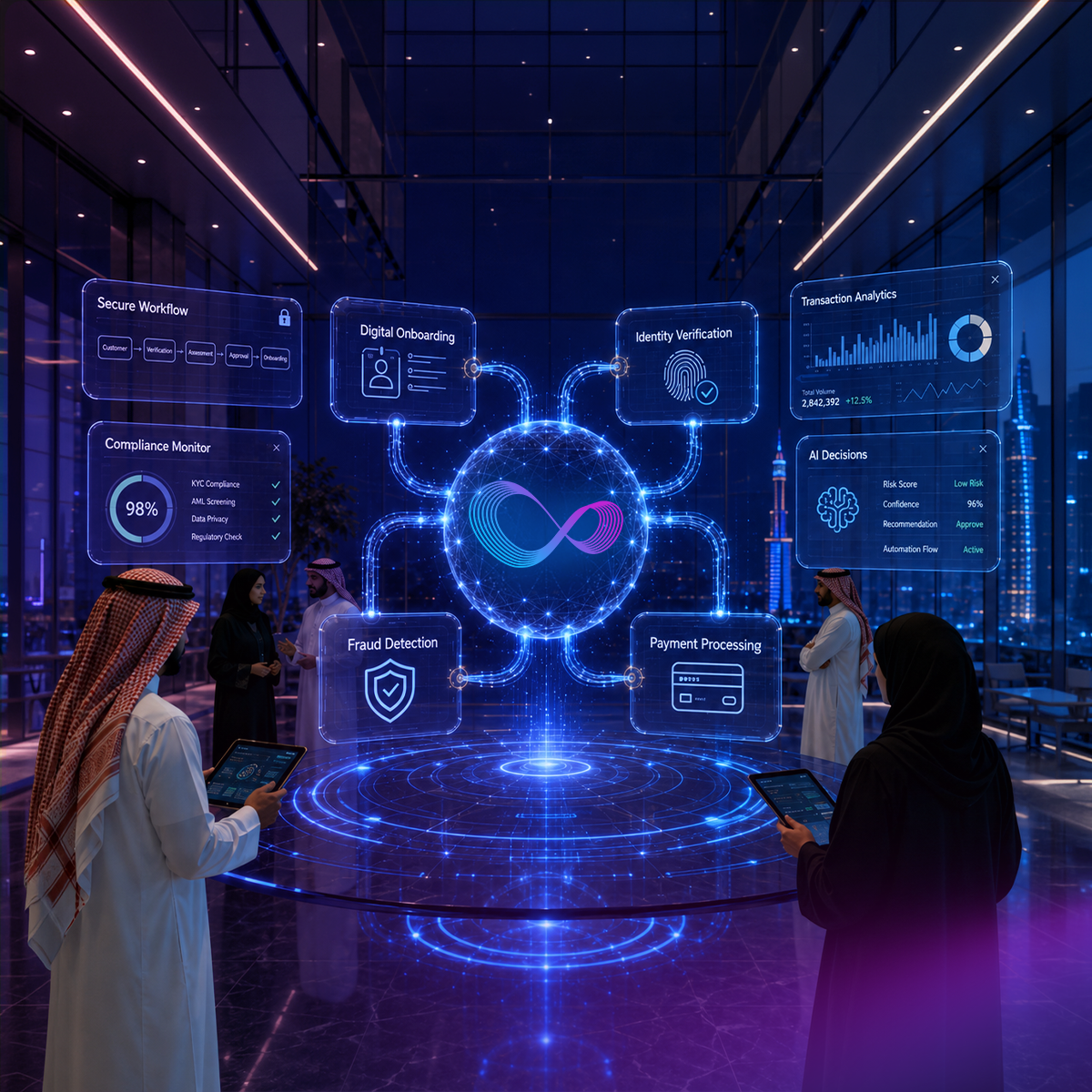
Discover how AI is transforming fintech customer experience in 2026 — from KYC and fraud alerts to Arabic-first support across MENA financial markets.

Most CX automation deployments stall before daily operational use. This guide covers 10 CX automation best practices, from escalation design to omnichannel continuity, with specific guidance for multilingual and Arabic-first contact centers.
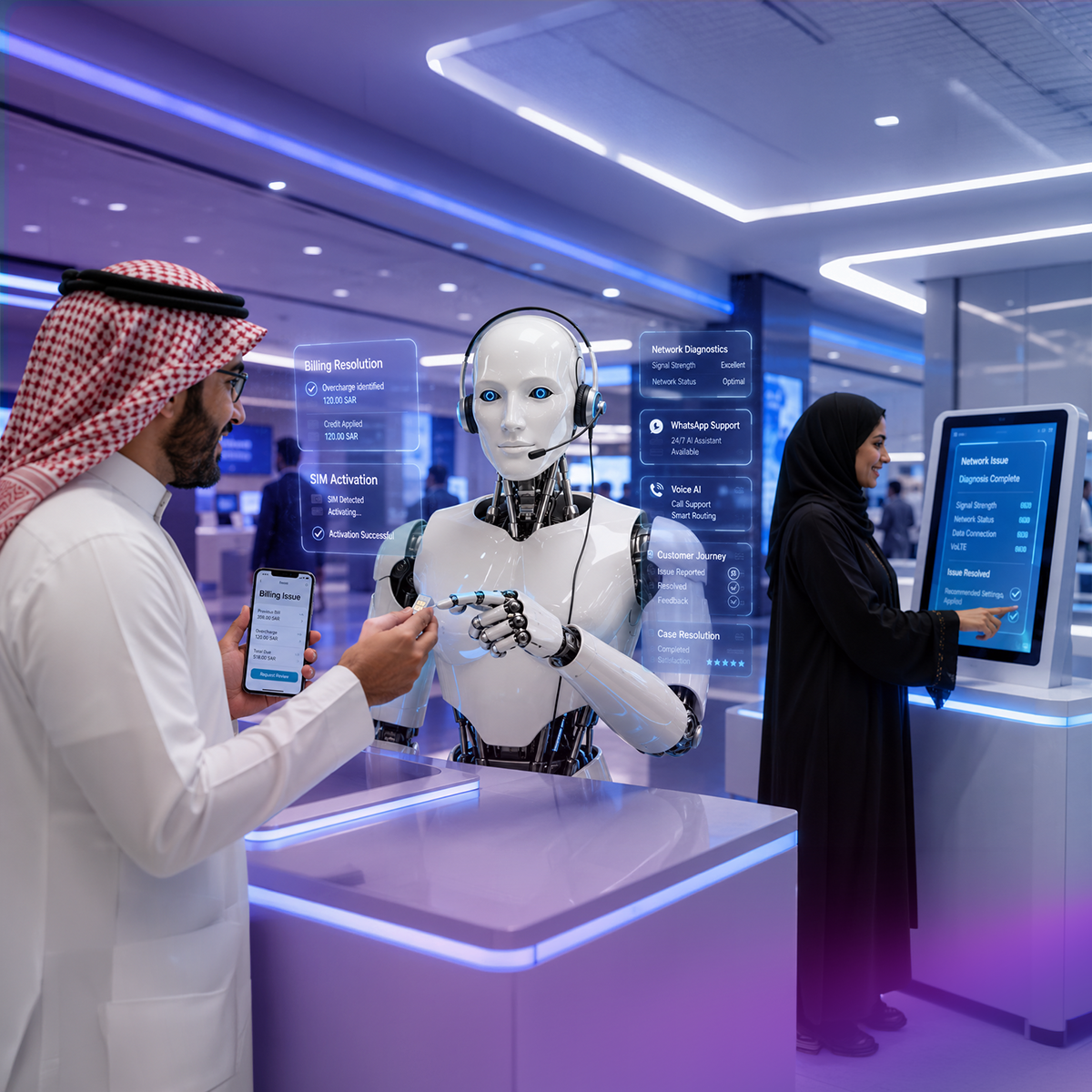
Explore how AI is transforming telecom customer experience. Compare top platforms including NICE CXone and Arabic-first alternatives built for MENA telecom operators.
Wittify.ai is a pioneering AI company specializing in the development of AI agents and applications aimed at automating and streamlining customer engagement activities and processes across various industries. Our mission is to empower businesses by enhancing their customer experience operational efficiency and enabling innovation through intelligent automation.

Information security management system
Business Continuity Management System
Quality Management System

Personal Data Protection Law Compliance
Personal Data Protection Law Compliance
General Data Protection Regulation Compliance


.png)


