



Uploading your knowledge base to ChatGPT and deploying an enterprise AI platform are not the same thing. Discover why general-purpose AI tools cannot match what a purpose-built enterprise platform delivers, and what it would actually cost to build it yourself.
Every enterprise exploring AI eventually runs the same experiment. They gather their product documentation, their FAQ files, their internal policy guides, and upload them to ChatGPT. It answers questions. It sounds informed. The team gets excited. Then the real questions start, and the ceiling becomes visible very quickly.
Can it handle a customer reaching out on WhatsApp at midnight in Gulf Arabic? Can it escalate intelligently to a live agent when a complaint crosses a certain threshold? Can it maintain a consistent tone across ten thousand daily interactions without drifting? Can it operate across voice and text simultaneously? Can it produce a compliance audit trail that satisfies a regulator?
The answer to every one of those questions is no, and that is not a criticism of ChatGPT. It is simply not what it was designed for. Understanding the difference between a general-purpose AI tool and a purpose-built enterprise platform is one of the most important distinctions any decision-maker in this space can make.
There is a question that comes up in almost every enterprise sales conversation Wittify.ai has, and it is worth addressing head-on: "Is this not just like ChatGPT with our data plugged in?"
It is an understandable assumption. Both involve conversational AI. Both can work with a company's own content. And because ChatGPT is the most visible AI product in the world right now, it has become the default mental model most people reach for when they first encounter any AI platform.
But the comparison breaks down quickly once you look at what enterprise operations actually demand. ChatGPT is a consumer and developer product built around a single interface and a single provider's model stack. Wittify.ai is an enterprise deployment platform built around outcomes: channel coverage, language fidelity, compliance, escalation, and model flexibility. The surface similarity is real. The underlying architecture, purpose, and capability are entirely different.
Confusing the two is like comparing a personal car with a logistics fleet management system because both involve vehicles. The component is familiar. The product is not the same thing at all.
There is a distinction that gets lost in most AI vendor conversations: the difference between querying a language model and operating an enterprise AI platform.
When a business uploads a knowledge base to ChatGPT and starts testing, what they are doing is sending queries to a single model through a single interface, locked to a single provider's technology decisions. It works well for exploration. It does not work for production-grade enterprise operations.
Wittify.ai is not a wrapper around one model. It is a full enterprise deployment platform that uses AI models as one component of a much larger and more sophisticated architecture. The knowledge base can be identical. What is built around it, including the channels, the escalation logic, the language handling, the compliance layer, and the model flexibility, is entirely different.
Some organisations look at enterprise AI platforms and ask a reasonable question: why not build this capability in-house? The answer is not that it is impossible. It is that the cost, timeline, and ongoing overhead rarely justify it when the alternative already exists and is already ISO-certified.
Building a production-ready conversational AI platform with voice and text channel support, multi-model flexibility, Arabic dialect handling, enterprise-grade security infrastructure, compliance controls, escalation logic, and integrations across WhatsApp, Facebook, Instagram, and more does not take a few months. It takes years of engineering work and millions in upfront investment, as we detailed in our article "Building AI In-House Is Not a Strategy. It's a Trap.".
That is before a single customer interaction has been handled. And after it is built, a dedicated team is required to maintain it, secure it, update it as models evolve, and scale it as demand grows. The operational overhead is permanent, not a one-time cost.
Wittify.ai removes that burden entirely. The infrastructure is built. The security is certified. The channels are integrated. What enterprises bring is their knowledge base and their context. Everything else is already there.
One of the most overlooked differences between a general-purpose tool and an enterprise platform is model flexibility. When a business builds its customer operations on top of a single AI provider, it inherits every limitation, every pricing change, and every capability gap that provider carries. ChatGPT, by design, offers access to OpenAI models only. There is no choice, no fallback, and no ability to optimise by use case.
Wittify.ai takes the opposite approach. The platform gives enterprises the ability to choose from a full library of leading AI models across every major provider, and to switch or combine them based on the specific demands of each deployment.
OpenAI: GPT-4o, GPT-4o Mini, GPT-4 Turbo, and GPT-3.5 Turbo for instant responses, plus o3, o1 Pro, and o1 Mini for deeper reasoning tasks
Anthropic: Claude Haiku for instant responses, Claude Sonnet for balanced performance, and Claude Opus for complex reasoning workflows
Google: Gemini Flash and Gemini Flash 8B for speed-optimised instant interactions, Gemini 1.5 Pro and Gemini Ultra for advanced reasoning at scale
xAI: Grok-1 and Grok-2, both reasoning-grade models built for analytical depth
Open Source (Self-Hosted): Llama-3 8B and Llama-3 70B, Mistral 7B, Mixtral 8x7B, and Falcon 40B for enterprises that require data sovereignty, private deployment, or cost-controlled infrastructure
This is not a list for its own sake. It represents a fundamentally different philosophy: your AI strategy should not be hostage to one vendor's decisions. Need Claude's reasoning depth for a regulated financial use case? Prefer Gemini Flash's speed for a high-volume inbound voice flow? Want to self-host on Llama-3 to keep all data within your own infrastructure? Wittify.ai makes all of it possible from the same platform, with the same interface, without rebuilding anything.
There is one more dimension that general-purpose tools consistently underdeliver on for enterprises in the GCC, and it is language. Uploading an Arabic knowledge base to a model that was not built Arabic-first produces outputs that feel translated rather than native. Customers in the Gulf notice immediately. Satisfaction scores and containment rates both reflect it.
Wittify.ai was architected with Arabic as a first-class capability, not an afterthought. Supporting over 25 dialects, it handles the natural way customers across Saudi Arabia, the UAE, Egypt, and the wider region actually speak, not just the formal Modern Standard Arabic that most globally built models default to. As we explored in our blog on Saudi Arabia's Year of Artificial Intelligence and what it means for enterprise leaders, Arabic-first capability is no longer a competitive differentiator in this market. It is a baseline requirement.
Your knowledge base deserves more than a general-purpose interface. See what Wittify.ai builds around it.
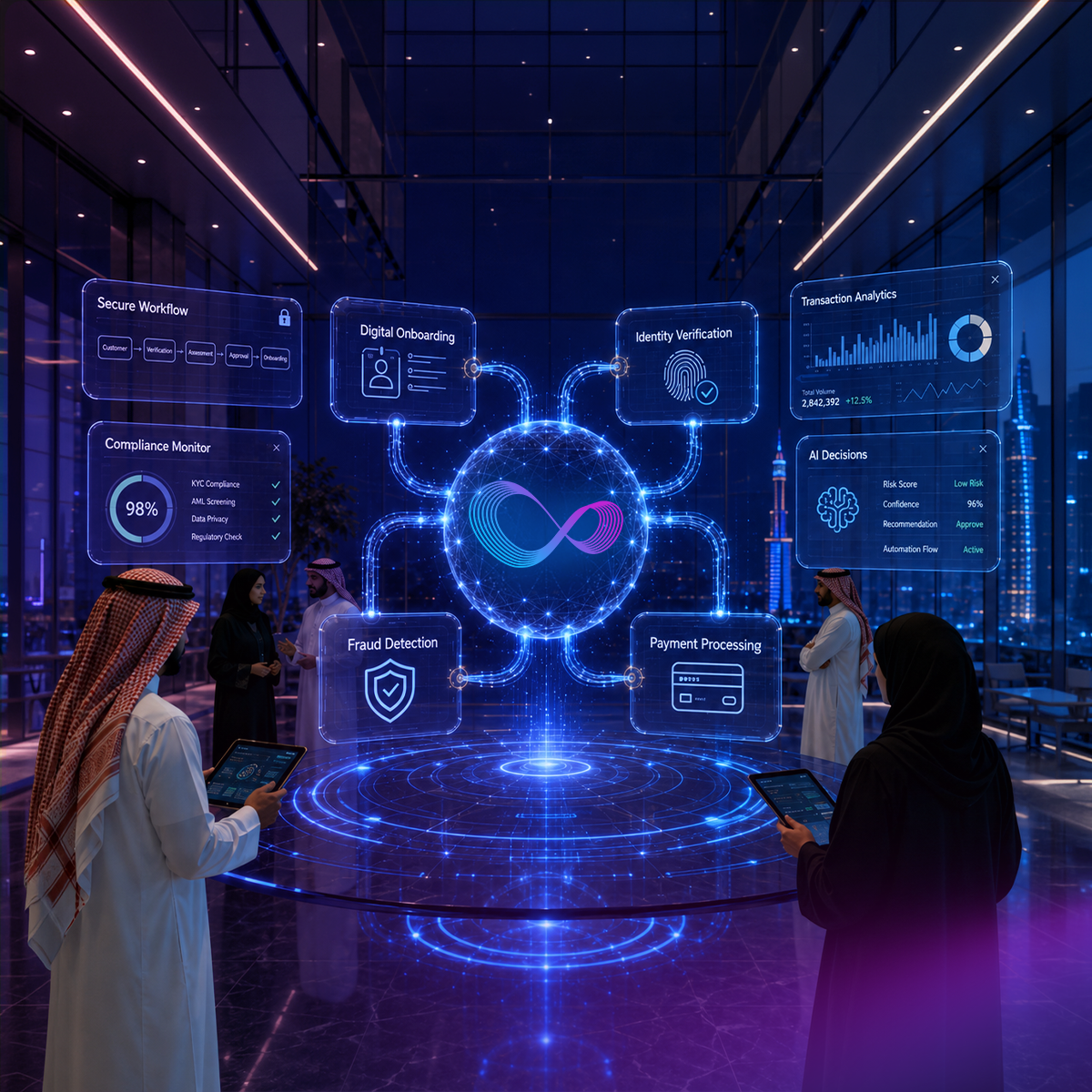
Discover how AI is transforming fintech customer experience in 2026 — from KYC and fraud alerts to Arabic-first support across MENA financial markets.

Most CX automation deployments stall before daily operational use. This guide covers 10 CX automation best practices, from escalation design to omnichannel continuity, with specific guidance for multilingual and Arabic-first contact centers.
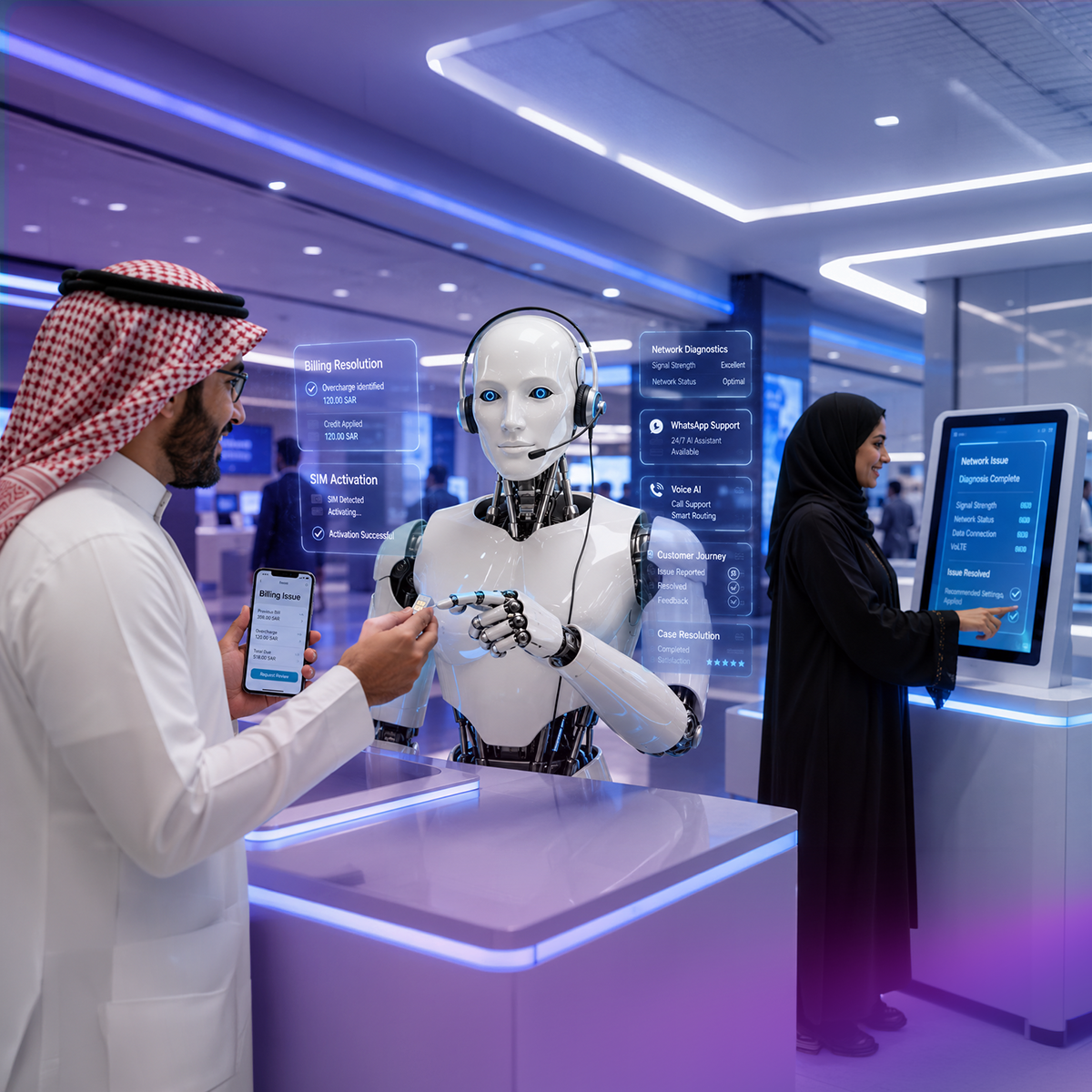
Explore how AI is transforming telecom customer experience. Compare top platforms including NICE CXone and Arabic-first alternatives built for MENA telecom operators.
Wittify.ai is a pioneering AI company specializing in the development of AI agents and applications aimed at automating and streamlining customer engagement activities and processes across various industries. Our mission is to empower businesses by enhancing their customer experience operational efficiency and enabling innovation through intelligent automation.

Information security management system
Business Continuity Management System
Quality Management System

Personal Data Protection Law Compliance
Personal Data Protection Law Compliance
General Data Protection Regulation Compliance


.png)


