


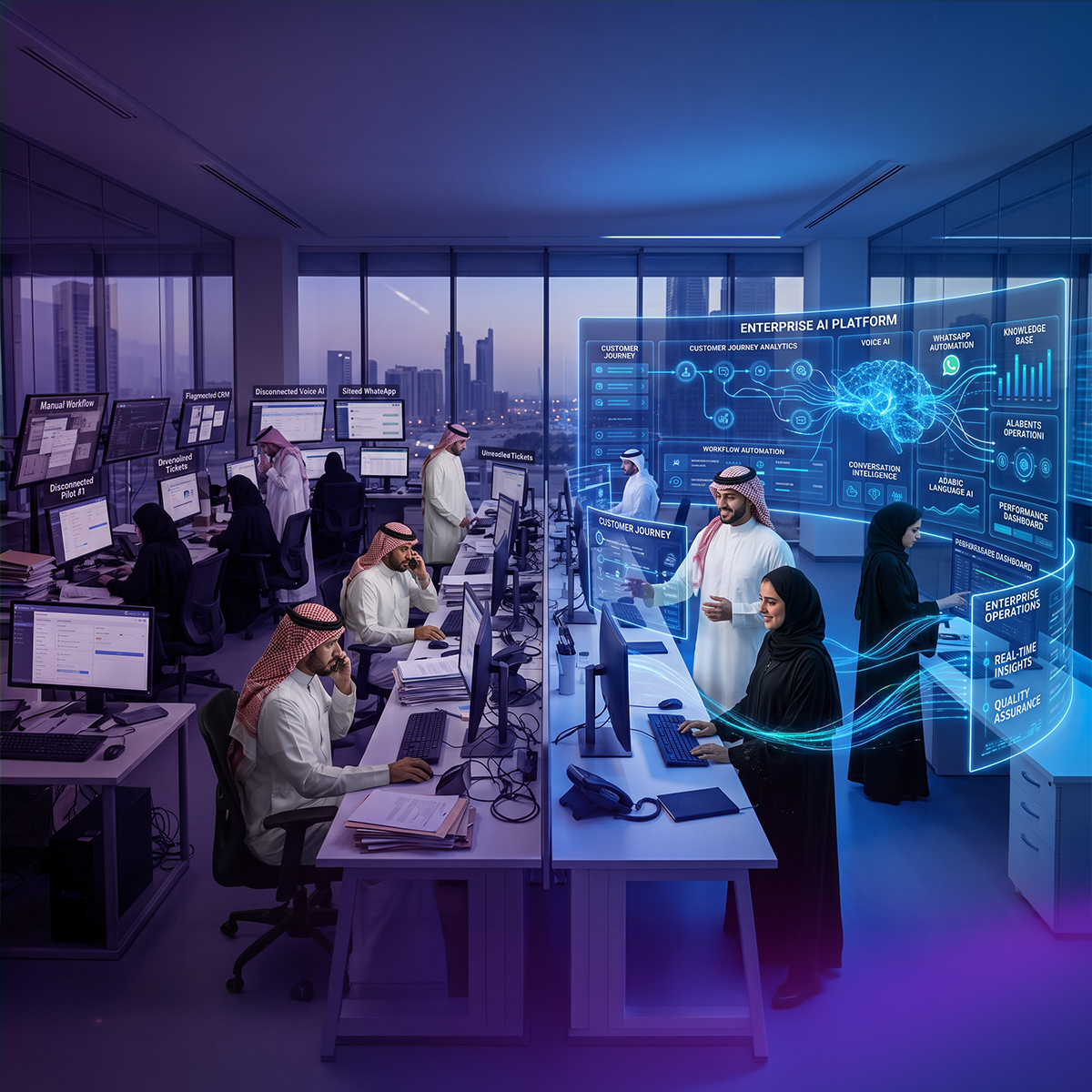
Most CX automation deployments stall before daily operational use. This guide covers 10 CX automation best practices, from escalation design to omnichannel continuity, with specific guidance for multilingual and Arabic-first contact centers.
McKinsey reported in 2026 that 78% of organizations use AI in at least one business function. Yet contact centers still struggle to turn AI pilots into daily operating systems. Verint reports that 66% of businesses needed more than six months to see ROI from recent AI implementations, while U.S. companies still lose roughly $75 billion annually to poor customer service, according to AmplifAI data cited by CMSWire. The gap is not usually technology access. It is operational design. This guide explains the CX automation best practices that separate deployments that work from deployments that quietly stall.
The most common mistake is confusing deployment with operationalization. Buying an AI customer service platform, launching a chatbot, or adding a voice AI agent does not mean the operating model has changed. CX automation succeeds only when it is embedded into routing, escalation, quality assurance, data governance, coaching, and continuous improvement.
According to Verint, 66% of businesses take more than six months to see ROI from AI implementation. That delay is rarely caused by weak AI alone. It is usually caused by unclear use-case prioritization, disconnected customer records, cost-only measurement, and models that are never retrained after launch.
For MENA enterprises, there is another failure pattern: English-first platforms are deployed into Arabic-speaking contact centers without dialect-aware intent detection. When a Gulf Arabic customer code-switches into English, or an Egyptian customer sends a WhatsApp voice note, a generic model can misread intent, sentiment, or urgency. The customer sees “automation.” The operations team sees broken containment, poor escalation, and inaccurate data.
The first question is not what can be automated. It is what should be automated first. High-volume, low-complexity interactions deliver the fastest ROI with the lowest customer risk: order status, appointment confirmation, password reset, balance inquiry, bill payment, service routing, and FAQ handling. Gartner forecasts that agentic AI will autonomously resolve 80% of common customer service issues by 2029, but that does not mean every journey should be automated on day one. Start with repeatable intents and let the model prove containment, accuracy, and escalation quality before expanding. In MENA contact centers, strong first candidates often include account balance inquiries, utility bill payments, appointment scheduling, and government service status checks.
Escalation is not a failure path. It is part of the product. If the bot transfers the customer but drops the context, the automation has failed even if it understood the original intent. Salesforce reports that 58% of agents at underperforming organizations toggle between multiple screens to find what they need. CX automation should remove that burden, not add another system to check. Every escalation should carry the transcript, detected intent, customer data already collected, sentiment signal, channel history, and reason for escalation. For Arabic-first deployments, code-switching can be an escalation signal. A customer moving from Arabic to English, or from formal Arabic into dialect, may be signaling confusion, urgency, or distrust.
Being available on phone, web chat, WhatsApp, email, and social media is not omnichannel CX. Omnichannel continuity means the customer can move between channels without repeating the problem. The architecture must read from and write to one customer interaction history. Zendesk reported in its 2026 CX Trends materials that consumers increasingly expect assistant-driven and connected service experiences. The practical lesson is simple: every channel must share context. Platforms purpose-built for WhatsApp, voice, and chat in a unified omnichannel stack — like Wittify — are particularly valuable in MENA markets where WhatsApp is a dominant customer channel. Omnichannel continuity has to be designed into the architecture, not patched in later.
Cost per interaction matters, but it cannot be the only success metric. Automation that lowers cost while increasing repeat contacts is not improving customer experience. The right measurement stack combines containment rate, first contact resolution, escalation rate, average handle time, CSAT, NPS, repeat contact rate, and cost per resolved issue. Aloware’s 2026 contact center AI analysis cites AI-handled voice interactions around $0.20 versus $5.50 for human-only calls, and agent assist increasing first contact resolution by about 14%. Those numbers matter only when resolution quality holds. Track leading indicators in weeks 1–4, then lagging customer metrics in months 3–6.
AI models degrade because products change, customer language changes, policies change, and new failure modes appear. A calendar-based retraining cycle is better than nothing, but trigger-based retraining is stronger. Retrain when intent precision drops by about 10%, when a new product creates a new intent cluster, when escalation spikes around a topic, or when agents frequently correct AI-generated answers. Arabic dialect models need especially close monitoring. Gulf, Egyptian, Levantine, and Maghrebi usage evolves quickly, especially in younger customer segments and WhatsApp voice messages. Feedback from agents must flow back into the model, because qualitative correction often reveals failure modes before dashboard metrics do.
Rules-based automation answers the same way every time. Generative AI can respond with context, tone, and customer history, but only if it is constrained properly. Use generative AI to personalize explanations, summarize history for agents, adapt tone to customer urgency, and recommend next-best actions such as a retention offer or callback. Do not let a general model improvise answers in regulated interactions. In Arabic CX, personalization includes register and cultural warmth. A formal MSA answer may be technically correct but emotionally distant for a Gulf customer on WhatsApp or a patient calling a public-sector healthcare line. Localized tone is not decoration. It is part of trust.
Automation is a capacity strategy, not a replacement ideology. It removes repetitive work so human agents can handle complex, emotional, and high-value interactions. Kayako’s 2026 CX trend analysis notes that only about half of CX leaders believe AI enhances the quality of human connection in service delivery. That is a warning. Customers want speed for routine issues, but they want humans for complaints, disputes, medical matters, and high-stakes financial decisions. The best systems disclose automation clearly, provide easy human escalation, and use agent assist to make human service better. In MENA public-sector and healthcare contact centers, voice-first escalation remains essential because not every citizen or patient will prefer text-first self-service.
CX automation handles identity data, payment data, complaint histories, recordings, transcripts, and sometimes medical or financial information. Security cannot be added after launch. It must be part of platform selection. For MENA enterprises, procurement may require Saudi PDPL alignment, UAE Federal Data Protection Law alignment, PCI DSS for payment handling, sector-specific banking or healthcare controls, and in-region data hosting. AI introduces additional risks: hallucinated answers, prompt injection, over-permissioned agents, and voice-cloning abuse. Gartner’s 2026 guidance on customer service AI also emphasizes the rise of agentic systems, which increases the need for governance and guardrails. Unified platforms reduce risk by limiting data movement between disconnected point solutions.
Multilingual support is not a translation layer. It affects ASR, intent detection, sentiment analysis, escalation rules, QA scoring, channel design, and retraining. Adding dialect support after deployment is architecturally harder than specifying it in the RFP. Few platforms outside purpose-built Arabic-native solutions support dialect-specific intent detection at the level MENA contact centers need. Wittify supports 25+ Arabic dialects across voice, chat, and WhatsApp, with dialect accuracy designed into the core NLP rather than layered over an English-trained base model. Before go-live, audit real interaction recordings by language and dialect, require benchmark tests on native speakers, and test WhatsApp voice notes, not only typed chat.
The safest path is a narrow pilot with a measurable operational target. Do not automate the full customer journey on the first release. Start with after-hours routing, appointment confirmation, password reset, bill inquiry, outage notification, or another high-volume use case. Define the green-light metrics before launch: containment rate, accuracy, escalation quality, CSAT, and resolution rate. Broader rollouts often take 6–12 months to prove value when the first pilot is unfocused. Focused pilots can show results in 3–6 months because the model, flow, and human escalation path are easier to tune. Use the pilot to build the internal evidence base for the next use case.
Telecom contact centers carry massive repetitive volume: billing questions, network complaints, SIM issues, plan changes, device support, and outage updates. CX automation works well when it separates routine intent from high-friction complaints. AI can identify intent from the first customer utterance, route the interaction correctly, summarize the issue for an agent, or resolve the request fully through self-service. During outages, proactive WhatsApp and SMS updates can prevent inbound spikes by telling customers what happened before they call. In GCC telecom environments, Wittify deployment teams commonly see prepaid balance inquiries, plan questions, and outage-status requests as early automation candidates because they are high volume, repetitive, and easy to measure.
Banking automation must start with compliance. Balance inquiries, card-status questions, fraud-alert routing, and transaction dispute intake are strong candidates, but every automated answer needs policy boundaries. Required disclosures, identity verification, prohibited statements, and payment-data handling must be built into the flow. AI-powered QA can monitor every interaction for missing disclosures instead of relying on small manual samples. In Saudi Arabia and the UAE, data protection obligations and sector-specific banking rules make local hosting, audit logs, and role-based access critical. The goal is not to automate judgment-heavy financial advice. The goal is to reduce repetitive intake, route risk correctly, and give agents better context when human review is required.
Healthcare CX automation should be narrow, high-value, and clinically safe. Appointment confirmation, reminder calls, pre-visit intake, post-visit follow-up, insurance document collection, and pharmacy pickup reminders are practical use cases. Clinical diagnosis, treatment guidance, or medication advice should remain under human clinical oversight. The escalation design matters more here than in most industries: a worried patient must reach a qualified human quickly, with context preserved. In GCC public health systems, Arabic dialect voice support is not optional because many patients will not use formal Arabic in urgent conversations. The best healthcare automation reduces administrative load while keeping clinical risk under human control.
Government contact centers serve citizens with different ages, literacy levels, languages, and channel preferences. That makes voice-first and dialect-aware automation essential. The best use cases include appointment booking, document status checks, fee payment guidance, service eligibility questions, and complaint intake. Automation must support accessibility, not only efficiency. Citizens should be able to use natural language, switch channels, and reach a human when the issue becomes complex. The UAE government’s public AI strategy highlights AI as a tool for improving service delivery, and regional public-sector investment in AI is accelerating. For MENA governments, customer experience automation is also a digital inclusion strategy.
The next phase is not a smarter FAQ bot. It is agentic AI that can complete multi-step tasks: change an appointment, update an address, open a complaint, schedule a technician, or trigger a retention workflow. Gartner predicts agentic AI will autonomously resolve 80% of common customer service issues by 2029. That shift raises the standard for governance. An AI that only answers questions can disappoint. An AI that takes action can create operational or regulatory risk if it is over-permissioned. Leaders should classify workflows into two groups: information delivery and system action. Agentic investment belongs first in the second group when the business process is stable and well governed.
Predictive CX uses signals before the customer asks for help: contract renewal, unresolved ticket, usage change, network outage, repeated failed payments, or policy expiry. The system can trigger a WhatsApp message, callback, retention offer, or escalation before the issue becomes a complaint. This only works when customer records are unified across channels. A predictive model cannot operate on fragmented data. In MENA, proactive outreach over WhatsApp is often more practical than email because customers already use the channel for service conversations. The best proactive automation reduces inbound volume by resolving anxiety before the customer enters the queue.
Voice AI is moving beyond IVR menus into natural conversations that hold context, detect intent, and complete tasks. The difference is meaningful: an IVR asks customers to fit a menu; voice AI adapts to the customer’s language. For Arabic-speaking markets, this depends on dialect-native speech recognition, text-to-speech, and intent classification. Reuters reported in 2026 that Adobe and Qualcomm partnered with HUMAIN on Arabic generative AI tools for the Middle East, reflecting a broader regional investment in Arabic AI infrastructure. That matters for CX because the quality floor for Arabic voice experiences is rising quickly. Organizations still using English-first voice AI for Arabic customers will feel that gap faster every year.
If your contact center serves Arabic-speaking or multilingual customers, the implementation considerations above apply directly to your environment. Wittify was built for this specific context — Arabic-first, dialect-aware, omnichannel. [Request a demo] to see how it performs on your actual interaction recordings.
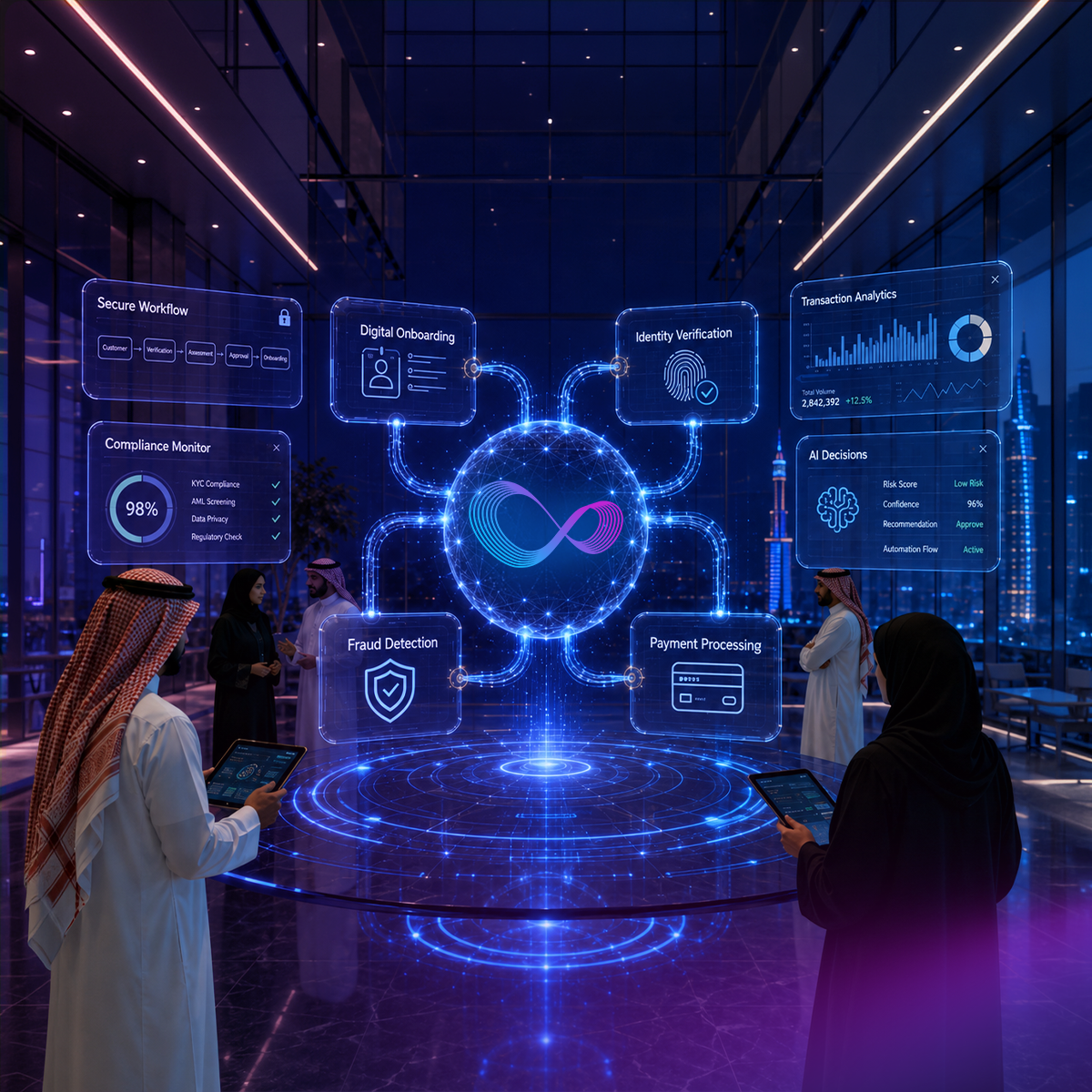
Discover how AI is transforming fintech customer experience in 2026 — from KYC and fraud alerts to Arabic-first support across MENA financial markets.
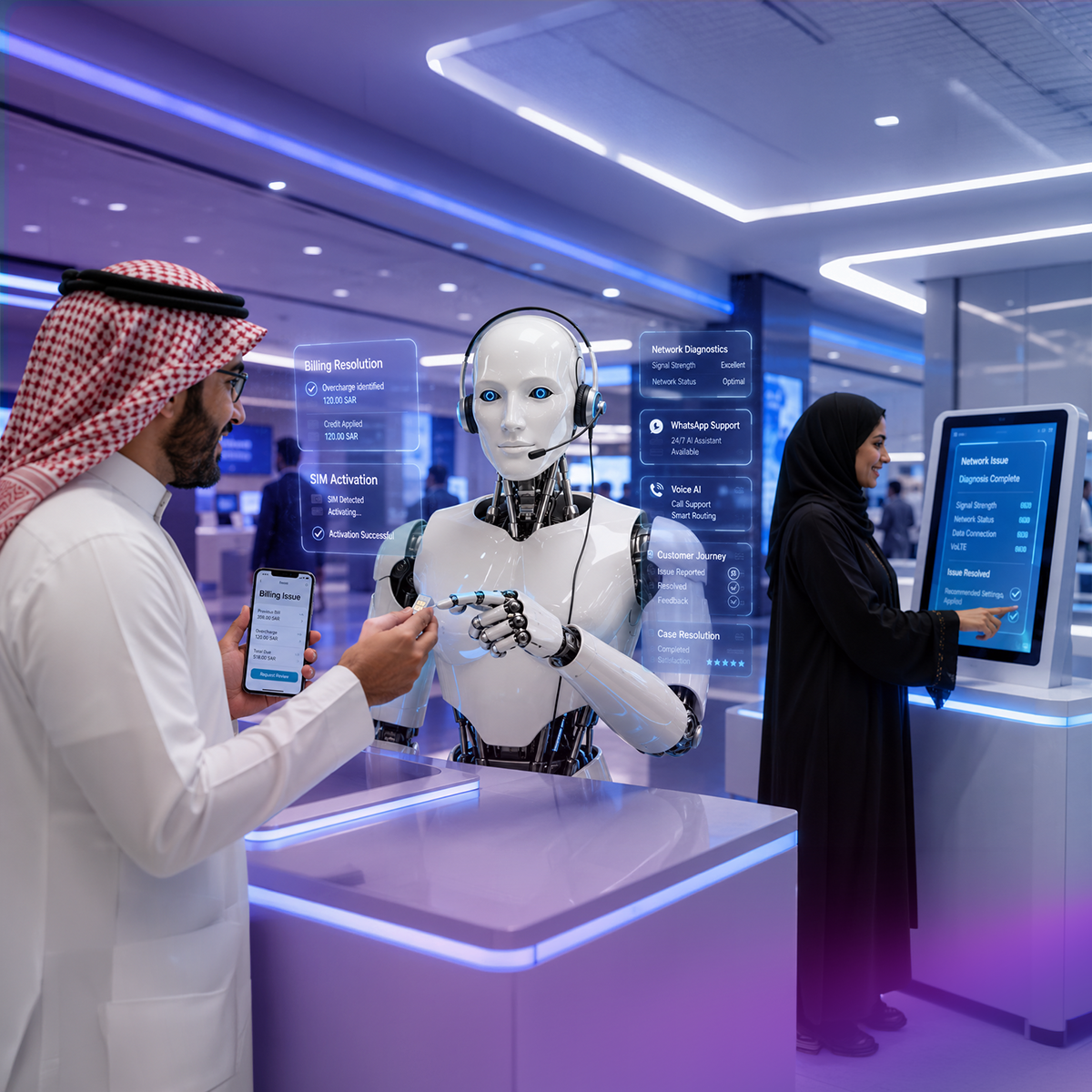
Explore how AI is transforming telecom customer experience. Compare top platforms including NICE CXone and Arabic-first alternatives built for MENA telecom operators.

Comparing contact center quality assurance platforms in 2026? This guide explains how AI-powered QA works, what global tools do well, and what English-first platforms often miss in Arabic and MENA environments.
Wittify.ai is a pioneering AI company specializing in the development of AI agents and applications aimed at automating and streamlining customer engagement activities and processes across various industries. Our mission is to empower businesses by enhancing their customer experience operational efficiency and enabling innovation through intelligent automation.

Information security management system
Business Continuity Management System
Quality Management System

Personal Data Protection Law Compliance
Personal Data Protection Law Compliance
General Data Protection Regulation Compliance


.png)


