


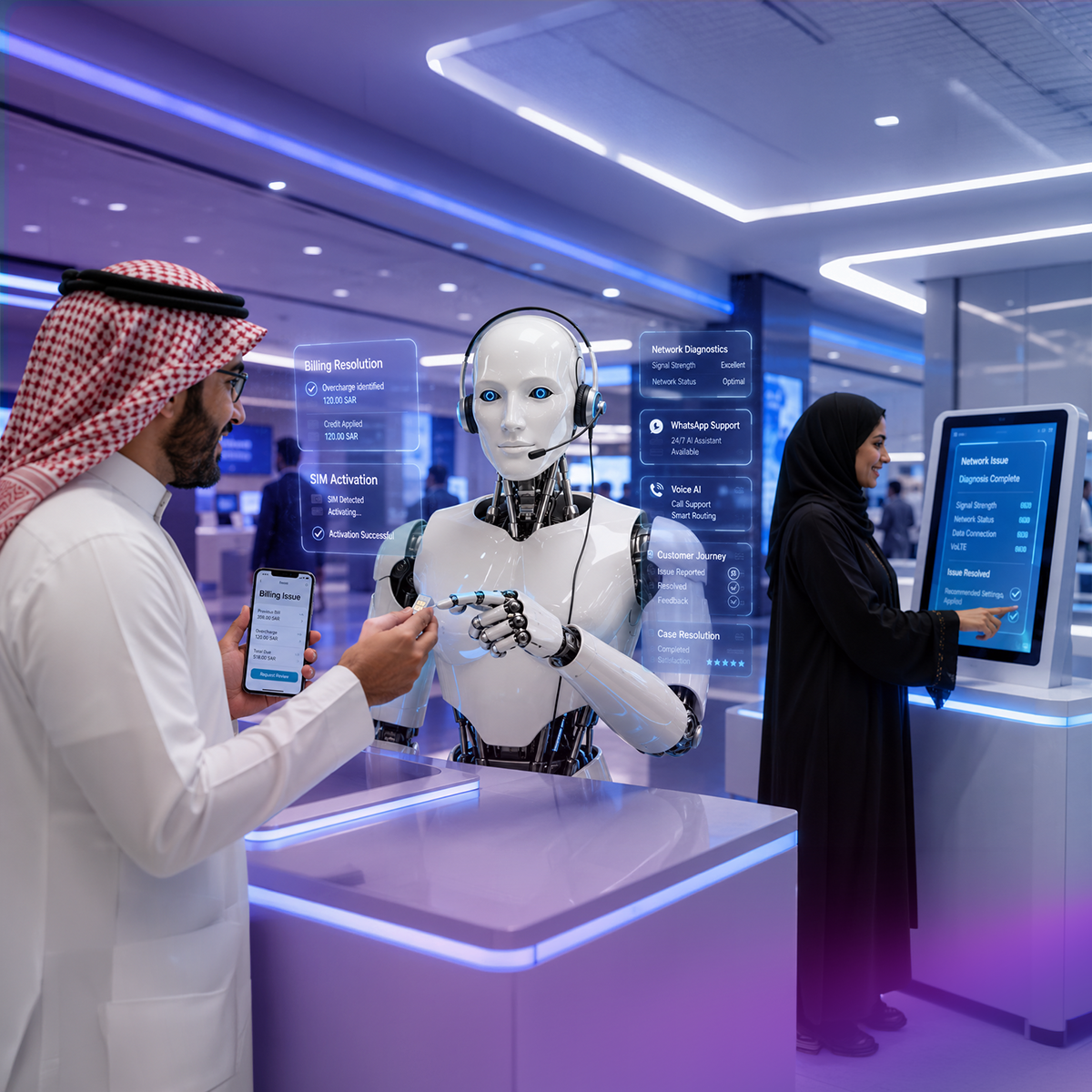
Telecom customer experience is difficult because the industry combines huge interaction volume with high emotional pressure. A billing error, a network outage, a failed SIM activation, or a slow complaint path can push a customer toward churn faster than in many other sectors.
Customer experience quality remains under pressure globally. Forrester reported that 25% of US brands declined in CX rankings in 2026 while only 7% improved, and ACSI’s 2026 telecom study noted that wireless customer satisfaction slipped as customers stayed highly sensitive to coverage, outages, and speed. Telecom operators therefore cannot treat service automation as a cost project only; it is a retention project.
The MENA environment adds another layer. A Gulf customer may use dialect, English product names, Arabic numerals, WhatsApp voice notes, and app chat within the same journey. A global English-first automation stack can route the ticket, but it may not understand the customer well enough to resolve it. For telecom operators serving Arabic-speaking markets, purpose-built MENA platforms like Wittify AI are designed to address that language and channel gap.
AI telecom CX automation is the use of artificial intelligence to handle, route, analyze, and improve customer interactions across telecom support channels. It combines conversational AI, voice AI, chatbots, speech analytics, workflow automation, and agent assist tools to resolve customer needs with minimal manual effort.
Traditional IVR asks customers to press fixed menu options. AI-powered IVR and virtual agents identify intent from natural language, check the customer’s account context, trigger the right workflow, and escalate only when the case needs a human. The goal is not to remove agents from every interaction. The goal is to remove repetitive work from agents and give customers faster paths to resolution.
AI for telecom customer experience usually covers four layers: intent recognition, channel orchestration, backend workflow execution, and performance analytics. In practice, that means the AI can understand “my internet is down,” check outage data, create a ticket, send a WhatsApp status update, and summarize the case for an agent if escalation is required.
Telecom customers rarely stay in one channel. A customer may start with WhatsApp, move to a phone call, receive an app notification, and then reply on social media. If each channel holds a separate record, the customer repeats the same issue and the operator pays for duplicated handling.
Omnichannel telecom customer support means the AI and the agent share the same context across voice, WhatsApp, app, chat, and social channels. This is especially important in MENA, where WhatsApp is often a primary customer service channel rather than an add-on.
NICE CXone is one of the largest cloud-based contact center platforms globally. NICE describes CXone as a customer experience AI platform that brings human and AI agents together across customer engagement, automation, workforce, analytics, and routing capabilities. For large telecom operators, the strength of NICE CXone is maturity: it has broad enterprise functionality, established implementation partners, and deep contact center feature coverage.
NICE AI capabilities include AI agents, AI routing, analytics, agent assist, and automated quality features. NICE also maintains Dojo as a learning hub for customers and partners, with training resources for administrators and managers. NICE ContactEngine, now part of NICE AI Agents for proactive engagement, focuses on orchestrated proactive conversations and customer journeys.
NICE publishes package pricing on its site. At the time of review, listed CXone packages included Omnichannel Suite at $110 per agent/month, Essential Suite at $135, Core Suite at $169, and Complete Suite at $209. Other third-party and industry sources reference NICE Mpower tiers that can reach higher per-agent levels depending on AI and enterprise modules.
For telecom operators, the public price is only a starting point. Final cost depends on channels, workforce management, analytics, AI modules, storage, recording, implementation, integrations, and professional services. Large BSS/OSS and CRM integrations can materially change the total cost of ownership.
NICE CXone is strong for global enterprise environments that need routing complexity, workforce engagement, analytics, and mature contact center operations. It is a serious platform and should be evaluated carefully by multinational telecom groups.
The MENA question is more specific: can the platform handle spoken Gulf, Egyptian, Levantine, and Maghrebi Arabic with the accuracy needed for self-service, speech analytics, and QA scoring? NICE has broad AI and automation capability, but MENA telecom operators should test Arabic dialect performance with real recordings before selecting any global platform. Arabic language support in general is not the same as dialect-native telecom automation.
Wittify AI is built around the operational reality of Arabic-speaking customer bases. For MENA telecom operators, that matters because support conversations are rarely clean Modern Standard Arabic. They are spoken dialects, mixed with English plan names, account terms, acronyms, and local service expressions.
Wittify’s platform positioning includes voice AI agents, AI chatbots, WhatsApp automation, Speech-to-Text, Text-to-Speech, and Contact Center QA across voice, chat, phone, WhatsApp, and social channels. It is designed for Arabic dialect support across 25+ dialects, including Gulf, Levantine, Egyptian, and Maghrebi variants, according to the product brief. That makes it relevant for telecom billing support, outage notification, SIM activation, retention conversations, and quality monitoring.
The strongest use case is not a single chatbot. It is an Arabic-first telecom CX automation layer that sits across voice, WhatsApp, and agent workflows while feeding QA and analytics back into the operation. Trade-off: MENA specialization is the advantage, but global telecom groups should still validate integrations with their exact BSS/OSS, CRM, telephony, and data residency requirements before rollout.
Soft CTA: See how Wittify AI handles telecom CX at scale — request a demo using real Arabic telecom scenarios.
NICE CXone is a mature enterprise contact center platform for organizations that need ACD routing, workforce management, analytics, AI self-service, quality management, and large-scale reporting in one ecosystem. It is a strong fit for global telecom operators with complex routing and workforce requirements.
Its pricing and module structure require careful scoping, particularly when AI, analytics, WFM, recording, and professional services are included. For MENA telecom deployments, the key due diligence item is dialect-native Arabic performance. NICE may be a strong global platform, but Arabic-heavy deployments should be tested on real regional calls, WhatsApp messages, and code-switching scenarios.
Genesys Cloud CX is a strong omnichannel contact center platform with voice, digital, messaging, routing, workforce, analytics, and AI features. Public Genesys pricing starts at $75 per user/month for the CX 1 tier, with higher tiers adding omnichannel and workforce capabilities.
Genesys is a credible alternative to NICE for large telecom organizations that value channel breadth and integration ecosystems. For MENA operators, the same language question applies: Arabic support is available in parts of the ecosystem, but dialect-native telecom automation should be validated with actual local speech data and workflows.
Google Contact Center AI is strongest as an AI augmentation layer. Its virtual agents and Agent Assist features are designed to help resolve support cases and provide in-the-moment guidance to human agents. This can be useful when an operator wants to modernize specific use cases without replacing the entire contact center stack.
Google CCAI can support sophisticated knowledge and agent assist scenarios, but it often requires integration work and ecosystem design. For Arabic telecom use cases, the operator should test intent detection, dialect handling, and escalation logic with local telecom conversations rather than relying on generic language claims.
Amazon Connect is a cloud contact center service with consumption-based pricing and tight integration with the AWS ecosystem. Amazon Lex provides conversational AI capabilities for self-service flows. This combination works well for teams that already build heavily on AWS and have engineering resources to configure, integrate, and optimize the stack.
The trade-off is ownership. AWS-native flexibility can be powerful, but it may require more technical effort than packaged CX platforms. MENA telecom operators should assess Arabic dialect needs, WhatsApp integration, telephony requirements, and the total engineering cost of building the full customer journey.
The right platform depends on market reality. Global telecom operators may prioritize routing complexity, workforce management, and global reporting. MENA operators should place Arabic dialect support, WhatsApp automation, voice AI quality, local data requirements, and speed of deployment near the top of the checklist.
Telecom churn is expensive because operators pay heavily to acquire customers and then lose value when support failures push them away. AI contributes to churn reduction through speed, proactivity, and personalization.
McKinsey describes AI-enabled telco service as a “next-best-experience” engine that connects data, analytics, decisioning, and channel execution. In practical terms, that means a telco can detect a churn-risk signal, decide whether a retention conversation is needed, and deliver that interaction through the most appropriate channel.
AI reduces churn in three ways. First, it improves resolution speed by answering routine billing and network questions without queues. Second, it enables proactive engagement, such as outage updates before customers call. Third, it supports context-aware retention offers based on usage, complaint history, and contract stage.Wittify helped a Gulf telecom company reduce its billing-related customer service calls by 35% during the first 90 days and raise its self-containment rate to 78%.
Key dependencies include BSS/OSS connectivity, CRM data access, telephony integration, WhatsApp Business API readiness, security review, and data residency approval. A no-code layer can accelerate business-side changes, but enterprise telecom deployment still requires technical governance.
AI telecom CX automation can reduce cost, improve resolution speed, increase channel consistency, and support churn prevention. But the platform must match the market. For MENA operators, Arabic dialect handling, WhatsApp automation, voice AI quality, and local security expectations are not secondary requirements. They are deployment requirements.
If your telecom operation serves Arabic-speaking customers at scale, test every platform with real calls, real WhatsApp flows, real billing issues, and real dialects before signing. See how Wittify AI’s Arabic-first conversational platform handles telecom CX across voice, WhatsApp, and the channels your customers already use — request a demo.
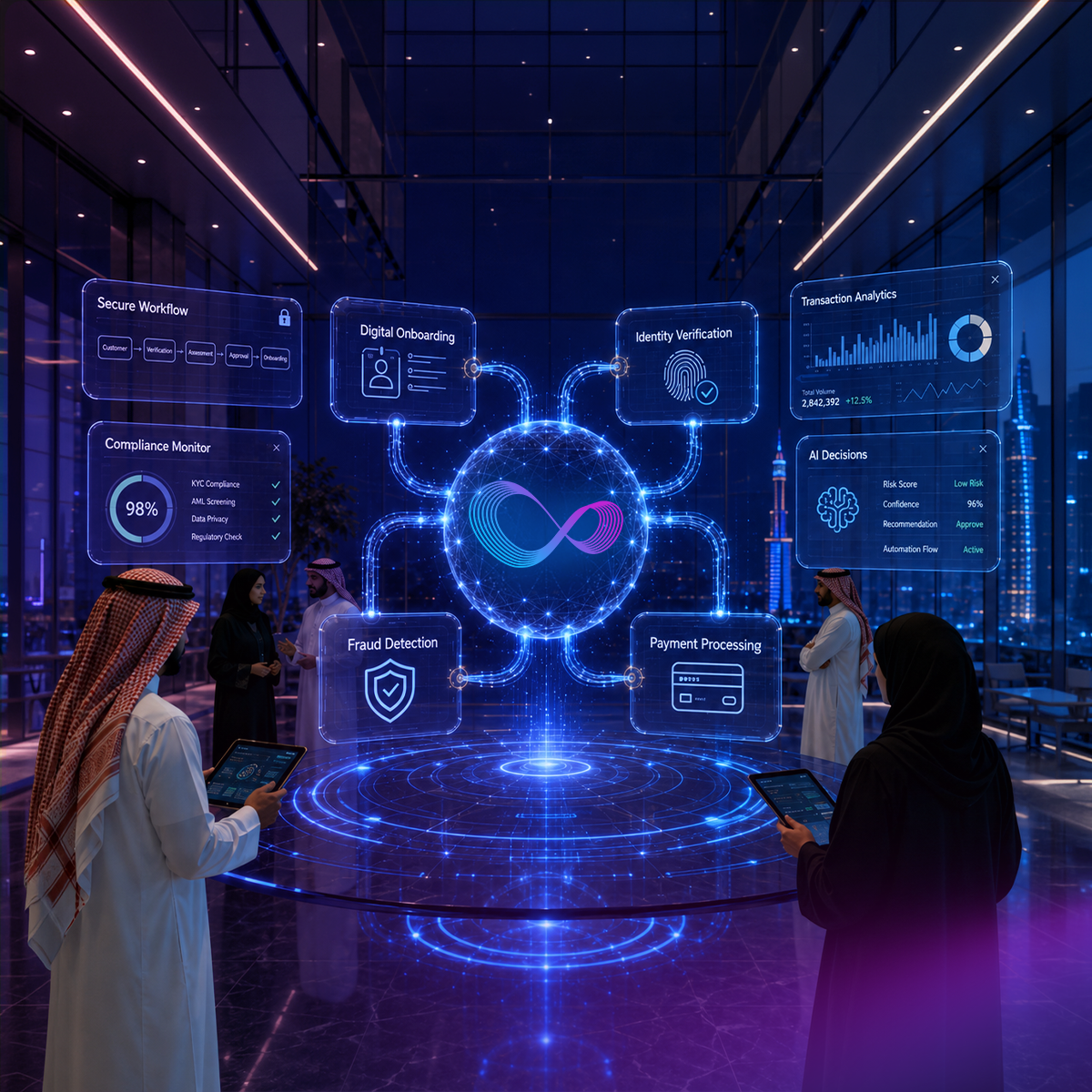
Discover how AI is transforming fintech customer experience in 2026 — from KYC and fraud alerts to Arabic-first support across MENA financial markets.
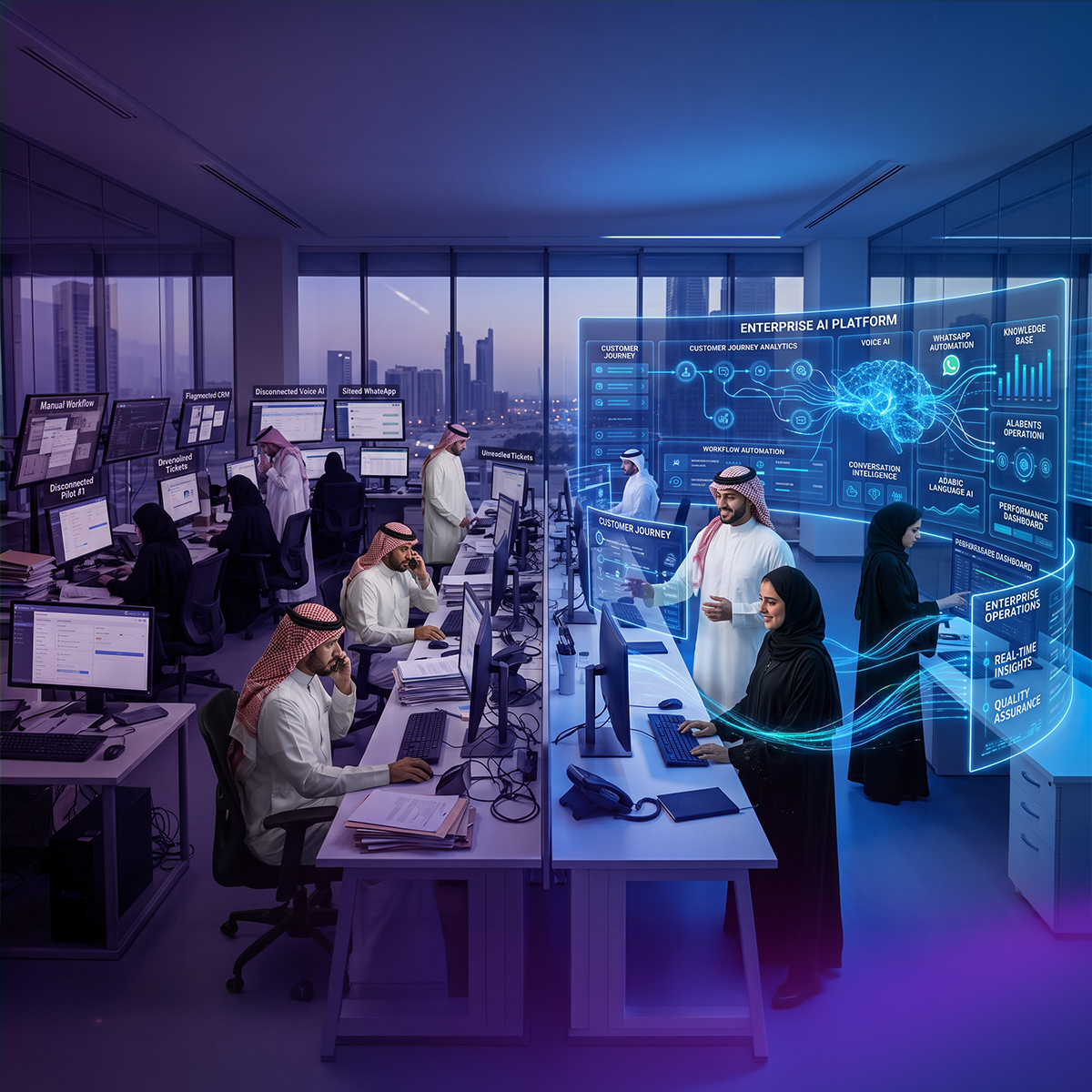
Most CX automation deployments stall before daily operational use. This guide covers 10 CX automation best practices, from escalation design to omnichannel continuity, with specific guidance for multilingual and Arabic-first contact centers.

Comparing contact center quality assurance platforms in 2026? This guide explains how AI-powered QA works, what global tools do well, and what English-first platforms often miss in Arabic and MENA environments.
Wittify.ai is a pioneering AI company specializing in the development of AI agents and applications aimed at automating and streamlining customer engagement activities and processes across various industries. Our mission is to empower businesses by enhancing their customer experience operational efficiency and enabling innovation through intelligent automation.

Information security management system
Business Continuity Management System
Quality Management System

Personal Data Protection Law Compliance
Personal Data Protection Law Compliance
General Data Protection Regulation Compliance


.png)


