



Saudi Arabia's Council of Ministers officially declared 2026 the Year of Artificial Intelligence, backed by national policy, infrastructure investment, and workforce programs. Here's what enterprise leaders across the GCC need to understand and act on right now.
On March 9, 2026, Saudi Arabia made a declaration that resonates across every boardroom in the region. The Council of Ministers, chaired by Crown Prince and Prime Minister HRH Mohammed bin Salman, formally designated 2026 as the Year of Artificial Intelligence (#عام_الذكاء_الاصطناعي). The resolution was not ceremonial. It arrived alongside 13 binding cabinet decisions spanning infrastructure, workforce development, governance, and investment. For enterprise decision-makers across the GCC, this moment resets the fundamental question: not "should we adopt AI?" but "how quickly can we scale it?"
Saudi Arabia's AI journey did not begin in 2026. The Saudi Data and AI Authority (SDAIA) was established in 2019 with a clear mission: position the Kingdom among the top AI nations in the world. The National Strategy for Data and Artificial Intelligence (NSDAI) was built on six pillars: ambition, competencies, policies, investment, innovation, and ecosystem development, and it has been quietly delivering results at scale ever since.
What makes 2026 different is the pace of acceleration. Many of the original 2030 targets have already been surpassed ahead of schedule. Saudi Arabia now ranks first globally in public sector AI adoption, with approximately two-thirds of government workers actively using AI tools in their daily workflows. The SAMAI initiative has trained over 1.1 million Saudi citizens in AI competencies, and SAMAI 2 is now rolling out across 11 government ministries, making AI proficiency a baseline expectation for every public sector employee.
This is the environment enterprises must now operate within. The Kingdom is not waiting.
The 2026 declaration is not just a title. It is supported by programs that are already active:
Together, these pillars signal that AI infrastructure in Saudi Arabia is not being built for experimentation. It is being built for permanence.
When a government designates an entire year to a technology and backs it with legislation, infrastructure spending, and a national training mandate, the private sector receives an unambiguous signal: the operating environment has fundamentally changed.
Enterprises in financial services, healthcare, retail, logistics, and government-linked sectors are now working inside an AI-first regulatory and cultural climate. Customer expectations have shifted upward. Regulators expect auditability. Employees expect AI to assist and empower them, not sideline them.
This is precisely why the difference between a basic AI add-on and a genuine enterprise AI strategy has never mattered more. As we explored in our guide to enterprise conversational AI readiness in the GCC, organizations that bolt on a chatbot without an underlying strategy tend to hit a ceiling quickly: high volumes, inconsistent quality, no governance, and eroding customer trust. The Year of AI demands more.
One dimension consistently underweighted in regional AI discussions is language. Saudi Arabia is an Arabic-speaking nation with Gulf dialect nuances that most globally built AI systems handle inadequately. Enterprise AI solutions designed Arabic-first, trained to understand Gulf Arabic naturally, handle formal queries in Modern Standard Arabic, and navigate code-switching between Arabic and English, deliver meaningfully higher containment rates, better customer satisfaction scores, and fewer costly escalations.
In the Year of AI, this is no longer a differentiator. It is a baseline requirement for any enterprise serious about customer experience in the Kingdom.
Saudi Arabia's Year of AI represents a rare alignment of political will, institutional infrastructure, public trust, and economic momentum. For enterprises that move now, the upside is significant: favorable government procurement, access to AI-ready talent pipelines, partnerships with SDAIA-aligned programs, and early positioning in a market that is actively rewarding AI adoption.
The enterprises that define 2026 will not be the ones that followed the announcement from a distance. They will be the ones that treated it as a starting gun.
Ready to build an AI-powered customer experience strategy designed for the GCC? Discover how Wittify.ai helps enterprises across the region automate intelligently, in Arabic and English.
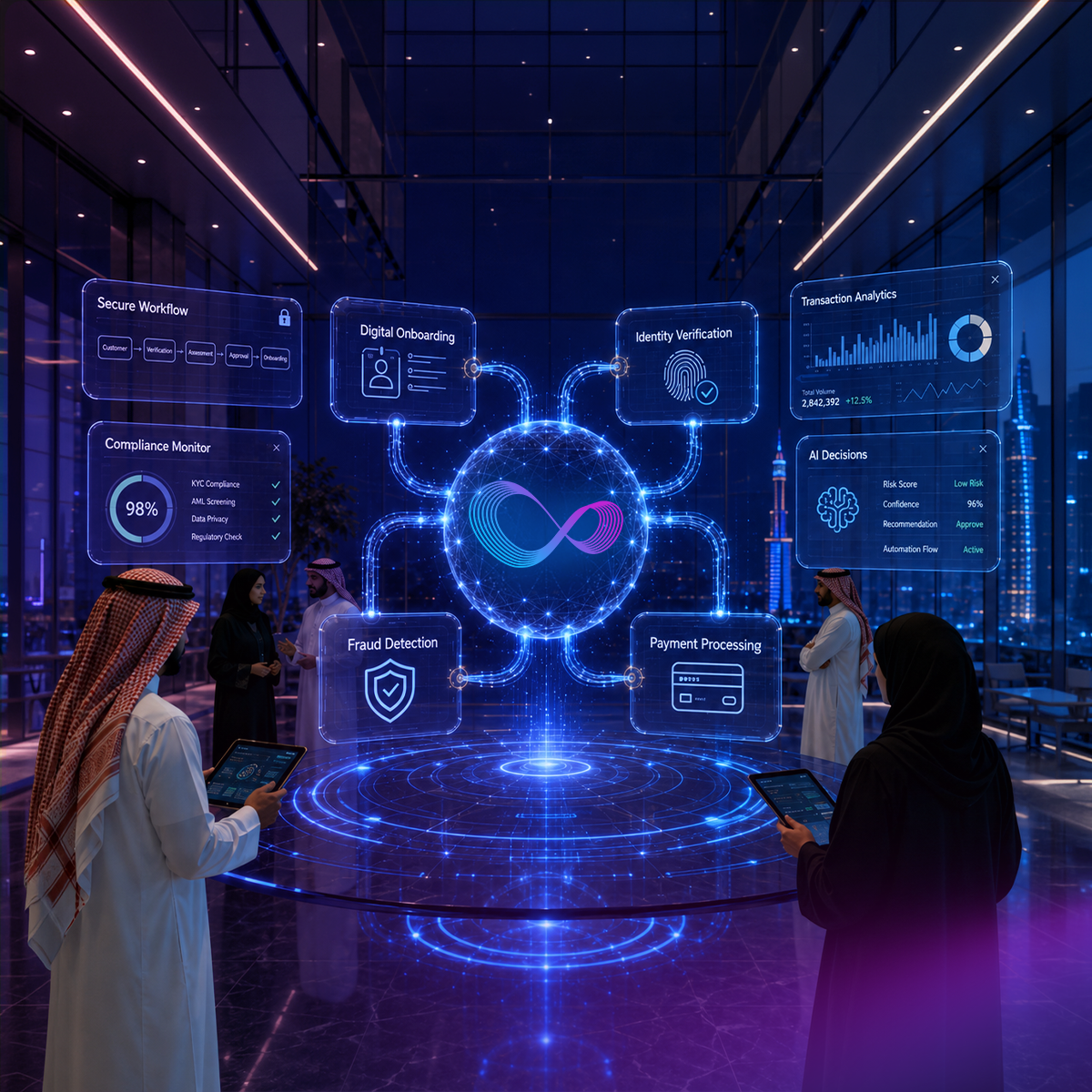
Discover how AI is transforming fintech customer experience in 2026 — from KYC and fraud alerts to Arabic-first support across MENA financial markets.

Most CX automation deployments stall before daily operational use. This guide covers 10 CX automation best practices, from escalation design to omnichannel continuity, with specific guidance for multilingual and Arabic-first contact centers.
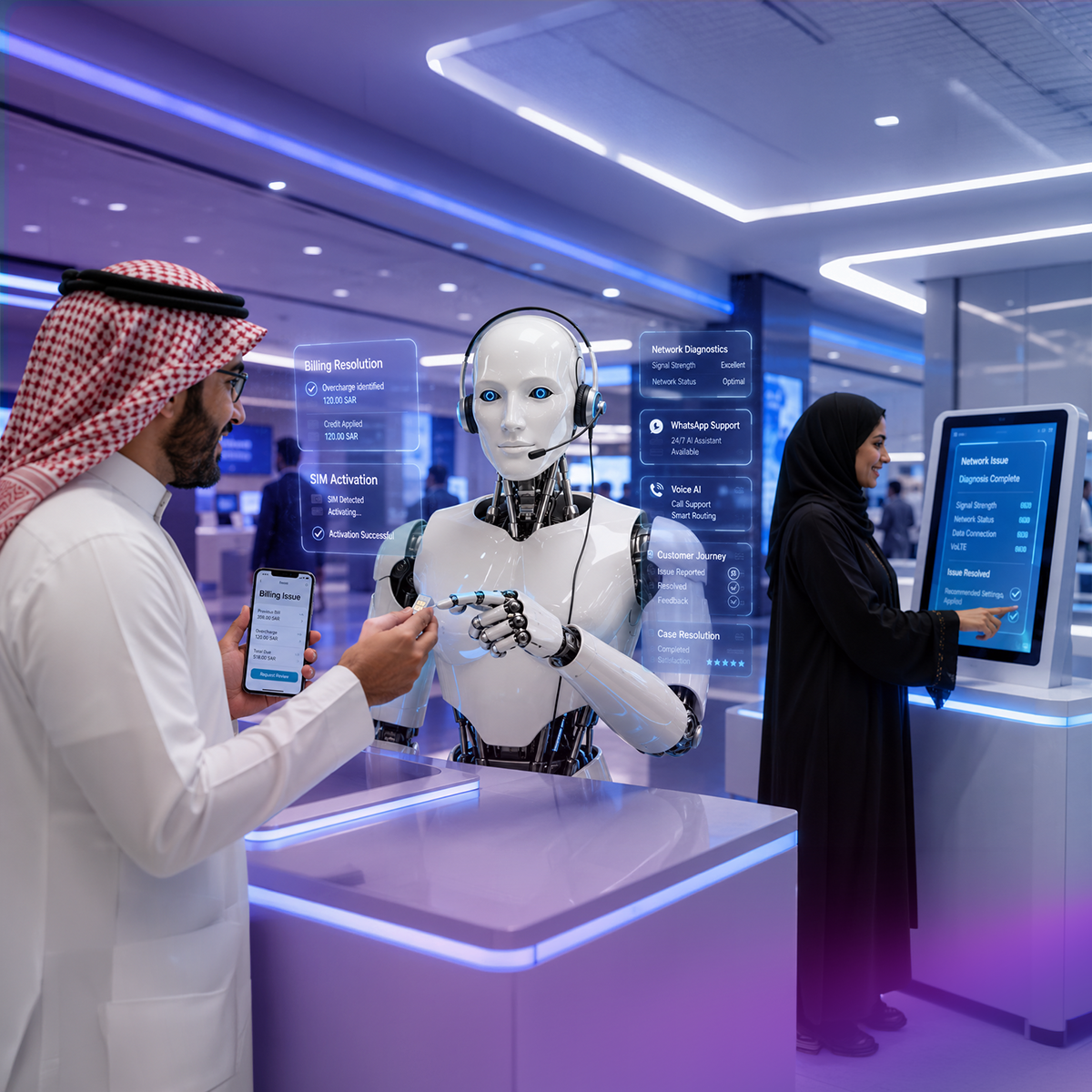
Explore how AI is transforming telecom customer experience. Compare top platforms including NICE CXone and Arabic-first alternatives built for MENA telecom operators.
Wittify.ai is a pioneering AI company specializing in the development of AI agents and applications aimed at automating and streamlining customer engagement activities and processes across various industries. Our mission is to empower businesses by enhancing their customer experience operational efficiency and enabling innovation through intelligent automation.

Information security management system
Business Continuity Management System
Quality Management System

Personal Data Protection Law Compliance
Personal Data Protection Law Compliance
General Data Protection Regulation Compliance


.png)


