


.png)
Discover what defines the best Arabic Voice AI and Chat Agents in 2026, from dialect-first voice to agentic execution and sovereign compliance.
The industry standard for Arabic AI has shifted toward Agentic AI, systems that do not simply converse, but execute tasks reliably at scale.
For enterprises and government entities across the GCC and MENA, the best Arabic Voice and Chat AI platforms are defined by three non-negotiable requirements:
This review is criteria-driven, based on real enterprise and government deployment requirements, not marketing claims, demos, or feature checklists.
Most global AI platforms claim “Arabic support,” but in practice they are trained primarily on Modern Standard Arabic (MSA).
This approach fails in real-world voice interactions.
Field deployments consistently show that over 90% of spoken Arabic interactions in the GCC occur in local dialects, not formal MSA. When a voice agent responds in textbook Arabic, users experience an immediate trust gap, the interaction feels artificial, scripted, and culturally misaligned.
To be viable in 2026, Arabic Voice AI must be Dialect-First, not dialect-added.
Key requirements include:
This is why searches such as “Arabic Voice AI for GCC”, “Khaleeji AI Assistant”, and “Dialect-aware Chatbots” have grown rapidly since 2024.
And we have discussed previously: Why Arabic is Not Just Another Language For Voice AI.
In 2026, the answer is unequivocally no.
High-performing enterprises and government entities deploy unified agentic systems with cross-channel session memory.
If a citizen starts an inquiry on WhatsApp and later calls a hotline, the AI must retain context. Without this continuity, users are forced to repeat information, leading to frustration, longer resolution times, and loss of trust.
Unified systems enable:
This architectural shift is now a baseline expectation, not an advanced feature.
Rather than ranking vendors, a more accurate evaluation compares architectural approaches.
In voice interactions, latency is the primary trust metric.
If an AI takes longer than one second to respond, users subconsciously perceive it as a technical failure—leading to interruptions or call abandonment.
End-to-end voice latency includes:
For natural conversations, this total must remain below 800 milliseconds.
Achieving this requires:
Enterprises are no longer deploying chatbots to answer FAQs.
They are deploying AI agents that perform work.
A production-grade Arabic AI agent in 2026 must support:
Conversation alone is no longer the goal, resolution is.
For Government Experience (GX) and regulated enterprises, security is foundational.
With the enforcement of regulations such as Saudi PDPL and UAE data laws, Arabic AI platforms must support:
Without these capabilities, large-scale deployment is often legally impossible.
Before selecting any platform, organizations should validate that it provides:
This checklist separates experimental tools from production-ready systems.
Wittify was designed to address the gaps most “Arabic-supported” platforms overlook:
Rather than optimizing for demos, the platform is optimized for real production environments in the GCC and MENA.
By 2026, the definition of the “best” Arabic Voice and Chat AI is clear:
Arabic-first, agentic platforms like Wittify, are setting the standard for enterprise and government AI deployments, where quality, compliance, and reliability are non-negotiable.
Does Wittify support the different Arabic dialects?
Yes. Wittify supports 25+ Arabic sub-dialects, including Najdi, Emirati, Kuwaiti, Qatari, Egyptian and many more.
Can the AI handle Arabic-English code-switching?
Yes. Agents are optimized for natural bilingual speech common in the GCC.
What is the typical deployment timeline?
With pre-configured RAG and integrations, production deployment can begin in minutes.
.jpeg)
Most contact centers still rely on sample-based QA. The real issue is not speed. It is visibility across every interaction, channel, and agent. Sample-based QA no longer gives contact centers the visibility they need. Here is why modern teams need broader insight across human and AI-led interactions.
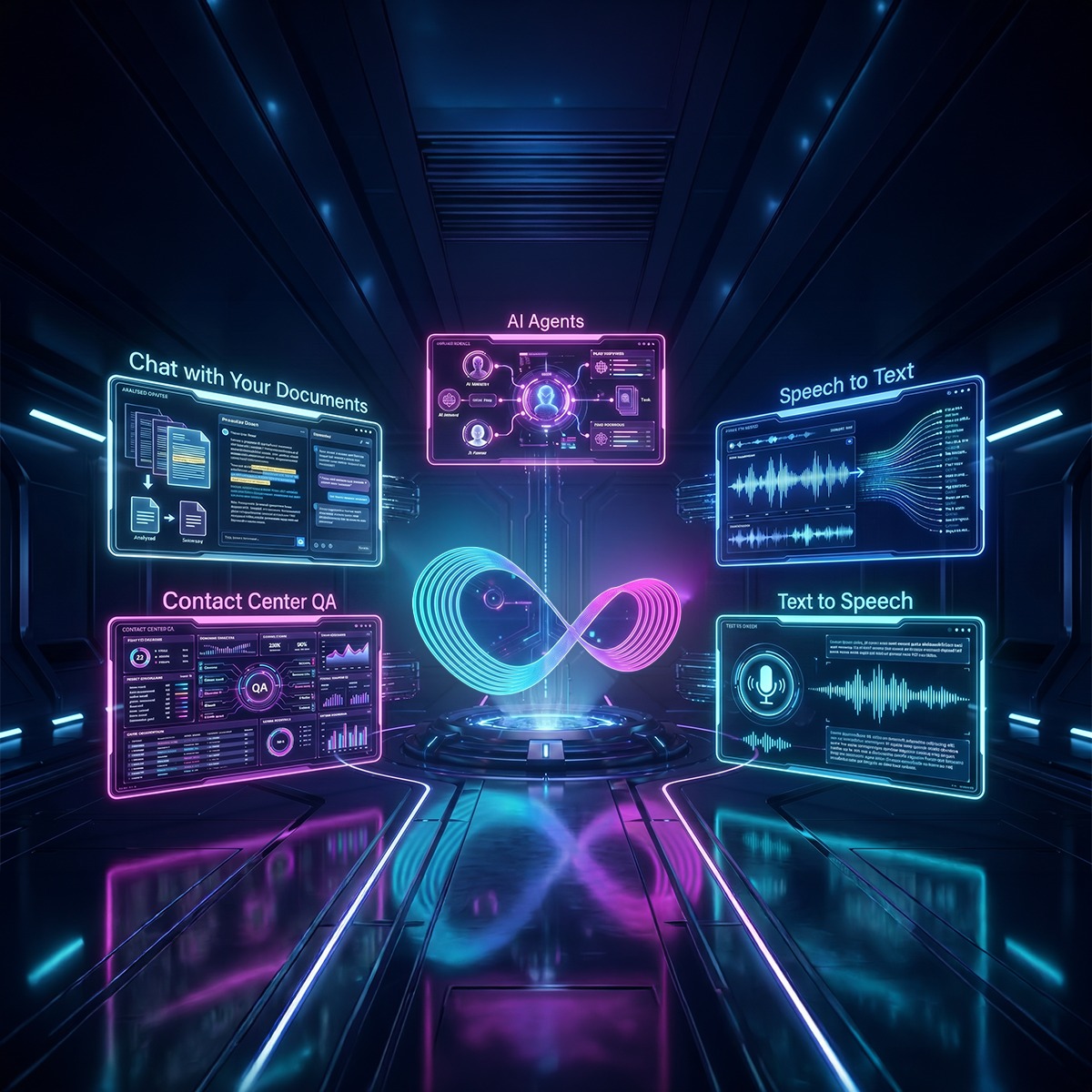
Wittify began with AI Agents that could act. Today, they listen across Arabic dialects, sound human, review 100% of conversations, and cite every answer from your data. Here’s how Wittify’s five products evolved into an accountable enterprise AI stack.
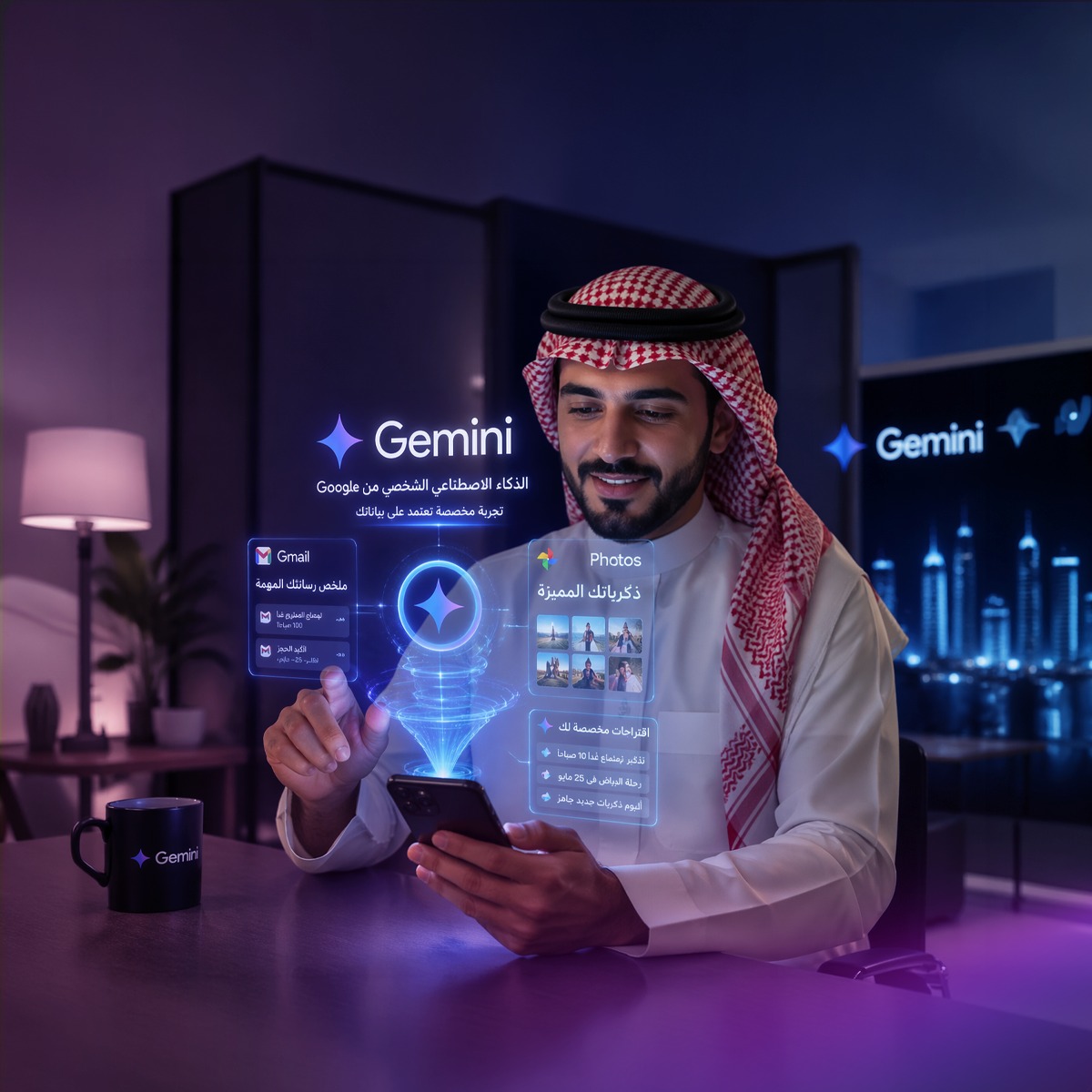
Google has launched Gemini's Personal Intelligence feature across the Arab world, connecting Gmail, Photos, and personal apps for tailored AI experiences. Here's what this means for Arabic-speaking users and enterprise conversational AI in the MENA region.
Wittify.ai is a pioneering AI company specializing in the development of AI agents and applications aimed at automating and streamlining customer engagement activities and processes across various industries. Our mission is to empower businesses by enhancing their customer experience operational efficiency and enabling innovation through intelligent automation.

Information security management system
Business Continuity Management System
Quality Management System

Personal Data Protection Law Compliance
Personal Data Protection Law Compliance
General Data Protection Regulation Compliance


.png)


