



Are you looking for a No Code AI Agent Builder that handles voice calls fluently? Discover how to replace outdated IVR systems with intelligent agents that handle interruptions, speak native dialects, and manage phone support seamlessly using Wittify.
In the fast-paced world of customer experience (CX), the phone call remains king. Despite the explosion of chatbots, social messaging, and email, industry statistics consistently show that over 60% of customers still prefer to pick up the phone when they have a complex, urgent, or sensitive issue.
However, for most businesses, the "Phone Channel" is an operational nightmare. It implies high hiring costs, long hold times, and the universally hated IVR systems ("Press 1 for Sales, Press 2 for Support...") that frustrate customers before they even speak to a human.
The question keeping CTOs and Marketing Managers up at night is: "Does a No Code AI Agent Builder exist that can handle voice calls with the skill and empathy of a human?"
The short answer is: Yes.But the longer, more critical answer is that not all platforms are created equal—especially when it comes to handling accents, dialects, and the natural flow of conversation.
In this article, we will explore how No-Code technology has revolutionized telephony, why text-first bots fail at voice, and why Wittify is the premier solution for building a Voice AI Agent that actually speaks your language.
The market is flooded with platforms claiming to be the ultimate No Code AI Agent Builder. However, most of them started as text-based tools. When the demand for voice grew, they simply slapped a generic Text-to-Speech (TTS) plugin on top of their chat engine.
This "patchwork" approach creates three fatal flaws for any business that tries to use them for phone support:
In a text chat, a 3-second delay is acceptable. On the phone, 3 seconds of dead air feels like an eternity.Standard builders often struggle to process the audio, send it to the LLM, and generate a response quickly enough. This results in awkward pauses that make the customer ask, "Hello? Are you still there?"—killing the illusion of intelligence instantly.
Human conversation is messy. We interrupt each other constantly.If a customer interrupts a standard bot to say, "Wait, no, I meant next Tuesday," most bots will stubbornly keep talking until they finish their scripted sentence. This makes the agent feel stupid and robotic. A true Voice AI must have "active listening" capabilities to stop speaking the millisecond the user chimes in.
Standard platforms often rely on generic, Western-centric voice models. When these models try to pronounce local names, cities in the Middle East, or specific dialect slang, they sound unnatural and disconnected from the brand's identity.
If you are evaluating a No Code AI Agent Builder for phone support, do not settle for basic features. Ensure your platform meets these technical standards:
Your customers don't speak like news anchors. A Saudi customer might use local slang; an Egyptian customer has a distinct cadence. The builder must support specific regional dialects, not just "Standard Arabic" or "Global English."
The agent must possess "barge-in" technology. It needs to listen while it is speaking. If the customer interrupts, the agent must stop, process the new input, and pivot the conversation immediately.
Does the builder provide you with a real phone number? Can it forward calls to a human agent if the AI gets stuck? Can it send an SMS recap after the call hangs up? These are operational necessities, not luxuries.
The response time should be sub-second. The conversation must flow like a game of tennis, back and forth without lag.
Can the voice agent actually do things? It’s not enough to talk; it needs to be able to check your database for order status or write a booking into your calendar during the call.
Wittify stands out as one of the few platforms globally—and the leader regionally—engineered as a "Voice-First" No Code AI Agent Builder.
Here is what differentiates a Voice Agent built on Wittify:
If you are wondering, "How does this fit into my business?", here are three common scenarios our clients are automating right now using Wittify, without writing a single line of code:
Instead of a receptionist putting people on hold:
When a lead calls a property listing number:
The beauty of the "No-Code" revolution is that you don't need a telecommunications engineer to set this up. Here is the workflow:
[Read our Detailed Guide: From Zero to Your First No-Code Agent in One Hour])
The answer to "Does a No Code AI Agent Builder support Voice?" is a resounding YES. It is no longer futuristic technology; it is a present-day reality that smart businesses are using to slash operational costs by 40% while improving customer satisfaction.
Don't let your customers listen to elevator music on hold anymore. Replace that boring IVR with an intelligent agent that speaks their language, understands their needs, and solves their problems instantly.
Are you ready to hear your brand's new voice?
Start building your first Voice AI Agent for free today on Wittify.
.jpeg)
Most contact centers still rely on sample-based QA. The real issue is not speed. It is visibility across every interaction, channel, and agent. Sample-based QA no longer gives contact centers the visibility they need. Here is why modern teams need broader insight across human and AI-led interactions.
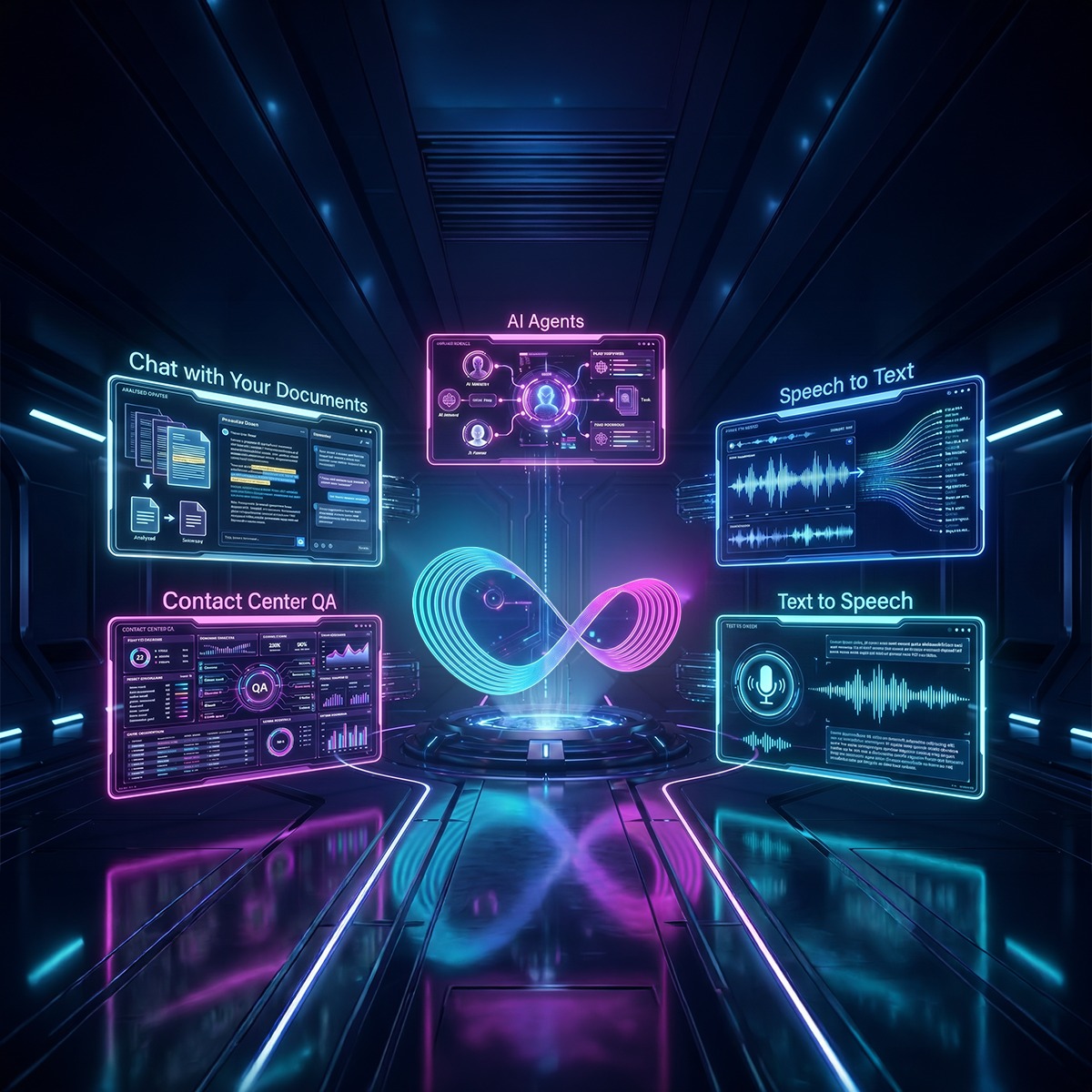
Wittify began with AI Agents that could act. Today, they listen across Arabic dialects, sound human, review 100% of conversations, and cite every answer from your data. Here’s how Wittify’s five products evolved into an accountable enterprise AI stack.

Google has launched Gemini's Personal Intelligence feature across the Arab world, connecting Gmail, Photos, and personal apps for tailored AI experiences. Here's what this means for Arabic-speaking users and enterprise conversational AI in the MENA region.
Wittify.ai is a pioneering AI company specializing in the development of AI agents and applications aimed at automating and streamlining customer engagement activities and processes across various industries. Our mission is to empower businesses by enhancing their customer experience operational efficiency and enabling innovation through intelligent automation.

Information security management system
Business Continuity Management System
Quality Management System

Personal Data Protection Law Compliance
Personal Data Protection Law Compliance
General Data Protection Regulation Compliance


.png)


