


Middle Eastern and North African (MENA) CX has entered an era where the traditional support mechanisms can no longer be adequate to meet the "omnichannel imperative" requirement. The CX experts in the MENA region are faced with a complicated combination of challenges: large number of support cases, fragmented digital channel ecosystem, and the technical challenge of supporting more than 25 different Arabic dialects. As customer experience satisfaction around the globe becomes under stress, with evidence from Forrester pointing out that 25% of brands lost CX rankings in 2026, it is essential for telecom and enterprises in the MENA region to view service automation as a key approach to retain customers. Wittify, the CX automation platform, has started addressing this need.
No-Code CX automation refers to a technology-centric approach that enables non-technical business employees to build, launch, and manage their customer journeys via drag-and-drop interfaces. This helps eliminate the need for coding and thus enables CX professionals to quickly automate all of their CX initiatives through voice, WhatsApp, and other social media channels.
Organizations are increasingly moving beyond traditional chatbots toward AI Agents that can understand intent, execute workflows, and complete customer requests across business systems. Learn more in our guide to AI Agents vs Chatbots.
The difference between No-Code and Low-Code is essential from the perspective of operational efficiency. The former is meant to enable so-called "citizen developers" to reach an "IT-free" configuration. In contrast, the latter still requires a developer to "pop open the hood" and write the code despite being visually oriented. In case of MENA businesses looking for speedy solutions, no-code is the best option.
The 4 Types of Automation
This part outlines the levels at which the technical spectrum of automation currently exists. Where modern CX automation stands among them would help with making a strategic investment decision.
It is important to realize while employing a CX strategy that there are multiple levels of automation technologies. These include the following:
Modern CX automation excels in the Integrated or Intelligent level of automation where it orchestrates entire customer experience journey from awareness to retention.
Even though rule-based automation works perfectly for simple and repetitive tasks such as order confirmations, it does not deal with the subtlety of human communication. It is based on predefined keywords and set dialogue patterns that might lead to "loops of frustration" if a client goes off course.
AI-based automation, on the other hand, employs Natural Language Processing (NLP) technology in order to recognize intent and sentiment in any spontaneous language usage. For example, the platform could process a customer complaint about a network outage expressed in a local vernacular, compare this information with backend data, and initiate an automatic update response. At the same time, the best platforms utilize both approaches: they apply rules for business logic and AI for the natural dialogue.
This part explains how no-code automation works within the wide spectrum of communication channels in the MENA region. This section also touches upon certain strengths and benchmarks of every channel.
In this section, we will analyze strategies for the application of automation, reviewing the platforms according to their capability of managing the particularities of the MENA market.
Choosing the right platform is critical for successful automation. Explore our guide on selecting the best No-Code AI Agent Builder for business growth.
Arabic customer automation requires specialized language models that understand regional dialects, cultural context, and local expressions. Learn more about Arabic Voice AI and dialect challenges.
This list serves as a guideline that will help you check if the vendor you have selected is able to fulfill the required specifications.
Organizations relying on AI solutions are also advised to adopt global governance frameworks—such as the NIST AI Risk Management Framework (AI RMF)—to ensure the responsible and trustworthy use of AI systems.
In MENA, a support interaction is hardly ever purely Modern Standard Arabic. It usually consists of dialects in oral form, alongside with product names in English, Arabic numerals and local terminology for services. From Wittify’s internal analysis, it looks like applying an English-first automation stack in such an environment would allow tickets to be processed correctly but would fail at solving the problem of a client due to lack of linguistic context. Moreover, regional laws such as KSA PDPL and UAE PDPL have specific requirements for handling and storing data, which makes compliance a must.
This part clarifies the financial model and shows an example of its application in practice in the region.
The pricing for no-code CX platform may be based on three main models: per agent ($110-$200+ per month), usage-based (per message/task) or custom enterprise contract. The important factors that determine the cost are the amount of channels, quality of AI models and integrations.
There is clear business value of using these technologies. According to McKinsey, automated customer interaction may help reduce costs of services up to 30%. According to Gartner, conversational AI will save $80 billion in labor costs in contact centers worldwide by 2026.
One of the leading telecom companies in the Gulf has adopted the Arabic-first automation layer offered by Wittify for high-volume billing and network questions. Based on information shared internally by Wittify, the company experienced a 35% reduction in the number of calls for customer support related to billing during the first 90 days due to the use of dialect-native voice and WhatsApp Automation. Additionally, the system had a self-contained rate of 78%.
Calculate your savings → Try the CX Automation ROI Calculator.
This strategic timeline emphasizes a "crawl, walk, run" approach to minimize risk.
See how Wittify matches this checklist for Arabic, omnichannel teams → Schedule your personalized demo today.
The adoption of the Arabic No-Code CX Automation will be the major competitive edge that MENA businesses will enjoy in 2026. By bypassing the challenges involved in coding and taking up dialect-specific and multichannel approaches, brands will be able to give consumers the immediate and individualized service that they want. Wittify will play an instrumental role in the process, making it possible for business leaders to turn their support function into an important driver of customer loyalty and growth.
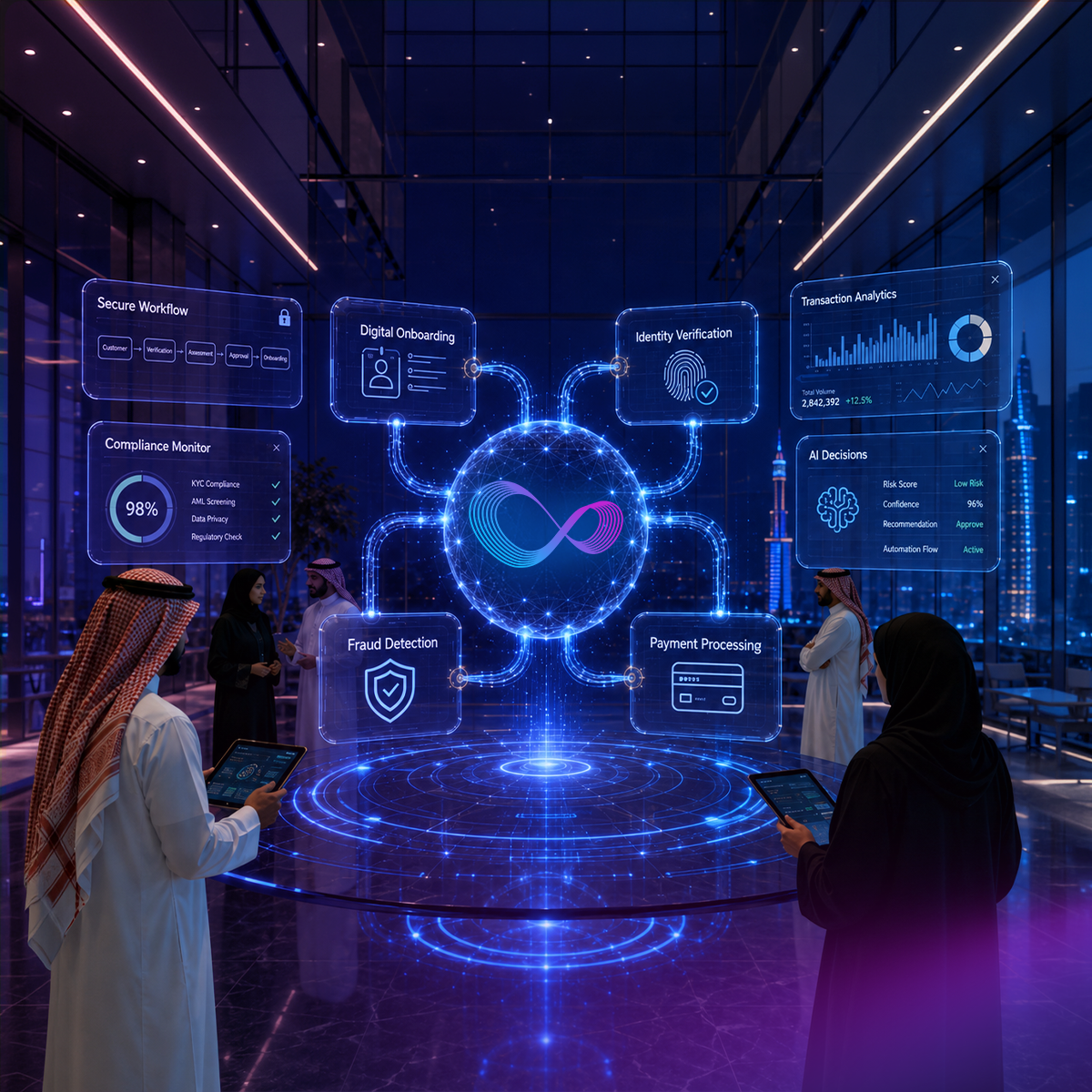
Discover how AI is transforming fintech customer experience in 2026 — from KYC and fraud alerts to Arabic-first support across MENA financial markets.
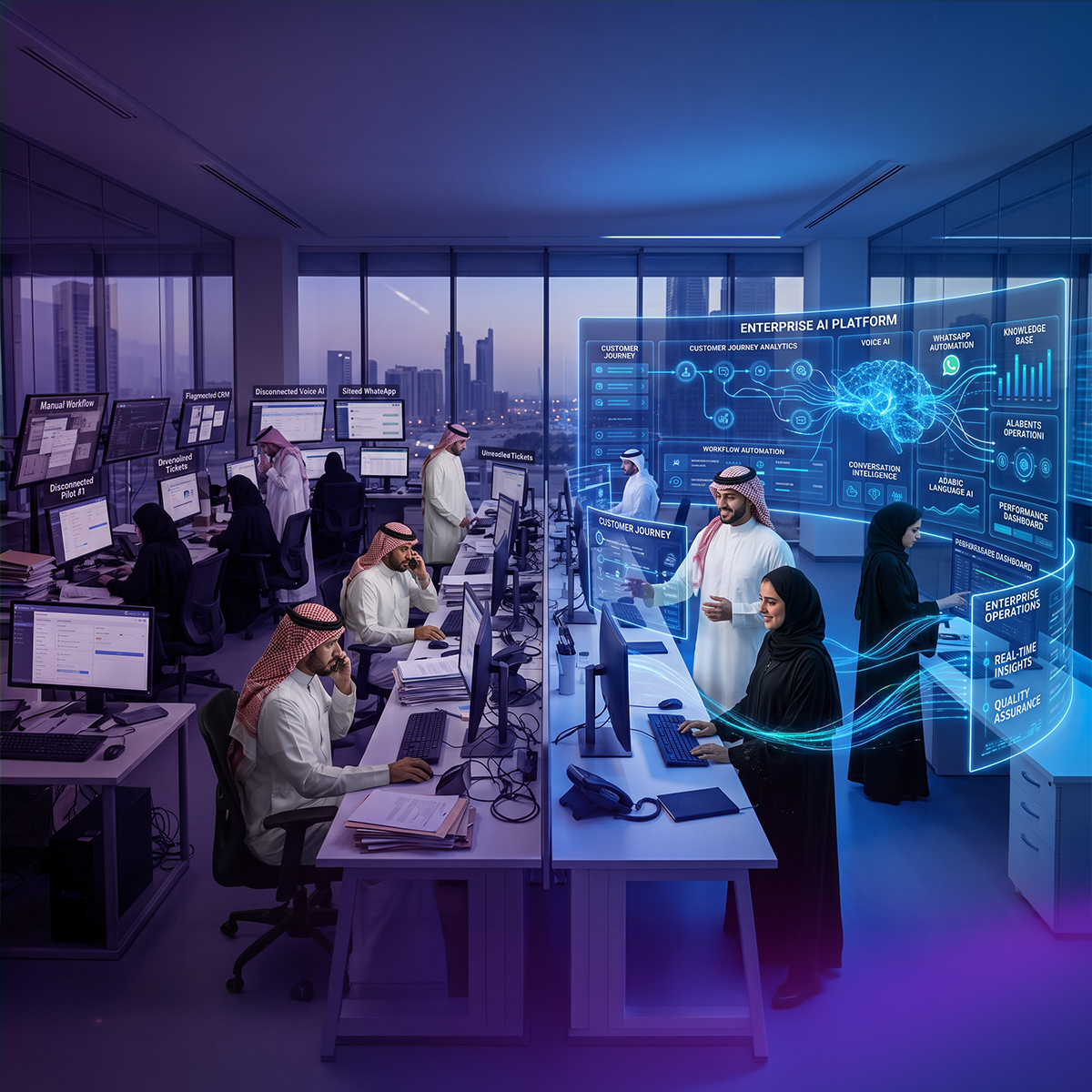
Most CX automation deployments stall before daily operational use. This guide covers 10 CX automation best practices, from escalation design to omnichannel continuity, with specific guidance for multilingual and Arabic-first contact centers.
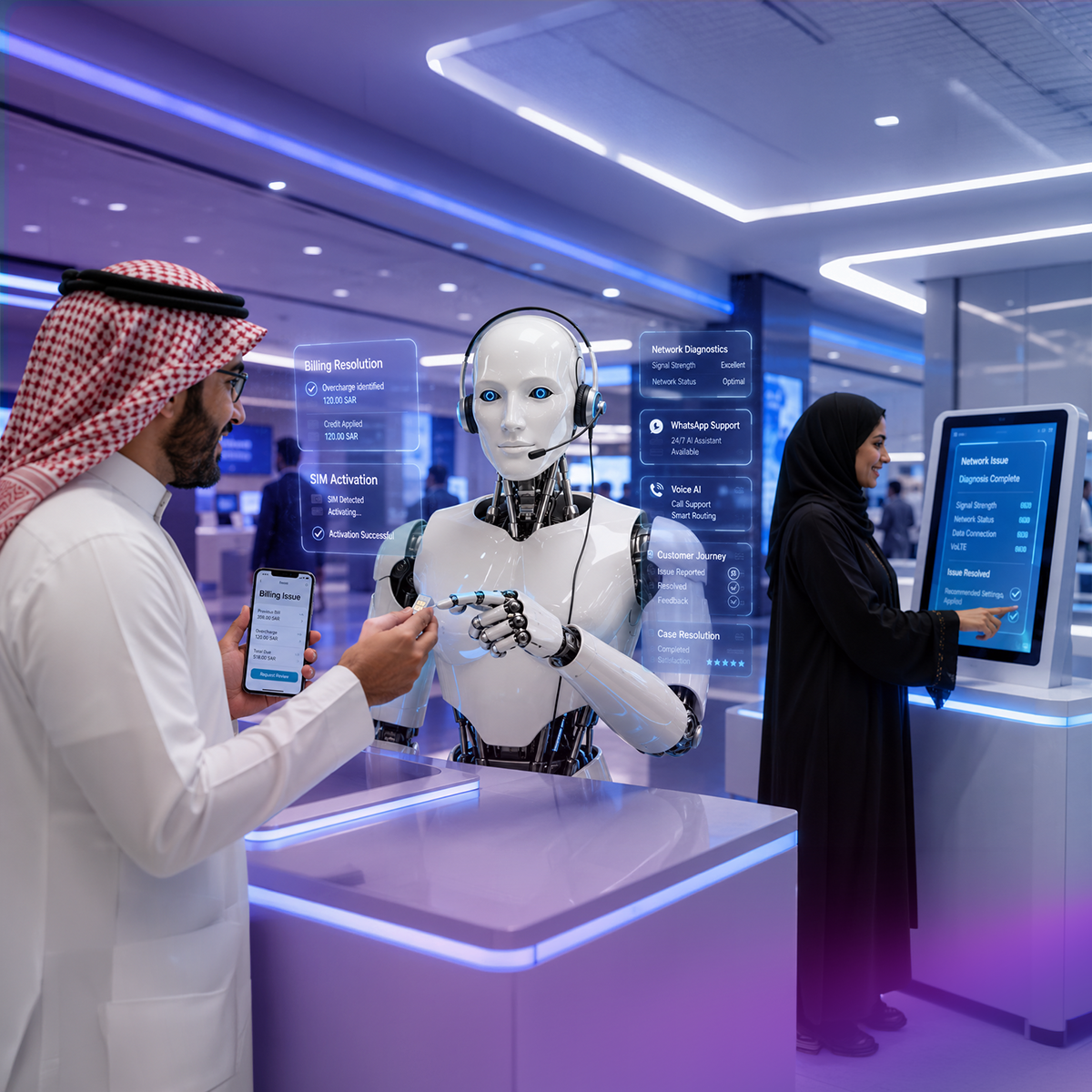
Explore how AI is transforming telecom customer experience. Compare top platforms including NICE CXone and Arabic-first alternatives built for MENA telecom operators.
Wittify.ai is a pioneering AI company specializing in the development of AI agents and applications aimed at automating and streamlining customer engagement activities and processes across various industries. Our mission is to empower businesses by enhancing their customer experience operational efficiency and enabling innovation through intelligent automation.

Information security management system
Business Continuity Management System
Quality Management System

Personal Data Protection Law Compliance
Personal Data Protection Law Compliance
General Data Protection Regulation Compliance


.png)


