


.png)
Stop building bots that frustrate your customers. The 2026 Guide to Smart Agents explains how to create a digital workforce that thinks, acts, and protects your brand—without writing a single line of code.
We’ve all been there.
You land on a website, click the chat icon hoping for a quick answer, and a "bot" greets you. You type a simple question, and it spits back a menu that has nothing to do with what you asked. You try rephrasing; it apologizes and loops you back to the menu.
Frustrated, you type "human" or "agent." Eventually, you close the tab and go to a competitor.
For the last decade, this was the standard. We called them "chatbots," but really, they were just FAQ pages dressed up as a conversation. They were rigid, reactive, and honestly, not very smart.
But as we settle into 2026, that era is officially over.
The technology has made a massive leap. We aren’t building basic chatbots anymore. We are building "Smart Agents." If your company still runs on those old, rigid scripts, you are missing opportunities and revenue every single day.
At Wittify, we are leading this shift. This guide is your roadmap to understanding the difference, why it matters, and how to build a digital workforce that actually works.
To see where we’re going, we have to look at why the old way failed.
Traditional bots were built on "Decision Trees." Picture a giant flowchart. The builder (you) had to guess every possible sentence a customer might say and write a pre-set reply.
This created a "Trust Gap." Customers learned to hate bots because 90% of the time, they were unhelpful.
So, what makes a "Smart Agent" different?
Think of a traditional chatbot as a receptionist with a rulebook. They can only do exactly what's on the page. If a situation isn't in the book, they freeze.
Now, think of a Smart Agent as an Executive Assistant.
You don’t give an EA a script to read. You give them a goal. You say, "Help this customer book a demo," or "Qualify this lead and add them to the database." The Assistant figures out the rest.
A Smart Agent doesn’t just wait for input. It thinks and infers. If a customer asks about pricing, the Agent might think: "They want the price, but I don't know their company size yet. I need to ask about their team size first to give the right quote."
It steers the conversation toward a goal. It’s proactive, not just reactive.
This is the big breakthrough of 2026. Chatbots talk; Agents execute.
Using integrations and APIs, a Wittify Agent can reach outside the chat window and interact with your other software.
The Agent checked the status, made a decision, and took action (issuing the coupon) without a human lifting a finger.
For a long time, AI was stuck in text. But business happens on the phone, especially in the Middle East.
Wittify agents are multi-modal. This means the same "brain" handling a WhatsApp chat can also pick up the phone and speak with a customer. And it doesn’t sound like a robot reading a script. It understands interruptions, pauses, and tone of voice. It can switch between Arabic dialects (like Najdi or Egyptian) and English instantly.
At Wittify, we realized early on that "smarts" aren't enough. For a company to hand over customer interactions to AI, the system must be safe.
We built our platform on a core belief: An AI Agent is an employee, and it needs supervision.
The "Human-in-the-Loop" Safety NetMost platforms promise "full automation" and leave you to deal with the mess if the system slips up. We took a different approach. We built a hybrid model.
You can let the Wittify Agent run 24/7, but you have an "emergency brake." You can monitor conversations in real-time. If you see the Agent struggling, or if a VIP customer enters the chat, you can click one button to pause the AI and take over manually. Once you're done, you hand control back to the AI.
This removes the fear. You aren't losing control; you're just extending your reach.
Enough theory. Here is how organizations are using Wittify Agents right now.
1. The Real Estate Agent Who Never Misses a Call
2. The E-Commerce Sales Assistant
3. Citizen Support in Government
In the past, building what I just described took a team of five engineers and six months of development.
In 2026, marketing and sales teams build these agents themselves.
Wittify is a No-Code platform. If you can draw a flowchart on a whiteboard, you can build an AI Agent. We believe the people who know the customer best—business owners, marketers, support leads—should design the conversation, not IT.
You drag and drop elements. Upload your policy PDFs to train the "brain." Click "connect" to link WhatsApp. It takes hours, not months.
Moving from a traditional chatbot to a Smart Agent is like moving from fax machines to email. It’s a fundamental upgrade in how business gets done.
In 2026, your customers will stop tolerating "dumb" bots. They expect to be understood. They expect their problems solved instantly, regardless of the channel.
You have a choice. You can keep using old scripts and watch customers leave in frustration. Or you can hire your first digital workforce—safe, smart, and scalable.
The tech is ready. The question is: Are you?
Start building your first Agent on Wittify.ai today
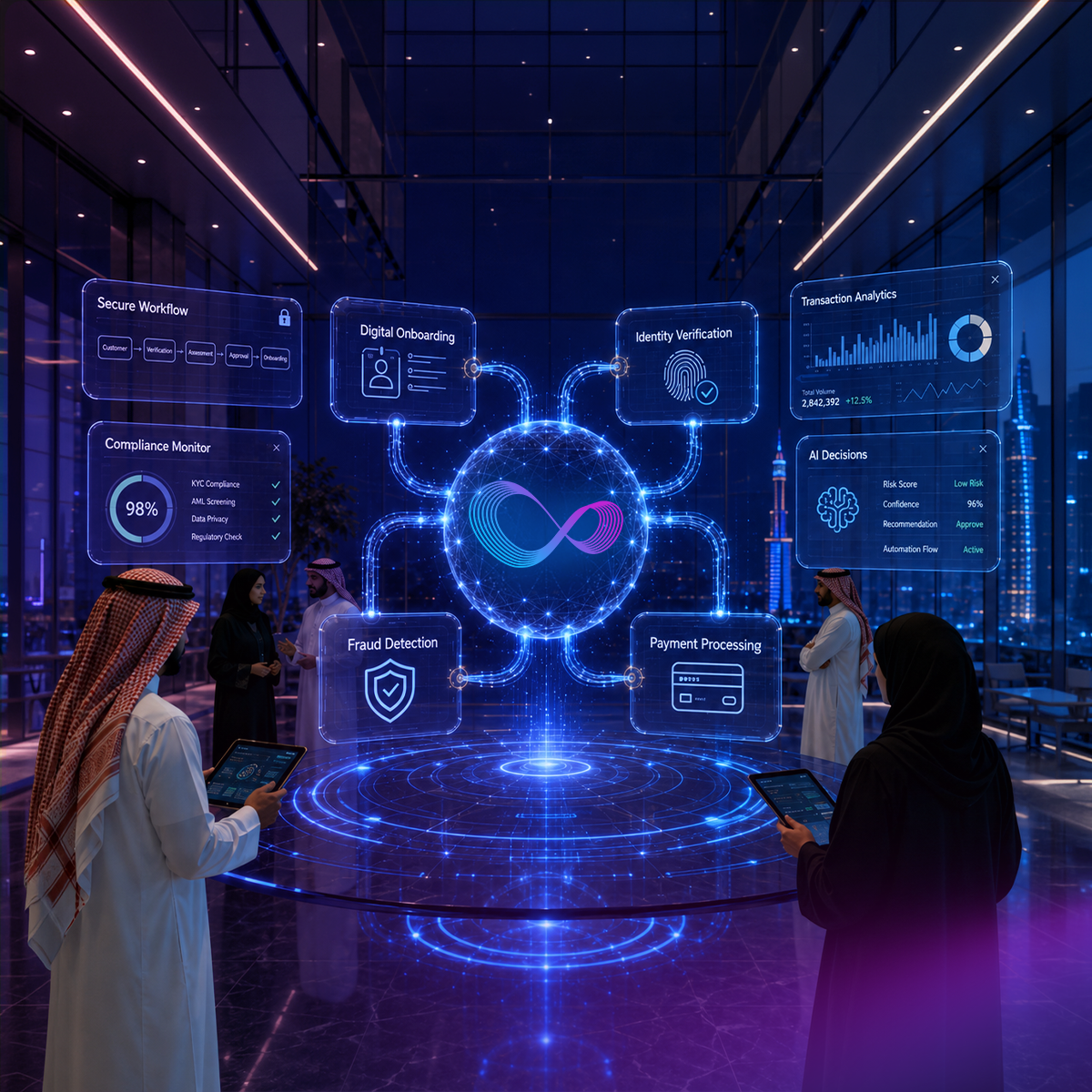
Discover how AI is transforming fintech customer experience in 2026 — from KYC and fraud alerts to Arabic-first support across MENA financial markets.

Most CX automation deployments stall before daily operational use. This guide covers 10 CX automation best practices, from escalation design to omnichannel continuity, with specific guidance for multilingual and Arabic-first contact centers.
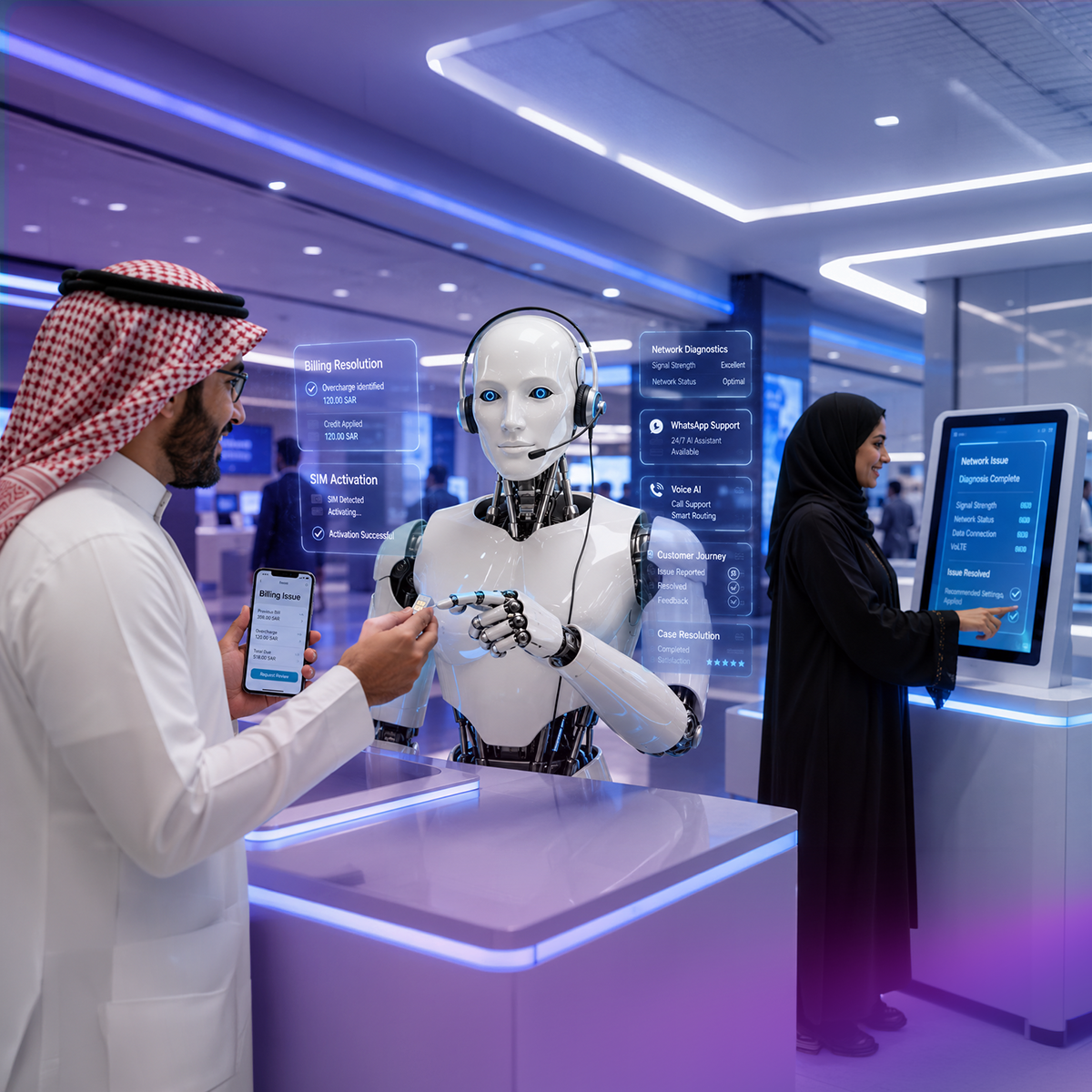
Explore how AI is transforming telecom customer experience. Compare top platforms including NICE CXone and Arabic-first alternatives built for MENA telecom operators.
Wittify.ai is a pioneering AI company specializing in the development of AI agents and applications aimed at automating and streamlining customer engagement activities and processes across various industries. Our mission is to empower businesses by enhancing their customer experience operational efficiency and enabling innovation through intelligent automation.

Information security management system
Business Continuity Management System
Quality Management System

Personal Data Protection Law Compliance
Personal Data Protection Law Compliance
General Data Protection Regulation Compliance


.png)


