



Most contact center quality assurance software promises better visibility, faster coaching, and more consistent scoring. That promise is real, but it often breaks down when the contact center is not English-first.
For Arabic-speaking and multilingual teams, quality assurance is not just a sampling problem. It is a language, channel, and regional compliance problem. A platform may score English calls well and still fail on Gulf Arabic, Egyptian Arabic, Levantine Arabic, or code-switched conversations where the agent and customer move between Arabic and English in the same call.
This guide is published by Wittify AI, a contact center QA and conversational AI platform built for MENA markets. We have organized platform coverage alphabetically by category and included a clear disclosure so the guide remains useful even if your final platform decision is not ours.
The goal is not to list every vendor. It is to help you understand what automated QA should do, where global platforms are strong, where Arabic-first teams need extra scrutiny, and what to test before signing a contract.
Generic QA software usually starts with a simple assumption: the transcript is reliable enough to score. In Arabic-speaking contact centers, that assumption is often the first point of failure. If the speech recognition layer misunderstands the customer, the sentiment score, compliance flag, topic label, and agent score are all built on weak data.
The gap is not only between English and Arabic. Modern Standard Arabic is not how most customers speak to support teams. Gulf Arabic, Egyptian Arabic, Levantine Arabic, Moroccan Arabic, and other dialects have different sounds, vocabulary, rhythm, and cultural signals. A scorecard that depends on a 60-70% accurate transcript is not measuring quality; it is generating noise.
Code-switching makes the problem sharper. A customer may explain the issue in Arabic, mention an English product name, and then use a local phrase to express frustration. English-first sentiment models can miss that nuance. Arabic-only models trained on formal text can miss it as well. For QA managers, the result is operationally dangerous: coaches act on false signals, compliance teams miss risk, and performance dashboards look precise while being unreliable.
MENA channels also differ from Western QA assumptions. Voice calls remain critical, but WhatsApp messages, WhatsApp voice notes, webchat, social channels, and phone conversations often sit in the same customer journey. Maqsam’s Arabic contact center guidance, for example, highlights dialect coverage, mixed Arabic-English conversations, RTL support, and voice/WhatsApp automation as practical requirements for Arabic-ready AI contact centers.
Automatic speech recognition is the foundation layer for voice QA. If it fails, every downstream metric becomes suspect. Word error rate matters because even small transcription errors can change whether a disclosure was captured, whether the customer expressed intent to cancel, or whether an agent used the required phrase.
For Arabic QA, ask vendors for dialect-specific testing, not a generic statement that Arabic is supported. Request real recordings from your own center, including noisy calls, fast speech, mixed English terms, and regional slang. [PLACEHOLDER: Insert internal benchmark or technical reviewer quote on Arabic ASR accuracy, dialect configuration, or code-switching from an internal NLP or implementation specialist.]
Automated contact center QA uses AI to review interactions at scale against defined quality criteria. It can score compliance, empathy indicators, script adherence, sentiment, silence, escalation signals, resolution cues, and agent behaviors across calls and digital conversations.
The central benefit is coverage. Manual QA teams commonly review only 1-5% of interactions, while modern automated QA platforms aim for 100% coverage. Solidroad’s 2026 QA software analysis describes this as the central coverage gap: manual programs sample a fraction, while automated platforms score all conversations. Zendesk similarly describes automated review as a path to 100% coverage of customer conversations.
That does not mean human QA disappears. Human reviewers still own calibration, edge cases, judgment-heavy compliance decisions, and coaching conversations. The best operating model is exception-based: AI scores everything, while humans review flagged, low-confidence, sensitive, or disputed interactions.
Automated contact center QA typically does five things:
The best buying checklist starts with the reality of your operation, not a generic feature grid. If your agents handle Arabic dialects, English product names, WhatsApp messages, and regulated conversations, then language accuracy and regional compliance are not secondary requirements. They are core platform criteria.
Use the checklist below before shortlisting any vendor.
If a platform still relies on small samples, it is quality guessing, not quality assurance. For modern contact centers, 100% automated scoring should be the baseline expectation, even if humans review only exceptions.
For Arabic-speaking teams, confirm whether the platform supports dialects or only Modern Standard Arabic. Ask for word error rate data on Gulf, Egyptian, Levantine, and code-switched recordings, then test with your own calls.
Voice calls, WhatsApp audio, webchat, email, and social messages should be scoreable in one QA model. A MENA contact center that treats WhatsApp as a side channel will miss a major part of the customer journey.
Banking, telecom, healthcare, and government contact centers need automatic detection of missing disclosures, prohibited phrases, identity verification failures, and high-risk interactions.
A score without a coaching action is just a number. QA data should flow into coaching workflows, supervisor queues, and agent feedback loops without spreadsheet exports.
Look for dashboards by agent, team, topic, channel, language, queue, time period, and compliance category. The goal is not more charts. It is faster operational decisions.
For GCC enterprises, ask about ISO certification, Saudi PDPL, UAE data protection requirements, audit trails, encryption, and local or sovereign hosting options.
Checklist note: if Arabic dialect support, WhatsApp coverage, regional data residency, and ISO-level controls are hard requirements, Wittify's platform was built specifically against this checklist; review its Contact Center QA page and deployment references during vendor evaluation.
Disclosure and methodology: this section is not a ranking. It is grouped by platform category, then listed alphabetically within each category. Public capabilities change quickly, so buyers should verify each platform against their own workflow, languages, call recordings, and compliance needs before purchasing.
The global tools below have mature capabilities for quality workflows, analytics, agent coaching, or interaction intelligence. The key question for MENA buyers is narrower: can the platform accurately transcribe, score, and analyze your Arabic dialect data at production quality?
Convin: Convin is positioned around AI-driven contact center quality monitoring, conversation intelligence, sales coaching, and agent performance insights. It can be a fit for teams that want automation around English-heavy QA workflows. For Arabic-speaking teams, buyers should request dialect-specific evidence and test real recordings before relying on production scores.
MaestroQA: MaestroQA presents itself as an AI-powered conversation analytics and quality platform across calls, chats, emails, bots, surveys, and more. Its strengths include structured QA workflows, coaching, and analysis across large conversation sets. Public materials emphasize broad conversation analytics; Arabic dialect depth should be validated directly with the vendor.
Observe.AI: Observe.AI offers a unified CX platform covering AI agents for customers, frontline teams, and operations, with real-time guidance and post-interaction analytics. It is strong for organizations that want enterprise-grade AI across the CX lifecycle. MENA buyers should test dialect ASR and sentiment performance because Arabic dialect QA is a specialized requirement.
Playvox: Playvox is commonly positioned as a workforce engagement and quality management suite, with QA, coaching, training, performance management, and workforce functions. It is relevant for teams that want QA tied to broader agent development workflows. Arabic-specific QA performance should be tested before procurement.
Scorebuddy: Scorebuddy focuses on contact center quality assurance, scorecards, coaching, analytics, and embedded AI. Public pages emphasize 100% interaction analysis and flexible quality programs. For multilingual or Arabic-first operations, the same rule applies: run a proof of concept using your own dialect recordings and compliance scenarios.
Maqsam: Maqsam positions itself as Arabic-first customer service software with an AI agent integrated into regional contact center workflows. Its public materials highlight Arabic support, different dialects, WhatsApp communication, and tools designed around MENA customer service realities.
Wittify AI: The platform is an Arabic-first conversational AI and Contact Center QA platform for MENA enterprises. Public company materials describe support for 25+ Arabic dialects, voice, chat, WhatsApp, phone, social channels, contact centers, and ISO 9001, ISO 27001, and ISO 22301 certifications. It is most relevant for teams where Arabic dialect accuracy, omnichannel QA, and enterprise deployment controls are central requirements.
The ROI case begins with coverage. If a 50,000-interaction center manually reviews 2%, then 49,000 interactions go unreviewed each month. Automated QA changes the denominator by scoring the whole operation instead of the sample.
The first returns usually appear in reduced manual review time, faster coaching cycles, and earlier compliance detection. A team can move from days or weeks of coaching lag to same-day feedback on recurring behaviors. That matters because repeated mistakes become expensive when they are discovered only after a sample review.
Market investment also supports the direction of travel. Fortune Business Insights projects the global CCaaS market to grow from $8.33 billion in 2026 to $30.15 billion by 2034 at a 17.4% CAGR. UnivDatos reports the Middle East and Africa conversational AI market was valued at $600 million in 2024 and projects 18.9% CAGR through 2033. Grand View Research presents an even larger MEA conversational AI estimate, reporting $1.2 billion in 2024 revenue and a high-growth outlook through 2030.
For a QA business case, track four baseline metrics before rollout: percentage of interactions reviewed, time from interaction to coaching, number of compliance incidents detected, and CSAT or complaint trends. After deployment, measure the same metrics at 30, 60, and 90 days.
1. Configuration: Define the QA scorecards, compliance rules, required disclosures, escalation categories, and coaching outcomes.
2. Integration: Connect telephony, CCaaS, CRM, WhatsApp, chat, email, or ticketing systems. No-code options may work for standard stacks; API integration is better for complex environments.
3. Language and channel setup: For Arabic-capable deployments, configure dialect handling, code-switching expectations, RTL workflows where needed, and channel-specific QA rules.
4. Calibration: Compare AI scores against human QA decisions on a test set. Adjust scorecards and thresholds until the system reflects the organization’s standards.
5. Rollout: Start with a limited queue, team, or channel. Expand only after the first coverage report, first coaching cycle, and first compliance trend review are validated.
6. Governance: Set human review rules for low-confidence scores, sensitive complaints, regulated interactions, and disputed evaluations.
The common failure modes are predictable: vague scorecards, insufficient calibration, poor agent communication, and treating AI scores as final in every case. Successful teams frame automation as a visibility and coaching system, not a surveillance weapon.
For MENA deployments, add time for dialect testing, regional compliance review, data residency decisions, and WhatsApp or voice-channel mapping. These steps are not blockers. They are the work that prevents a good-looking dashboard from producing bad Arabic QA data.
The generic contact center QA software market is crowded. That does not mean every platform can score your conversations accurately. For Arabic and multilingual contact centers, the real test is not the demo dashboard. It is the transcript quality, dialect handling, code-switching performance, channel coverage, and compliance fit on your own data.
A strong platform should help you move from sampling to full visibility, from delayed coaching to faster feedback, and from scattered channel reports to one operational picture. But it must do that in the languages and channels your customers actually use.
If you're evaluating QA automation for an Arabic-speaking or multilingual contact center in MENA, Wittify was built for exactly this context. Request a demo to see how dialect-aware QA scoring works in practice with your own call recordings.
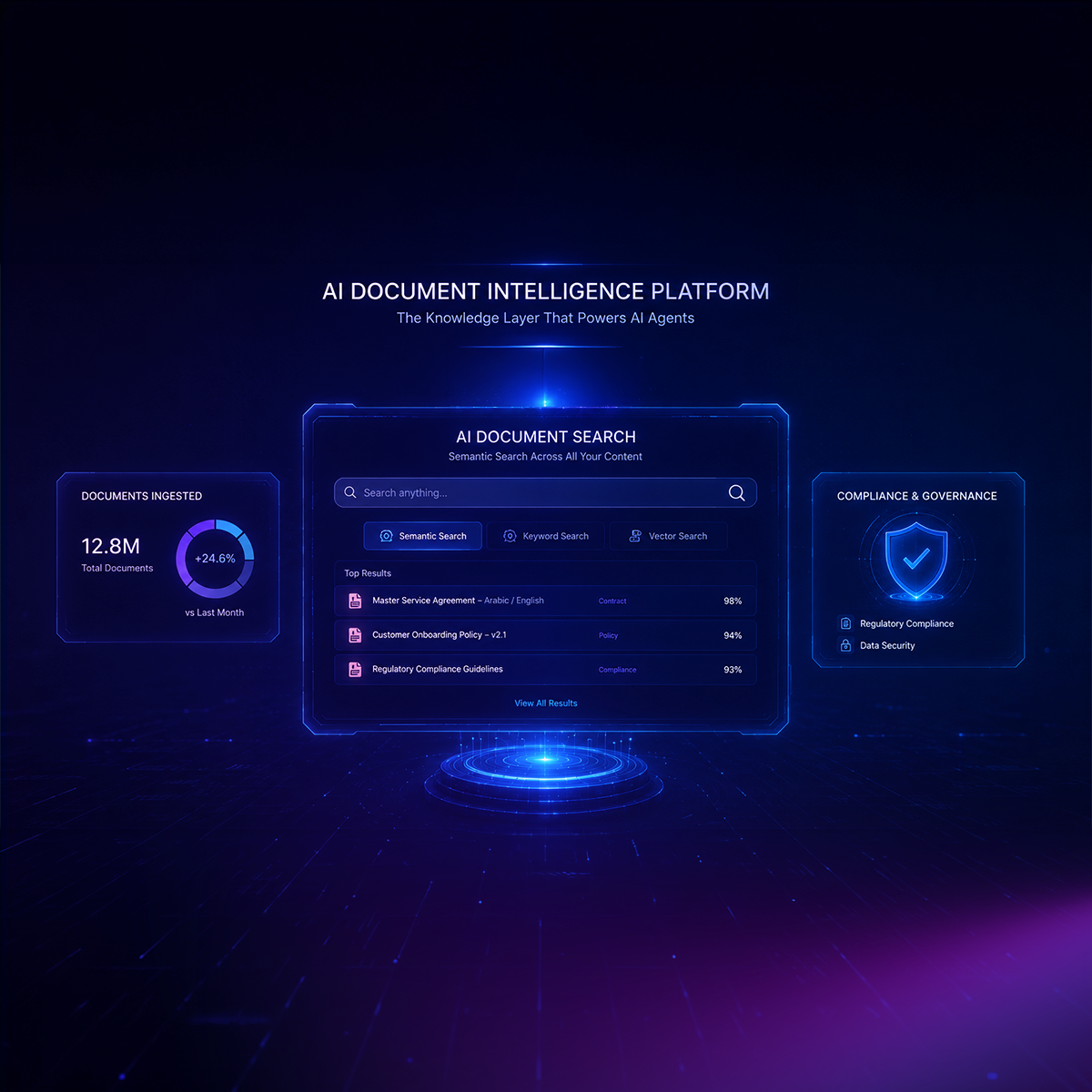
Compare the best AI document search tools for enterprise document AI, RAG-powered knowledge search, Arabic document intelligence, and CX automation. Learn how Wittify AI helps MENA enterprises search documents, extract insights, and automate workflows securely.
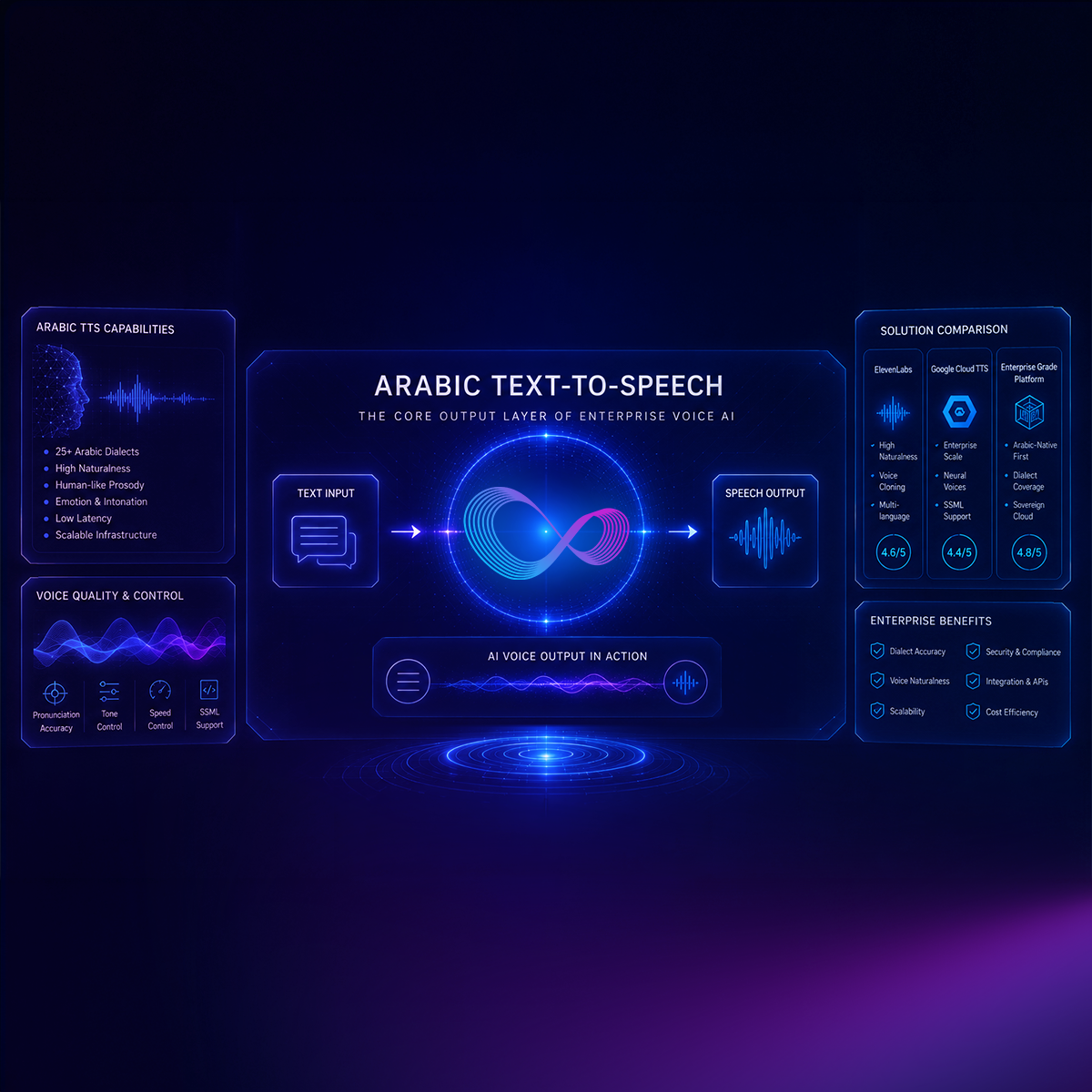
Examine the architectural role of Arabic TTS within enterprise voice AI systems. Compare CX automation vendors and voice infrastructure systems for the MENA region.
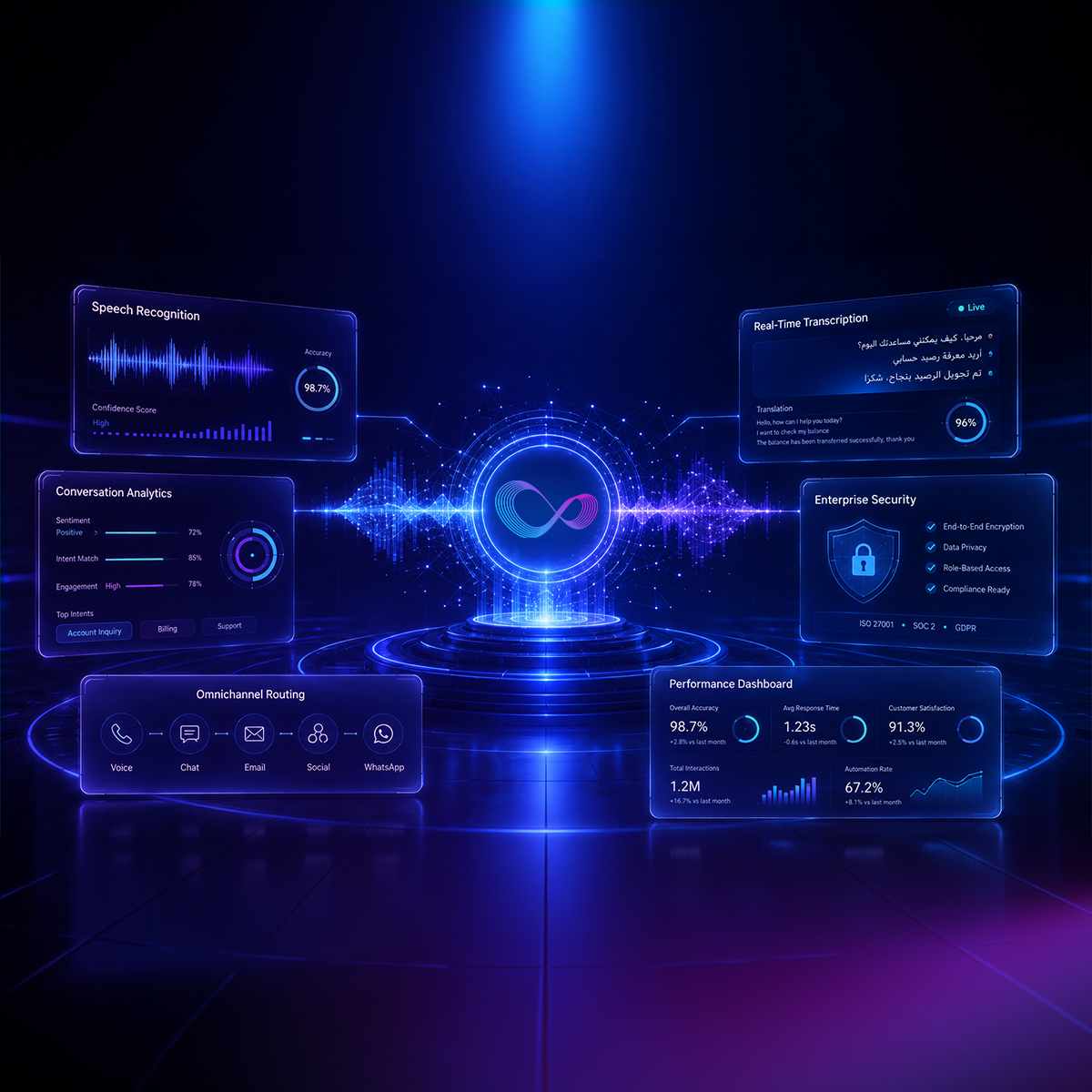
Looking for accurate Arabic speech recognition? Compare Arabic STT tools, apps, APIs, and enterprise CX automation platforms, including AI-powered solutions built for MENA dialects.
Wittify.ai is a pioneering AI company specializing in the development of AI agents and applications aimed at automating and streamlining customer engagement activities and processes across various industries. Our mission is to empower businesses by enhancing their customer experience operational efficiency and enabling innovation through intelligent automation.

Information security management system
Business Continuity Management System
Quality Management System

Personal Data Protection Law Compliance
Personal Data Protection Law Compliance
General Data Protection Regulation Compliance


.png)


