



Building a no-code AI agent in 2026 empowers business leaders to bypass traditional technical barriers. By replacing complex coding with natural language, organizations can deploy empathetic, brand-aligned digital workforces in days, ensuring rapid innovation and operational efficiency without an engineering degree.
For decades, the path to implementing cutting-edge technology was blocked by a formidable "technical wall." If a Marketing Manager wanted to automate a complex lead qualification process, or an Operations Lead aimed to streamline a high-volume customer support channel, they were traditionally forced into a grueling, months-long cycle. This cycle involved drafting exhaustive business requirements, submitting tickets for IT approval, and waiting through endless development sprints, all while hoping the final product vaguely resembled their original vision.
In 2026, that wall hasn't just been scaled—it has been completely demolished. The rise of the no-code AI agent has democratized innovation, shifting the power of AI adoption from the specialized silos of the engineering department directly into the hands of those who understand the business best. Today, the ability to build sophisticated digital workforces is no longer a matter of syntax and compilers; it is a matter of strategy and intent.
The primary reason businesses struggled with AI implementation in the past was what we call the "translation gap." This gap exists because of a fundamental disconnect in professional languages. Business leaders are experts in customer pain points, market nuances, and operational bottlenecks, but they rarely speak Python or manage vector databases. On the other side, engineers speak the language of code and infrastructure, but they are rarely on the front lines of customer service or sales negotiations.
When you use a no-code AI agent builder, this gap effectively disappears. Because these platforms utilize Natural Language Interfaces (NLI), the barrier to entry has shifted from "knowing how to code" to "knowing how to communicate."
The New Standard: If you can clearly explain to a human employee how to handle a complex return or qualify a high-value lead, you have all the "programming" skills necessary to build an AI agent.
By describing an agent’s personality, its ethical boundaries, and its operational rules in plain English, department heads ensure that the agent’s tone, empathy, and logic are 100% aligned with brand values. There is no longer a risk of a developer misinterpreting a business requirement because the business leader is the one directly configuring the intelligence.
In the modern economy, speed is the ultimate competitive moat. In the traditional model, making a change to an automated system required a formal change request, a code review, and a deployment window. This lag time is a silent killer of customer satisfaction.
With no-code AI agents, agility allows for real-time optimization. Consider a scenario where a company launches a new promotional campaign on a Tuesday morning. By 10:00 AM, the Operations Lead notices that customers are consistently confused by the fine print of the shipping policy.
In a traditional dev environment, that confusion might persist for weeks while a fix is scheduled. With a no-code builder, the manager can:
This iterative approach transforms AI from a static "set it and forget it" tool into a living, breathing part of the team that learns and adapts at the speed of human thought.
The transition to no-code doesn't mean skills are no longer required; rather, the type of skills required has evolved. We are moving away from technical execution and toward strategic orchestration.
As the table illustrates, the "No-Code" path prioritizes Business Strategy and Empathy. The most successful AI agents are not the ones with the most complex codebases, but the ones that have been "trained" by people who understand the human element of the business.
The move toward no-code AI agent platforms isn't just a cost-saving measure; it is a fundamental shift in corporate psychology. It empowers your most creative and experienced staff to lead from the front. By removing technical friction, you turn every department manager into a "Citizen Developer."
A Citizen Developer is someone who creates new business applications using development and runtime environments sanctioned by corporate IT, despite having little to no formal coding experience. In the context of AI, this means:
These individuals are no longer "requestors" waiting for help; they are "builders" creating solutions. This democratization of technology ensures that the digital workforce grows organically alongside the business, rather than being a bottleneck that slows it down.
One of the most overlooked benefits of the no-code revolution is the reduction in technical debt. Traditional custom-coded solutions require constant patching, library updates, and security fixes. This creates a dependency cycle where the business is tethered to the original developers.
No-code platforms abstract this complexity. The underlying "plumbing"—the LLM integrations, the server scaling, the security protocols—is handled by the platform provider. This allows the business user to focus exclusively on the User Experience (UX) and the Value Proposition. When the technology stays out of the way, innovation flourishes.
As we move further into 2026, the businesses that will dominate their respective industries are not necessarily those with the largest engineering budgets, but those that can most effectively harness the institutional knowledge of their non-technical staff.
Building a no-code AI agent is about reclaiming the "Intent." It’s about ensuring that the vision you have for your company is the one that actually reaches the customer. As discussed in The CEO’s Playbook, this is the ultimate secret to operational efficiency: removing the barriers between a good idea and its execution. The "Technical Wall" has fallen. It’s time to start building.
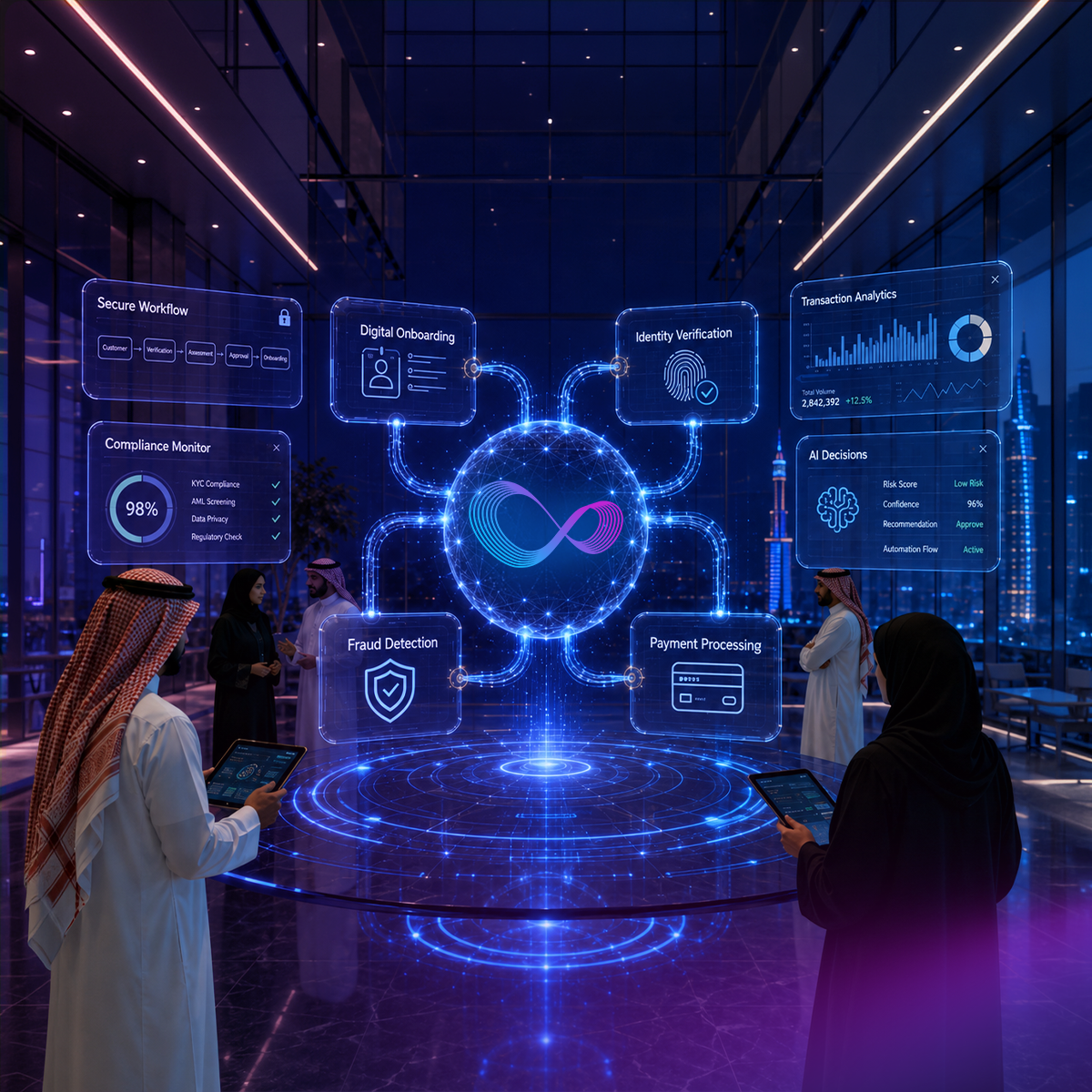
Discover how AI is transforming fintech customer experience in 2026 — from KYC and fraud alerts to Arabic-first support across MENA financial markets.

Most CX automation deployments stall before daily operational use. This guide covers 10 CX automation best practices, from escalation design to omnichannel continuity, with specific guidance for multilingual and Arabic-first contact centers.
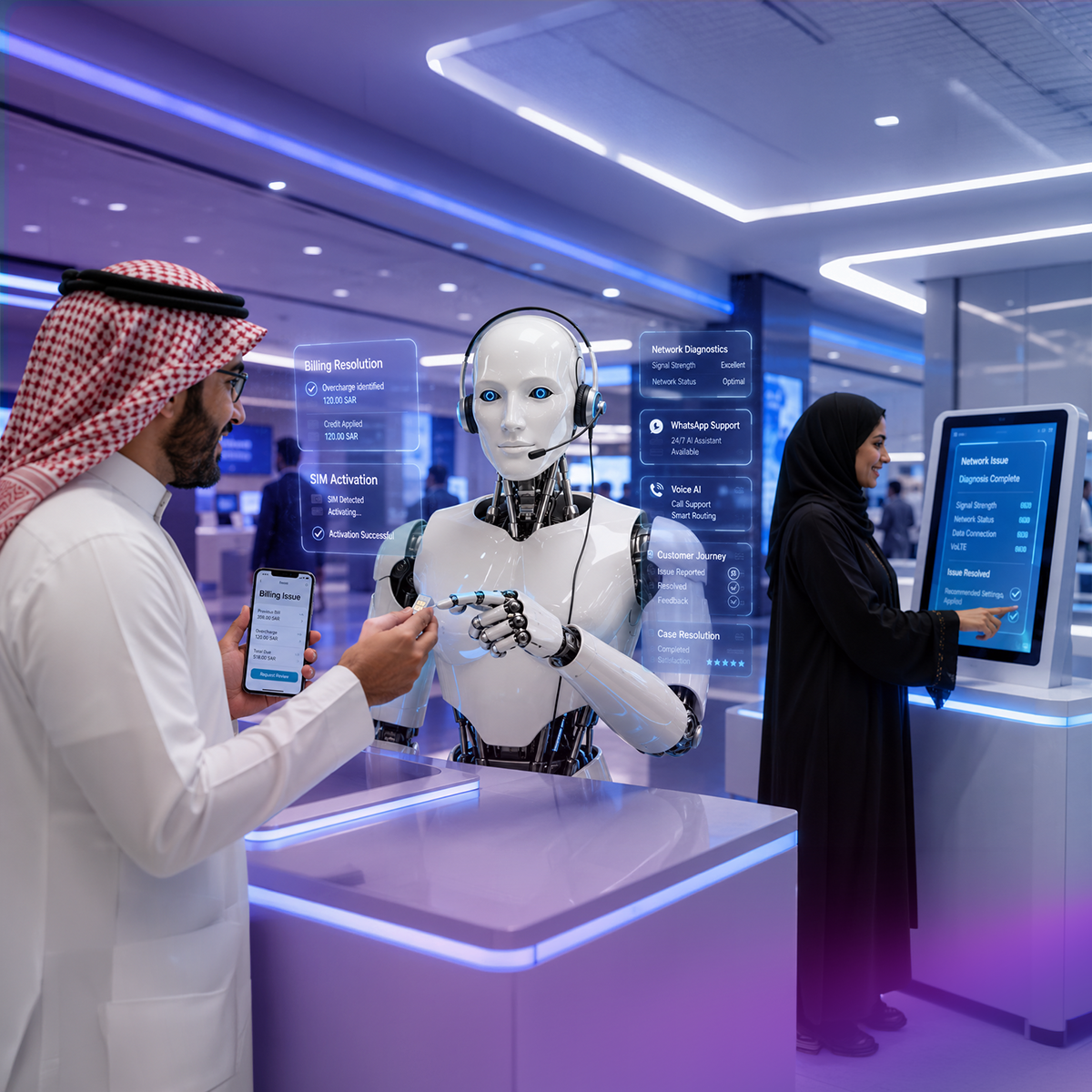
Explore how AI is transforming telecom customer experience. Compare top platforms including NICE CXone and Arabic-first alternatives built for MENA telecom operators.
Wittify.ai is a pioneering AI company specializing in the development of AI agents and applications aimed at automating and streamlining customer engagement activities and processes across various industries. Our mission is to empower businesses by enhancing their customer experience operational efficiency and enabling innovation through intelligent automation.

Information security management system
Business Continuity Management System
Quality Management System

Personal Data Protection Law Compliance
Personal Data Protection Law Compliance
General Data Protection Regulation Compliance


.png)


