


.png)
While 88% of organizations use AI, only 30% scale it effectively. Discover why your Operating Model is the bottleneck and how "High Performers" redesign workflows to escape the "Pilot Trap" and succeed with Agentic AI.
We have officially entered the era of widespread Artificial Intelligence adoption. If 2023 was the year of surprise and 2024 the year of experimentation, 2025 has cemented itself as the year of ubiquity. According to the latest data from November 2025, a staggering 88% of organizations now report regular AI use in at least one business function.
The curiosity phase is undeniably over. AI is no longer a futuristic concept—it is a present-day reality embedded in the corporate landscape.
However, when we peel back the layers of this adoption surge, a concerning reality emerges. While the breadth of adoption is high, the depth of impact remains shallow. We are witnessing a phenomenon where AI is everywhere, yet transformative value is largely absent.
Despite nearly universal adoption rates, the vast majority of enterprises are stuck in what industry experts call "Pilot Purgatory." These organizations are trapped in a cycle of endless experimentation, unable to push initiatives into production environments where they generate enterprise-level value.
This means that for every ten companies testing AI, only three are actually deploying it broadly. This raises a critical question for leadership: Why do promising pilots wither on the vine?
The answer rarely lies in the technology itself. The failure point is almost always the organizational Operating Model.
Many organizations fall into the trap of viewing AI as a "plug-and-play" software update—a tool to simply make people faster. However, evidence suggests that scaling AI is a change management challenge, not just a software one.
The McKinsey report highlights a distinct group of "High Performers"—organizations that attribute significant EBIT to their AI efforts. These companies operate differently. The data reveals that high-performing organizations are nearly three times (2.8x) more likely to fundamentally redesign their workflows compared to their peers.
To bridge the gap from "Pilot" to "Scaling," leaders must focus on three operational shifts:
There is a profound difference between automating a step in a process and redesigning the process itself. Most companies add AI to a legacy workflow, resulting in incremental gains. High performers deconstruct the workflow entirely. They ask: "Given that AI exists, do we even need this step?"
AI is not a "set it and forget it" deployment; it requires tuning. High performers are characterized by having an agile product delivery organization that allows for rapid, iterative development. They treat AI models as living products, not one-off IT projects.
While most companies use AI solely to cut costs, high performers play a different game. They are significantly more likely to set innovation and growth as primary objectives. They use AI to create new products, not just to cheapen existing ones.
The urgency to fix the operating model is becoming critical with the rise of AI Agents. Unlike standard Generative AI, which creates content, Agentic AI is designed to act. These systems plan and execute multi-step workflows autonomously.
Curiosity is exploding. 62% of organizations are already experimenting with AI agents. Leaders are enamored with the idea of "digital employees."
However, the "scale gap" is even wider here. Currently, no more than 10% of organizations are scaling agents in any single business function. Usage is largely confined to siloed environments like IT service desks.
Why Agents Fail in Broken Systems
Why is the failure rate so high? Because agents require robust processes. You cannot ask an agent to "execute" a workflow—like processing a refund—if the underlying process is broken or poorly documented.
It is no surprise that high performers are at least three times more likely to be scaling agents than their peers. Because they have rewired their business processes, they have paved the road for agents to drive.
The barrier to entry for AI has never been lower, but the barrier to scale has never been higher. The difference between the 88% who are "using" AI and the 30% who are "scaling" it, is not the size of their models—it is the maturity of their operating model.
To escape the "pilot trap," organizations must stop treating AI as a shiny tool and start treating it as a catalyst for deep operational transformation. If you don't change how you work, the best AI in the world won't save you.
Are you truly ready to scale, or are you just adding to the noise? The difference between the herd and the winners isn't luck; it's infrastructure. Stop guessing about your operational maturity and start measuring it. Take our Enterprise AI Readiness Index to find out if your organization is built for profit or destined for pilot purgatory.
Assess your Enterprise-AI Readiness here: https://lnkd.in/dz9Ww4bD
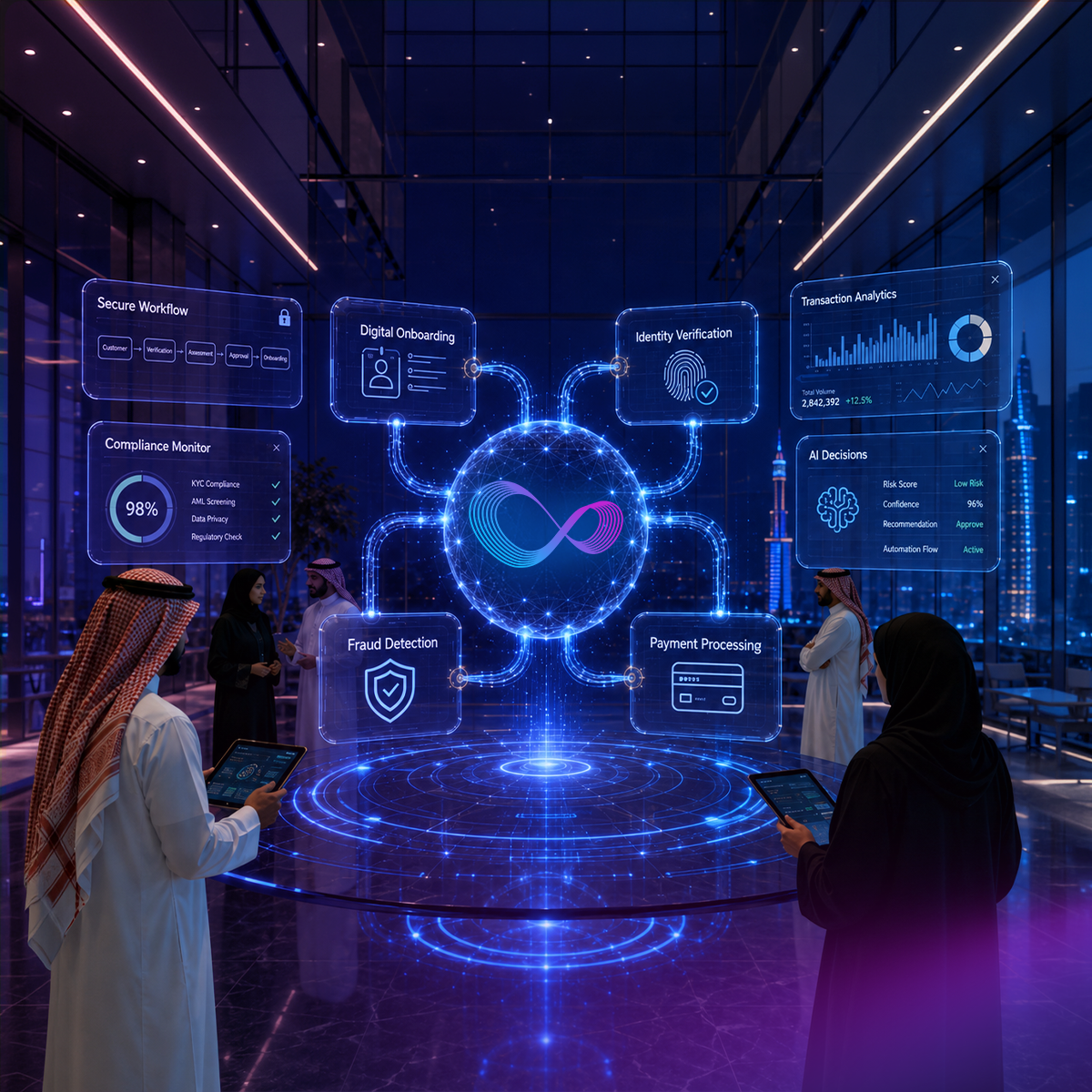
Discover how AI is transforming fintech customer experience in 2026 — from KYC and fraud alerts to Arabic-first support across MENA financial markets.

Most CX automation deployments stall before daily operational use. This guide covers 10 CX automation best practices, from escalation design to omnichannel continuity, with specific guidance for multilingual and Arabic-first contact centers.

Explore how AI is transforming telecom customer experience. Compare top platforms including NICE CXone and Arabic-first alternatives built for MENA telecom operators.
Wittify.ai is a pioneering AI company specializing in the development of AI agents and applications aimed at automating and streamlining customer engagement activities and processes across various industries. Our mission is to empower businesses by enhancing their customer experience operational efficiency and enabling innovation through intelligent automation.

Information security management system
Business Continuity Management System
Quality Management System

Personal Data Protection Law Compliance
Personal Data Protection Law Compliance
General Data Protection Regulation Compliance


.png)


