


.png)
The conventional wisdom in enterprise tech is simple: if you want the best, you have to build it yourself. A custom-built AI solution—bespoke, tailored, and code-heavy—is often seen as the ultimate competitive advantage.
The ‘Pilot-and-Scale’ Advantage: Why No-Code AI Outperforms Custom Builds for Rapid Growth
The Illusion of the Perfect Custom Model
The conventional wisdom in enterprise tech is simple: if you want the best, you have to build it yourself. A custom-built AI solution—bespoke, tailored, and code-heavy—is often seen as the ultimate competitive advantage.
But this thinking is dangerously outdated, especially in the context of rapid market growth and aggressive business goals. The pursuit of the "perfect" custom model is often the fast track to technical debt and strategic rigidity.
Consider the reality of a custom build: a typical custom build has a lead time of 4-6 months to develop a minimum viable product (MVP), often costing hundreds of thousands of dollars for data scientists, engineers, and infrastructure. Once launched, changes are slow, expensive, and require another multi-week redeployment cycle. For six months, your brilliant AI idea sits on a roadmap, generating zero revenue.
The real competitive advantage today is not owning bespoke code; it’s owning the speed and agility to deploy, test, and iterate faster than anyone else. This is the core principle of the Pilot-and-Scale Advantage, powered exclusively by No-Code AI.
The Pilot-and-Scale Philosophy: Agile AI is Superior
Pilot-and-Scale is the strategic deployment philosophy for the modern AI economy. It rejects the slow, high-risk "waterfall" approach of custom development in favor of rapid, low-stakes iteration.
1. Low-Risk Piloting
No-Code allows you to deploy a functional, data-collecting AI agent (your "Minimum Viable AI" or MVA) in days, not months. The financial risk is minimal—a platform subscription fee versus six figures in development salaries.
This speed allows you to test hypotheses in the real world almost instantly:
This ability to fail fast and cheaply is the ultimate safeguard for innovation. Custom AI makes failure prohibitively expensive. No-Code AI makes failure a cheap, powerful learning opportunity.
2. Decentralizing Innovation: Empowering the Domain Expert
The critical flaw in the custom approach is that it puts the power to build the solution in the hands of the IT team—the people who know how to code, but not necessarily what the customer truly needs.
No-Code AI flips this script, enabling Decentralized Innovation. It empowers the people who own the problem to build the solution:
This is a massive strategic win. It accelerates deployment, ensures the solution is perfectly aligned with the business problem, and clears the IT backlog to focus on mission-critical infrastructure projects.
Quantitative Advantage: The Economics of Agility
The cost comparison between a custom build and a no-code deployment is often staggering, but the true value lies in the opportunity cost of time. Let's look at the key differences between a typical three-month Custom AI Pilot and a two-week No-Code AI Deployment:
The Custom AI Build requires a substantial Initial Investment of between $$$150,000 and $$$300,000, primarily for developer salaries and infrastructure, and the Time to MVP is a lengthy 12 to 24 weeks. This means the Time to Data/Feedback—the point where you know if your investment is working—is often six months. The Cost of Failure is high, and Maintenance requires a dedicated in-house development team.
In stark contrast, a No-Code AI Deployment has an Initial Investment of only $$$1,000 to $$$5,000 (just the platform subscription), and the Time to MVP is incredibly fast, often just 1 to 2 days. Crucially, the Time to Data/Feedback is only two weeks. The Cost of Failure is near zero, and Maintenance is automatically handled by the platform vendor, including model updates.
The No-Code solution starts delivering ROI months before the custom solution even finishes its initial coding sprint. In a hyper-competitive market, this time difference is the margin between market leader and market follower. By the time a custom solution is finally ready to launch, the no-code solution will have already completed several cycles of testing, optimization, and scaling.
Future-Proofing and Technical Debt Reduction
One of the most insidious hidden costs of custom AI is Technical Debt. Every line of code, every open-source library, and every custom API connection must be continually maintained, secured, and updated by your internal team. As the underlying AI models (like LLMs) evolve monthly, custom code can become obsolete rapidly.
No-Code AI platforms abstract this maintenance completely. When the platform updates its underlying large language model (LLM) to a newer, faster version, your deployed agent is automatically updated. Your initial quick deployment remains a stable, modern asset without requiring a single hour of engineering time.
The strategic choice is clear: Do you want to dedicate your top engineering talent to maintaining custom code, or to building the next generation of core business infrastructure? By leveraging No-Code for all applications that can be delivered via a platform, you free up your engineers to focus on proprietary innovation, ensuring your business is future-proofed against the rapid pace of technological change.
The future belongs not to the companies that write the most code, but to the companies that iterate the fastest. Embrace the Pilot-and-Scale Advantage, and own your speed.
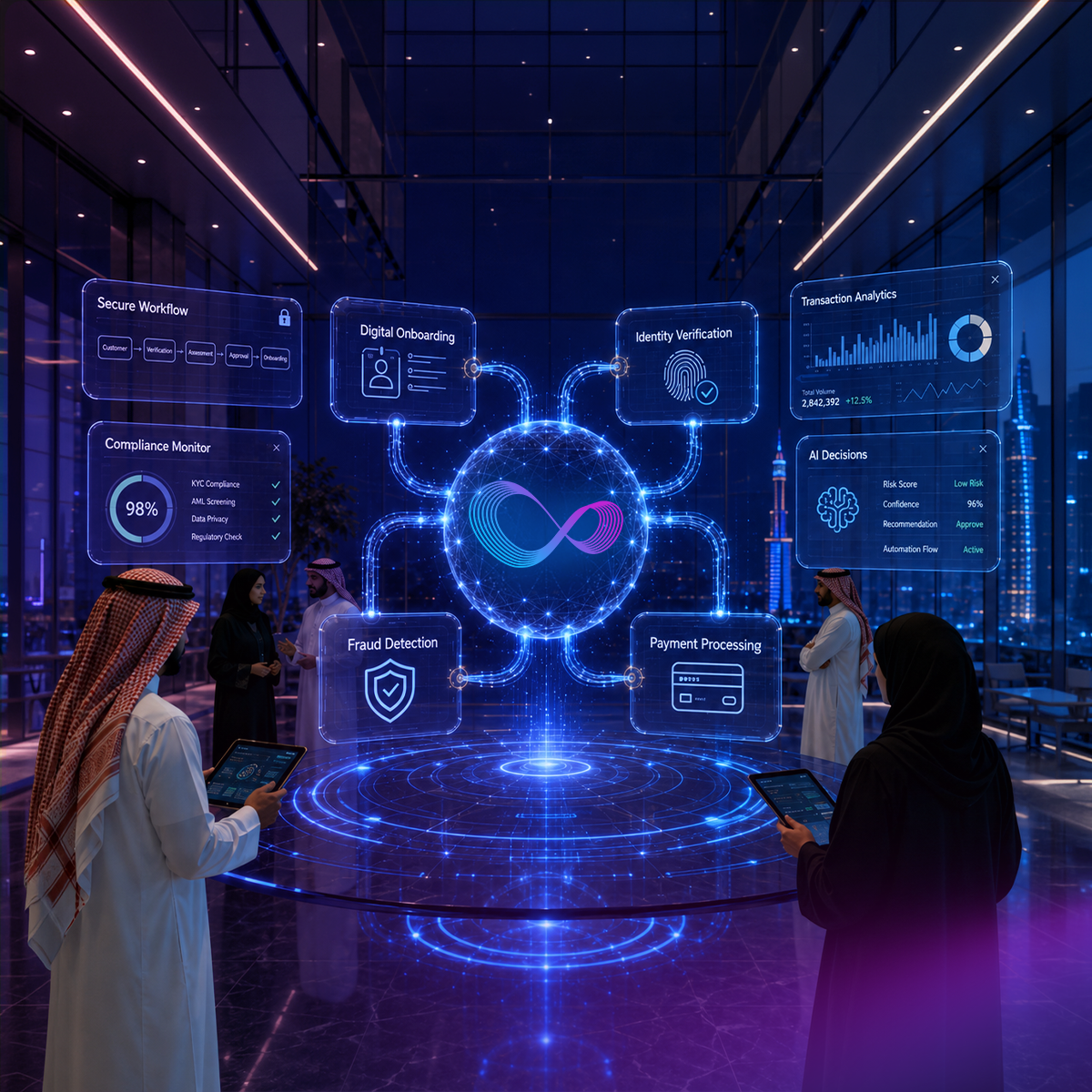
Discover how AI is transforming fintech customer experience in 2026 — from KYC and fraud alerts to Arabic-first support across MENA financial markets.

Most CX automation deployments stall before daily operational use. This guide covers 10 CX automation best practices, from escalation design to omnichannel continuity, with specific guidance for multilingual and Arabic-first contact centers.

Explore how AI is transforming telecom customer experience. Compare top platforms including NICE CXone and Arabic-first alternatives built for MENA telecom operators.
Wittify.ai is a pioneering AI company specializing in the development of AI agents and applications aimed at automating and streamlining customer engagement activities and processes across various industries. Our mission is to empower businesses by enhancing their customer experience operational efficiency and enabling innovation through intelligent automation.

Information security management system
Business Continuity Management System
Quality Management System

Personal Data Protection Law Compliance
Personal Data Protection Law Compliance
General Data Protection Regulation Compliance


.png)


