


.png)
We are shifting from AI that speaks to AI that acts. Agentic AI functions as a digital employee, executing tasks autonomously rather than just drafting text. Are you stuck in "pilot purgatory" or truly ready to scale? Assess your readiness here.
For the past three years, the global business landscape has been captivated by the explosive rise of Generative AI (Gen AI). Since the mainstream adoption of Large Language Models (LLMs), we have treated these tools as miraculous assistants. We have used them to draft difficult emails, summarize hour-long meetings into bullet points, and generate boilerplate code in seconds. We grew accustomed to a chat-based interface where the dynamic was simple: we ask, and the machine answers.
But as we approach 2026, the novelty of "chatting" with a machine is wearing off. A fundamental shift is occurring in the laboratories of tech giants and the boardrooms of forward-thinking enterprises. We are moving from AI that speaks to AI that acts.
We are formally entering the era of Agentic AI.
To understand why this shift is revolutionary rather than just evolutionary, we must look at the nature of the interaction. The core difference between standard Generative AI and Agentic AI is the massive leap from content generation to task execution.
Think of the standard Gen AI we have used since 2023 as a High-Level Consultant.
If you ask a Consultant for a marketing plan, they will use their vast knowledge to write a strategic document for you. They provide information, creative output, and advice. However, once the document is handed over, their job is done. They cannot log into your systems to execute that plan.
Now, think of AI Agents as Digital Employees.
If you ask an AI Agent for that same marketing plan, the Agent doesn't just write it. It functions as a colleague with access to your tools. It researches current market trends in real-time, drafts the social media posts, logs into your Content Management System (CMS), schedules the posts for next Tuesday, and finally, sends a Slack message or email to the creative director asking for final approval.
According to the latest research, Agents are systems based on foundation models capable of acting in the real world, planning, and executing multiple steps in a workflow autonomously. They possess "agency"—the ability to perceive a goal, break it down into sub-tasks, use software tools (APIs) to achieve those tasks, and critique their own work.
The next phase of automation isn't just about speeding up specific tasks; it is about the autonomous execution of entire workflows.
Why is this happening now? The technology has matured to include three critical components that were previously lacking in standard chatbots:
The business world is waking up to this potential with varied levels of enthusiasm and trepidation. As of November 2025, curiosity is surging. According to McKinsey & Company, 62% of organizations report that they are experimenting with AI agents. This indicates that the majority of the market understands that the "Chatbot" era is ending and is actively seeking the next competitive advantage.
However, there is a massive gap between running a shiny pilot project in a sandbox environment and trusting an Agent to act as an employee in the real world, handling sensitive customer data or financial transactions.
The data reveals a stark reality: while experimentation is high, only 23% of organizations have successfully begun scaling agentic AI systems in their enterprises.
Why are nearly 40% of companies stuck in the experimentation phase? Scaling "digital employees" is infinitely more difficult than deploying a chatbot. It requires more than just installing software; it requires a redesign of the business itself.
When an AI simply writes text, the risk of error is low—a human reads it and fixes it. When an AI executes tasks—like processing a refund or ordering inventory—the risk of error can be catastrophic.
Consequently, in any single business function, no more than 10% of companies have managed to scale agents successfully. The barriers include:
The technology is ready to work. We have the models, the processing power, and the integration capabilities. The bottleneck is no longer the AI; it is the organization.
To bridge the gap between the 62% who are curious and the 23% who are scaling, leaders must stop treating AI as an IT upgrade and start treating it as a workforce expansion. You wouldn't hire a new employee without a job description, an onboarding manual, and access to the right files. You must treat your AI Agents with the same rigor.
As we look toward 2026, the companies that win won't just be the ones with the smartest AI. They will be the ones with the operating models ready to manage a hybrid workforce of humans and machines.
Are you truly ready to scale, or are you just adding to the noise? The difference between the herd and the winners isn't luck; it's infrastructure. Stop guessing about your operational maturity and start measuring it. Take our Enterprise AI Readiness Index below to find out if your organization is built for profit or destined for pilot purgatory.

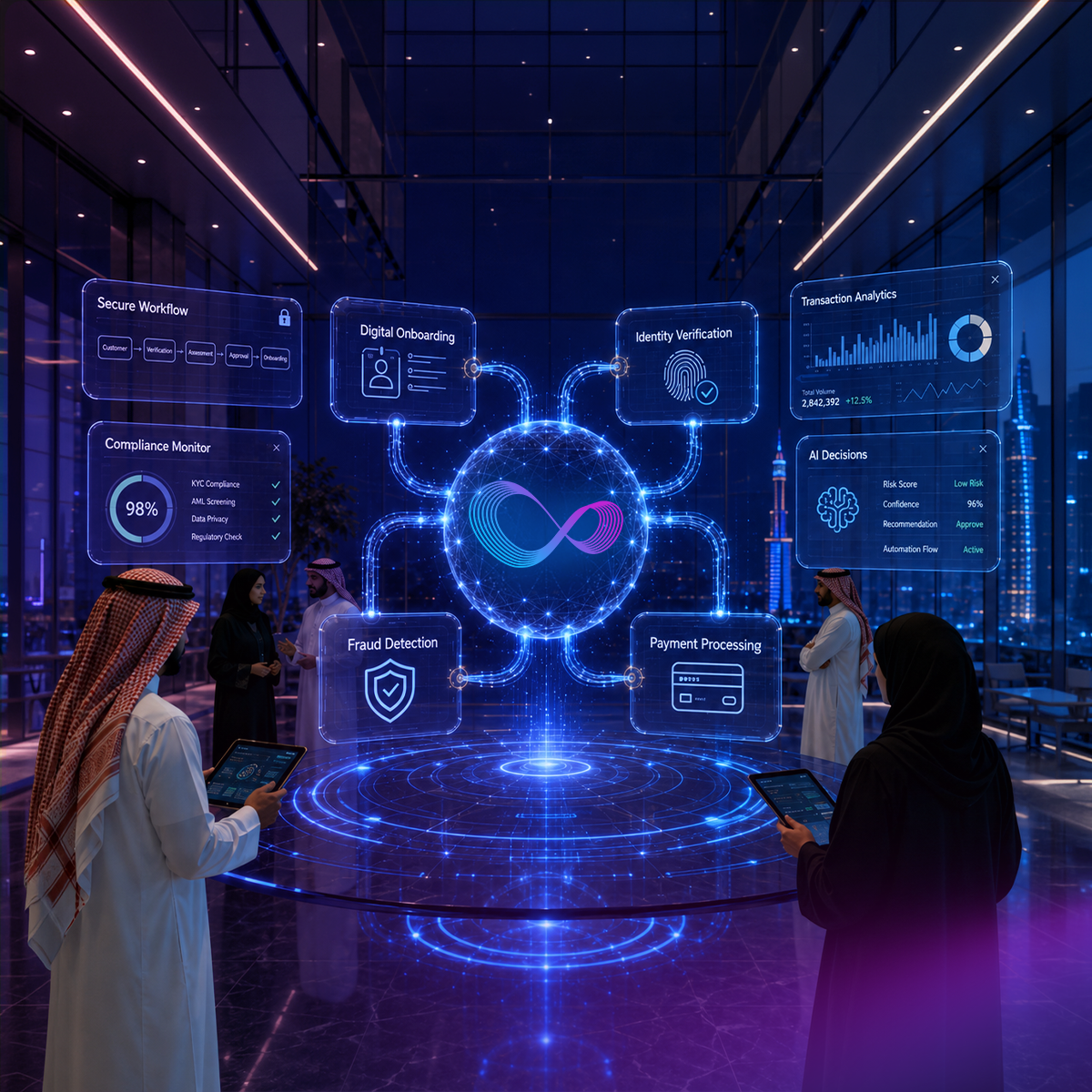
Discover how AI is transforming fintech customer experience in 2026 — from KYC and fraud alerts to Arabic-first support across MENA financial markets.

Most CX automation deployments stall before daily operational use. This guide covers 10 CX automation best practices, from escalation design to omnichannel continuity, with specific guidance for multilingual and Arabic-first contact centers.
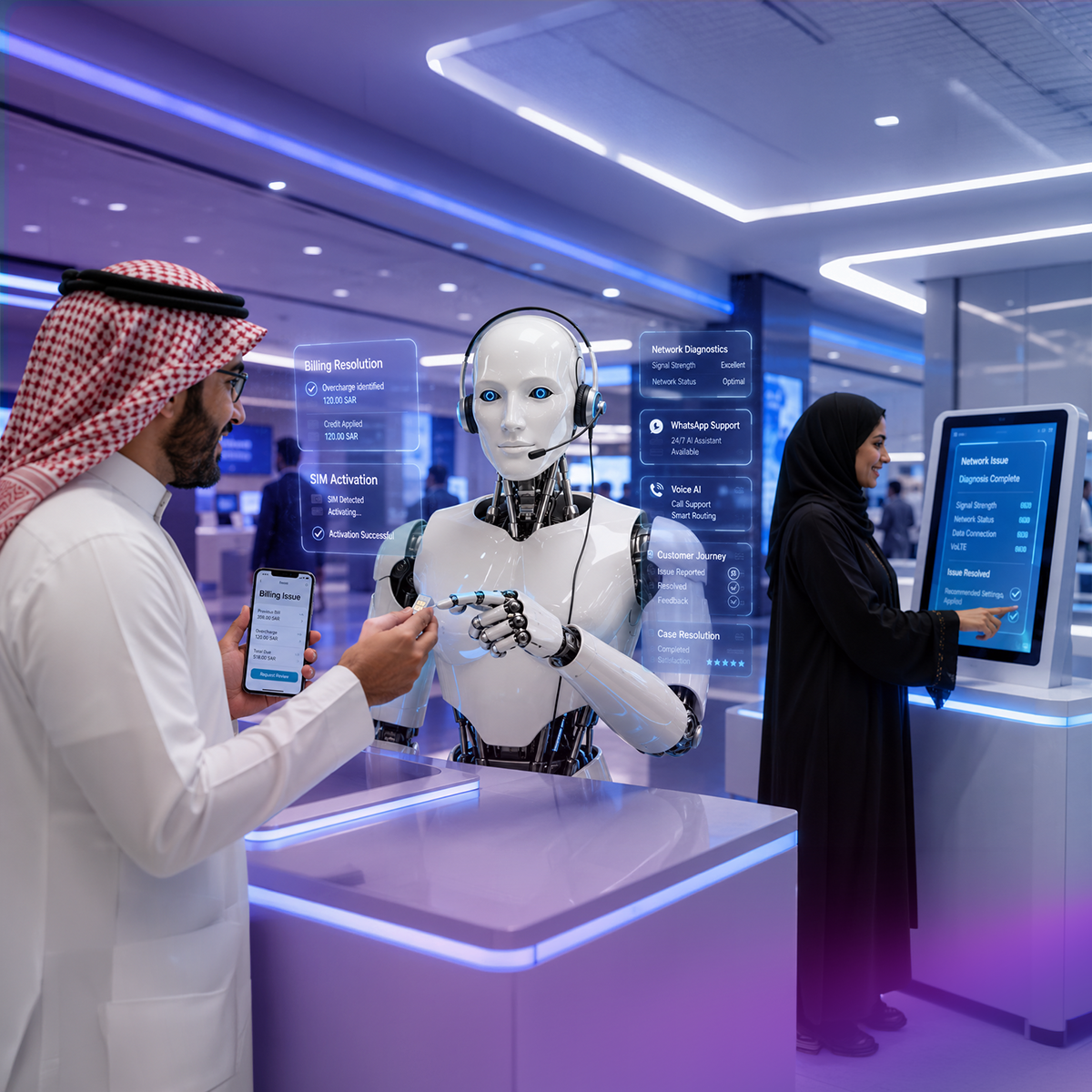
Explore how AI is transforming telecom customer experience. Compare top platforms including NICE CXone and Arabic-first alternatives built for MENA telecom operators.
Wittify.ai is a pioneering AI company specializing in the development of AI agents and applications aimed at automating and streamlining customer engagement activities and processes across various industries. Our mission is to empower businesses by enhancing their customer experience operational efficiency and enabling innovation through intelligent automation.

Information security management system
Business Continuity Management System
Quality Management System

Personal Data Protection Law Compliance
Personal Data Protection Law Compliance
General Data Protection Regulation Compliance


.png)


