



Have legacy chatbots ruined your customer trust? Discover why the era of static bots is over and how a No-Code AI Agent transforms your service into a smart, execution-focused digital workforce—without a single line of code.
We have all lived through this frustrating scenario. Probably more than once.
You contact a company to resolve an urgent issue. You click the chat icon, hopeful for a quick resolution, only to be greeted by a "bot" with a rigid digital smile and a menu of options that have nothing to do with your problem.
You type enthusiastically: "My order is late, and I need to know where it is."
The bot replies instantly: "I didn't understand that. Did you mean: Price List?"
You try again with simpler words. The bot replies with the exact same automated, robotic message. Your blood pressure rises, you close the tab, and you vow never to deal with this brand again.
For years, tech companies sold a promise called the "Chatbot." They promised us Artificial Intelligence, but in reality, they delivered "Artificial Stupidity." That era relied on primitive systems that simply do not meet the expectations of the modern customer.
But today, as we hurtle toward 2026, the rules of the game have changed completely.
The era of the traditional "Chatbot" is officially over. The era of the No-Code AI Agent has begun.
This shift isn't just a minor system update; it is a radical change in philosophy, technology, and how companies respect their customers.
In this comprehensive guide, we will dissect exactly why the first experiment failed, and why adopting a No-Code AI Agent strategy is the only lifeline for your company to regain customer trust and drive revenue.
To understand the magnitude of the solution a No-Code AI Agent offers, we must first be brutally honest about the disaster caused by legacy systems. Traditional chatbots didn't fail just because the technology was "bad"; they failed because they were engineered in a way that fundamentally contradicts natural human behavior.
Old bots operated on a primitive system called "Exact Matching." A programmer would write a rule: "If the customer says the word 'Price', send them the 'Price List'."
The problem is, humans don't speak like robots.
If a customer asked, "How much does this cost?" or "Is this expensive?" or "What’s the damage to my wallet?", the old bot would fail because it couldn't find the specific keyword "Price." It forced the customer to guess the "magic word" the developer programmed just to get an answer, turning customer service into a confusing and frustrating riddle.
The cardinal sin of legacy bots was "Instant Amnesia."
You could give the bot your name, your order number, and the details of your issue. Suddenly, if a menu option interrupted the flow, the bot would ask two minutes later: "What is your order number?"
This cognitive disconnect made the conversation feel like a cold police interrogation rather than warm customer service. The customer feels like they are talking to a brick wall, which kills brand loyalty instantly.
In the past, building any conversational system required a full team of developers and software engineers.
If the marketing team wanted to change a welcome greeting or add a new seasonal offer, they had to submit an "IT Ticket" and wait days or weeks for the update. This bureaucratic barrier made companies hesitate to update their bots, leading to the proliferation of bots dispensing outdated and misleading information.
This is precisely where the revolution of the No-Code AI Agent comes in, smashing this technical barrier and returning power to the decision-makers.
We are not talking about minor tweaks or a "facelift" for the interface. Moving from a traditional chatbot to a No-Code AI Agent is like upgrading from a manual typewriter to a quantum computer. The difference lies in two core elements: "Deep Perception" and "Agentic Action."
A smart assistant built using modern No-Code AI Agent platforms (like Wittify) relies on advanced Large Language Models (LLMs).
It doesn't blindly hunt for the word "Refund"; it understands the meaning behind the words.
If a customer says: "I bought this shirt but it's suffocating me, I'm really sad about it," the smart agent immediately understands several layers:
The agent responds with empathy: "I'm so sorry to hear that! Don't worry, we can exchange it for a larger size immediately. Would you prefer Large or XL?" This level of human-like understanding was impossible in the past.
The old chatbot was merely an information clerk reading from a flyer pasted on the wall. A No-Code AI Agent, however, is a fully empowered Executive Assistant.
This ability to use tools (Tool Use) is what transforms a conversation from idle chat into actual sales and completed actions that drive company revenue.
You might ask: "Why do you keep repeating the phrase No-Code AI Agent? Does it really matter if it's code or no-code as long as it's smart?"
The answer is: Yes, it matters immensely. The No-Code aspect is what makes AI democratic, fast, and scalable in a volatile business environment.
Who knows the customer and their pain points better? A Java developer sitting in a dark room, or the Customer Service Manager who handles complaints daily?
Previously, the programmer wrote the conversation script, and often, that script lacked marketing nuance and empathy.
Today, thanks to No-Code AI Agent platforms, the Marketing Manager, the Sales Lead, or even the Business Owner can build the agent.
The process is simple: You draw the "Conversation Flow," feed the agent PDFs of your company policies and product info, and click "Publish." There is no need to write a single line of code, and no need to wait for the IT department for six months.
Let’s assume you launched a surprise offer for National Day or "White Friday" this morning.
This speed in responding to market dynamics is the killer competitive advantage you need in 2026.
To make the picture crystal clear, let’s explore the fundamental differences between the two systems, not through dry numbers, but through how they think and operate:
If you are convinced that it is time for a change, here is a concise roadmap to building your first assistant using modern No-Code technologies:
Do not try to build a "Superman" agent that does everything on day one. Start with a specialized No-Code AI Agent. For example: "Returns & Exchanges Assistant" or "Real Estate Viewing Coordinator." Specialization means higher accuracy and faster customer satisfaction.
A Smart Assistant is only as smart as the information you give it. Gather all your PDFs, Word documents containing return policies, price lists, and FAQs. No-Code AI Agent platforms like Wittify allow you to upload these files directly for the agent to read, digest, and learn from in seconds.
Is your brand formal and serious (like a bank)? Or friendly and playful (like a fashion store)?
In the settings of your No-Code AI Agent, you can define the Tone of Voice. Remember, in the MENA region, transparency and warmth in speech are the keys to the customer's heart. Make the agent speak a dialect your audience understands (whether it's simplified Classical Arabic or a local dialect).
One of the biggest fears companies have is: "What if the Smart Assistant makes a mistake?"
The modern solution in No-Code AI Agent platforms is the "Hybrid Handoff" system. The agent works 90% of the time, but if it detects customer anger, or if the customer asks a complex question outside its knowledge scope, the agent gracefully and immediately transfers the chat to a human employee, providing a full summary of what happened. This ensures total safety for your brand reputation.
By 2026, customers will no longer forgive companies that force them to repeat themselves or wait hours on hold for a simple answer. The bar has been raised insanely high. Today’s customer compares their experience with you to their experience with global smart apps like Uber or Amazon.
Adopting a No-Code AI Agent gives you two priceless strategic advantages:
The shift from dumb bots to Smart Assistants isn't just a passing tech trend; it is a redefinition of how we respect a customer's time and intelligence. And the best part? Thanks to No-Code AI Agent technology, you no longer need an army of programmers to lead this transformation.
You, your current team, and your market knowledge are all you need to start.
Are you ready to hire the first Smart Assistant for your team?
Don't leave your customers prey to frustration and bad past experiences. Start building your own No-Code AI Agent on Wittify today, and discover how AI can be human, effective, and easier to build than you ever imagined.
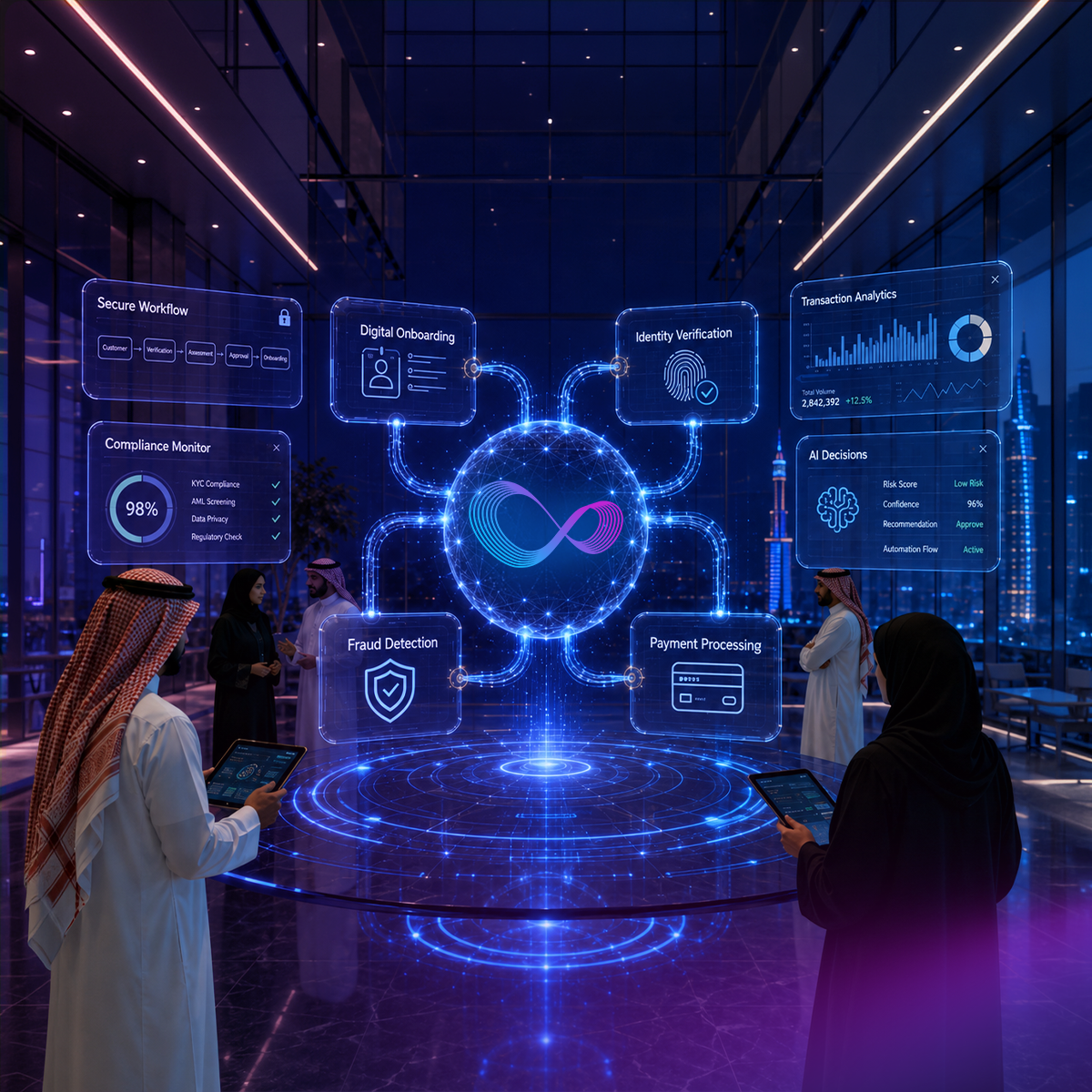
Discover how AI is transforming fintech customer experience in 2026 — from KYC and fraud alerts to Arabic-first support across MENA financial markets.

Most CX automation deployments stall before daily operational use. This guide covers 10 CX automation best practices, from escalation design to omnichannel continuity, with specific guidance for multilingual and Arabic-first contact centers.

Explore how AI is transforming telecom customer experience. Compare top platforms including NICE CXone and Arabic-first alternatives built for MENA telecom operators.
Wittify.ai is a pioneering AI company specializing in the development of AI agents and applications aimed at automating and streamlining customer engagement activities and processes across various industries. Our mission is to empower businesses by enhancing their customer experience operational efficiency and enabling innovation through intelligent automation.

Information security management system
Business Continuity Management System
Quality Management System

Personal Data Protection Law Compliance
Personal Data Protection Law Compliance
General Data Protection Regulation Compliance


.png)


