


.png)
AI High Performers fundamentally re-engineer broken business processes, rather than just automating them. The secret to significant competitive advantage lies in dismantling legacy workflows and redesigning for an AI-first reality.
There is a golden rule in digital transformation that many leaders conveniently forget when the hype of Artificial Intelligence takes over: If you digitize a broken process, you do not get a transformation. You simply get a faster broken process.
As we move deeper into 2025, the year of ubiquitous AI adoption, we are witnessing a concerning trend. In the rush to adopt GenAI and automation tools, countless organizations are making the critical mistake of "paving the cow path." They take their existing, legacy workflows—processes often created decades ago for a paper-based world—and simply layer sophisticated AI tools on top of them.
The result is a phenomenon known as the "efficiency paradox." Teams are using cutting-edge models to draft emails, summarize meetings, and generate code, yet the overall organizational velocity remains stagnant. Why? Because the underlying machinery of the business is clogged with bureaucracy, redundancy, and obsolescence. They have successfully automated the tasks, but they have failed to transform the value stream.
According to the latest McKinsey "State of AI in 2025" report, the corporate landscape has bifurcated. On one side, there is the majority: organizations seeing incremental, often negligible gains from their AI pilots. On the other side, there is a distinct, elite group classified as "AI High Performers."
These High Performers are not defined by the size of their budget or the sophistication of their GPU clusters. They are defined by their results. These are the organizations that attribute more than 5% of their total Earnings Before Interest and Taxes (EBIT) directly to their AI efforts. In a large enterprise, that 5% represents a massive competitive advantage.
So, what are they doing differently? The secret lies not in the software they buy, but in the operational hard work they are willing to do. High Performers aren't just buying better tools; they are fundamentally fixing the machinery of their business.
The gap between the winners and the rest is not anecdotal; it is quantifiable. The data reveals a stark difference in strategy. High Performers are nearly three times (2.8x) as likely as their peers to fundamentally redesign their workflows rather than just automating existing steps.
This metric is the smoking gun of AI success. While the "herd" uses AI to speed up a specific task within a workflow (e.g., "use AI to write this report faster"), High Performers step back and ask a much harder, more uncomfortable question: "Given that this technology exists, do we even need to write this report at all?"
They don't look for ways to make the horse run faster; they build the car. They understand that AI is not a plugin; it is a solvent that dissolves old constraints. If a process requires three levels of approval, an AI summary might speed up the reading, but a High Performer asks why the approvals are necessary in an age of algorithmic risk scoring.
To move from "pilot purgatory" to high performance, leaders must shift their mindset from "automation" to "re-engineering."
Automation is additive. It adds technology to a process. Re-engineering is subtractive. It removes friction, steps, and legacy logic. The High Performers identified in the report are engaging in "radical deconstruction." They map their core value streams and identify every touchpoint where human latency slows down delivery.
Instead of keeping the human in the loop for data entry or routine synthesis, they redesign the flow so that the AI handles the execution, and the human handles the exception. This requires a level of organizational courage that is rare. It means dismantling silos, changing job descriptions, and retiring legacy IT systems that—while functional—prevent the seamless flow of data required for agentic AI.
The lesson for 2025 is clear: Technology is no longer the bottleneck. The bottleneck is the Operating Model.
Organizations that continue to layer AI over dysfunction will simply accelerate their dysfunction. They will generate bad code faster, send spam emails faster, and create confusion faster. True value capture requires a "rewiring" of the enterprise. It demands that leaders look at their operations with a blank sheet of paper and design for an AI-first reality, rather than an AI-enabled past.
Before you deploy your next AI pilot or sign a contract for another LLM wrapper, audit the process it is meant to improve. Look at it critically. Is it clunky? Is it bureaucratic? Is it a relic of a pre-digital era? If the answer is yes, AI won't save it. You have to fix the foundation first.
Are you truly ready to scale, or are you just adding to the noise? The difference between the herd and the winners isn't luck; it's infrastructure. Stop guessing about your operational maturity and start measuring it. Take our Enterprise AI Readiness Index to find out if your organization is built for profit or destined for pilot purgatory.
Assess your readiness here:

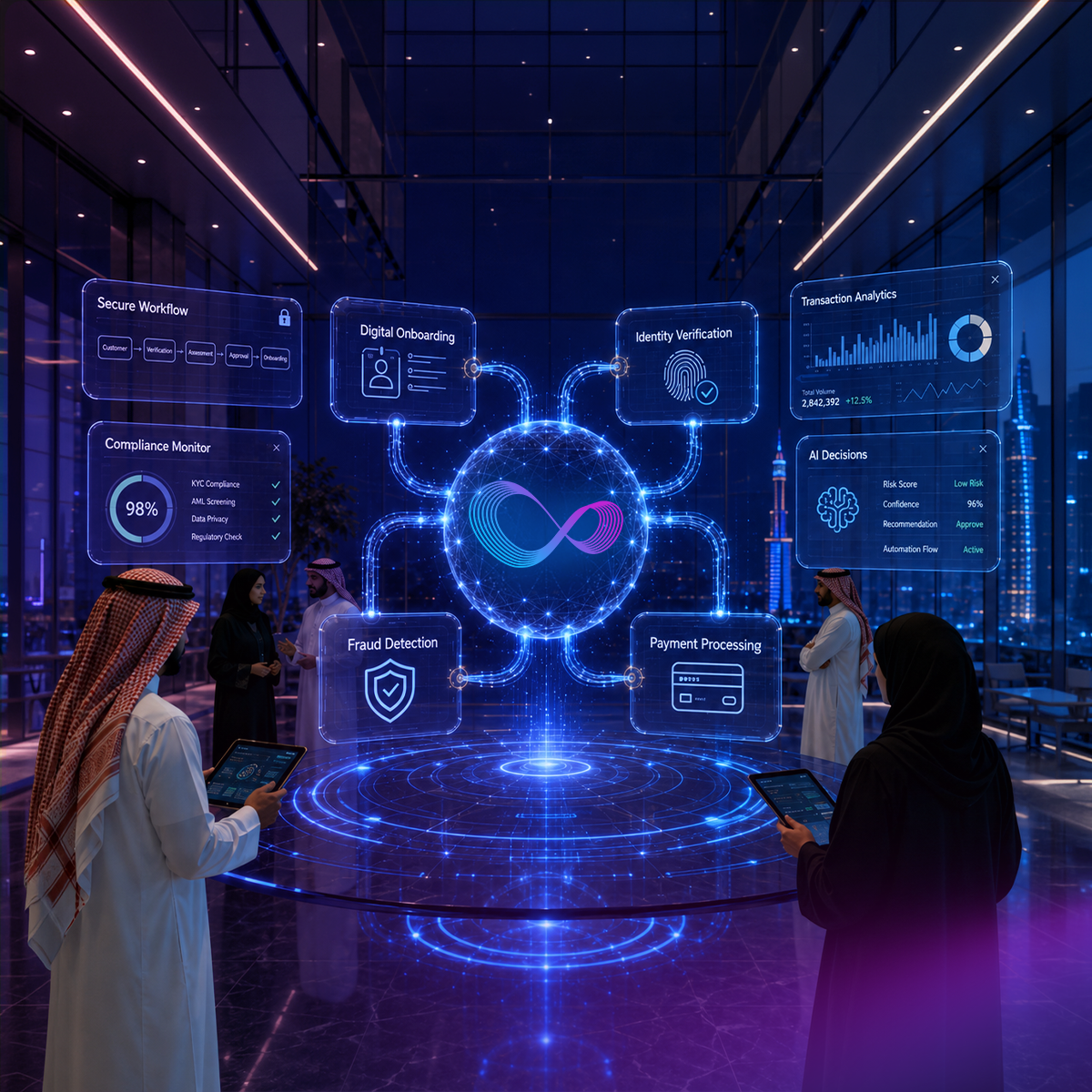
Discover how AI is transforming fintech customer experience in 2026 — from KYC and fraud alerts to Arabic-first support across MENA financial markets.

Most CX automation deployments stall before daily operational use. This guide covers 10 CX automation best practices, from escalation design to omnichannel continuity, with specific guidance for multilingual and Arabic-first contact centers.

Explore how AI is transforming telecom customer experience. Compare top platforms including NICE CXone and Arabic-first alternatives built for MENA telecom operators.
Wittify.ai is a pioneering AI company specializing in the development of AI agents and applications aimed at automating and streamlining customer engagement activities and processes across various industries. Our mission is to empower businesses by enhancing their customer experience operational efficiency and enabling innovation through intelligent automation.

Information security management system
Business Continuity Management System
Quality Management System

Personal Data Protection Law Compliance
Personal Data Protection Law Compliance
General Data Protection Regulation Compliance


.png)


