


Are peak season call volumes crashing your support center? Discover how Enterprise Voice AI delivers infinite scalability, handling 10,000+ concurrent calls instantly without hold times. Transform your customer experience today.
It is the nightmare scenario for every Customer Experience (CX) leader.
It is Black Friday, or perhaps the first day of Ramadan, or the launch of a highly anticipated product. Your marketing team has done an incredible job driving traffic. Sales are spiking. But behind the scenes, your contact center is collapsing.
The queue board is flashing red. Average Hold Time (AHT) has skyrocketed from 2 minutes to 45 minutes. Social media is flooding with complaints from customers stuck listening to elevator music. Your human agents are burnt out, rushing calls, and making mistakes.
For decades, the only solution to this "Peak Season Paradox" was throwing bodies at the problem: hiring hundreds of temporary staff, training them for weeks, and hoping they stick around. It was expensive, inefficient, and often ineffective.
In 2026, the game has changed. The solution is no longer "more humans." The solution is Enterprise Voice AI.
This technology has fundamentally shifted the economics of customer service, moving from linear human scaling to infinite digital scaling. In this guide, we will explore how deploying Enterprise Voice AI allows you to answer 10,000 calls simultaneously without a single customer hearing a busy signal.
To understand why Enterprise Voice AI is a necessity, we first have to look at the limitations of the traditional call center model.
Traditional support is linear. One human agent can handle one phone call at a time. If you have 50 agents, you can handle 50 concurrent conversations. If the 51st customer calls, they wait.
During peak seasons, call volume doesn't just grow linearly; it spikes exponentially. You might go from 1,000 calls a day to 50,000 calls a day overnight.To handle this with humans, you would need to:
This model is rigid and costly. Enterprise Voice AI, on the other hand, is elastic. It treats voice support not as a staffing issue, but as a server capacity issue.
Before we dive into the scalability mechanics, let’s define the term.
Enterprise Voice AI is not the old, clunky IVR (Interactive Voice Response) system that forced you to "Press 1 for Sales." Those systems were just routing tools.
Modern Enterprise Voice AI refers to intelligent, generative voice agents capable of understanding natural language, processing complex intent, and executing tasks. These agents use Large Language Models (LLMs) and advanced speech synthesis to hold natural, human-like conversations. They don't just route calls; they resolve them.
The primary value proposition of this technology during peak seasons is "Concurrency." Here is how it solves the scalability crisis.
Imagine your call center is a physical door. Only one person can walk through at a time. Enterprise Voice AI removes the door and replaces it with a wide-open field.
Because these agents live in the cloud, they are not limited by physical phone lines or human availability. If 500 customers call at 10:00 AM, the system spins up 500 digital agents instantly. If 10,000 customers call at 10:05 AM, the system scales up to 10,000 instances.
There is no "busy signal." There is no "Your call is important to us, please hold." Every single customer is greeted immediately by an intelligent agent ready to help.
During peak seasons, 70-80% of calls are repetitive.
When human agents are forced to answer these same three questions 100 times a day, the queue gets clogged for customers with complex, high-value problems.
Enterprise Voice AI acts as the ultimate filter. It autonomously resolves these Tier 1 and Tier 2 queries without human intervention. This means your human agents are free to handle the VIP clients or complex technical issues that actually require empathy and judgment.
Scalability isn't just about quantity; it's about quality.When a human agent is on their 50th call of the day during a stressful peak shift, their patience wears thin. Errors happen. Tone degrades.
An AI agent maintains the exact same brand persona, tone, and accuracy on the 10,000th call as it did on the first. It doesn't get stressed by angry customers, and it doesn't need coffee breaks. This consistency protects your brand reputation during the most chaotic times of the year.
Implementing Enterprise Voice AI isn't just a customer experience play; it is a massive financial defensive strategy.
Hiring temporary staff is one of the most inefficient expenses for an enterprise. You pay for recruitment, onboarding, and training, only to get 2-3 weeks of productivity before laying them off.
With Enterprise Voice AI, you move from a CapEx (Capital Expenditure) model to an OpEx (Operational Expenditure) model. You pay for what you use.
You are never paying for idle agents, and you are never scrambling to hire more.
Understanding the technology is one thing; deploying it effectively is another. This is where the choice of platform matters.
Many global platforms struggle with the nuances of specific markets, particularly in the Middle East. If your Enterprise Voice AI scales to 10,000 calls but cannot understand the local dialect of the customer, you haven't solved the problem—you've just automated frustration.
At Wittify, we specialize in building Enterprise Voice AI solutions that are:
The definition of a successful peak season is simple: Maximum Revenue with Minimum Chaos.
In the past, chaos was the price of doing business. Today, it is a choice. By adopting Enterprise Voice AI, you are choosing to decouple your growth from your headcount. You are building an infrastructure that breathes and expands with your business needs.
Don't wait for the next crisis to upgrade your infrastructure. The technology to handle 10,000 concurrent calls exists today.
Ready to scale your support without limits?Discover how Wittify’s Enterprise Voice AI platform can transform your customer experience. [Start Your Free Pilot Today].
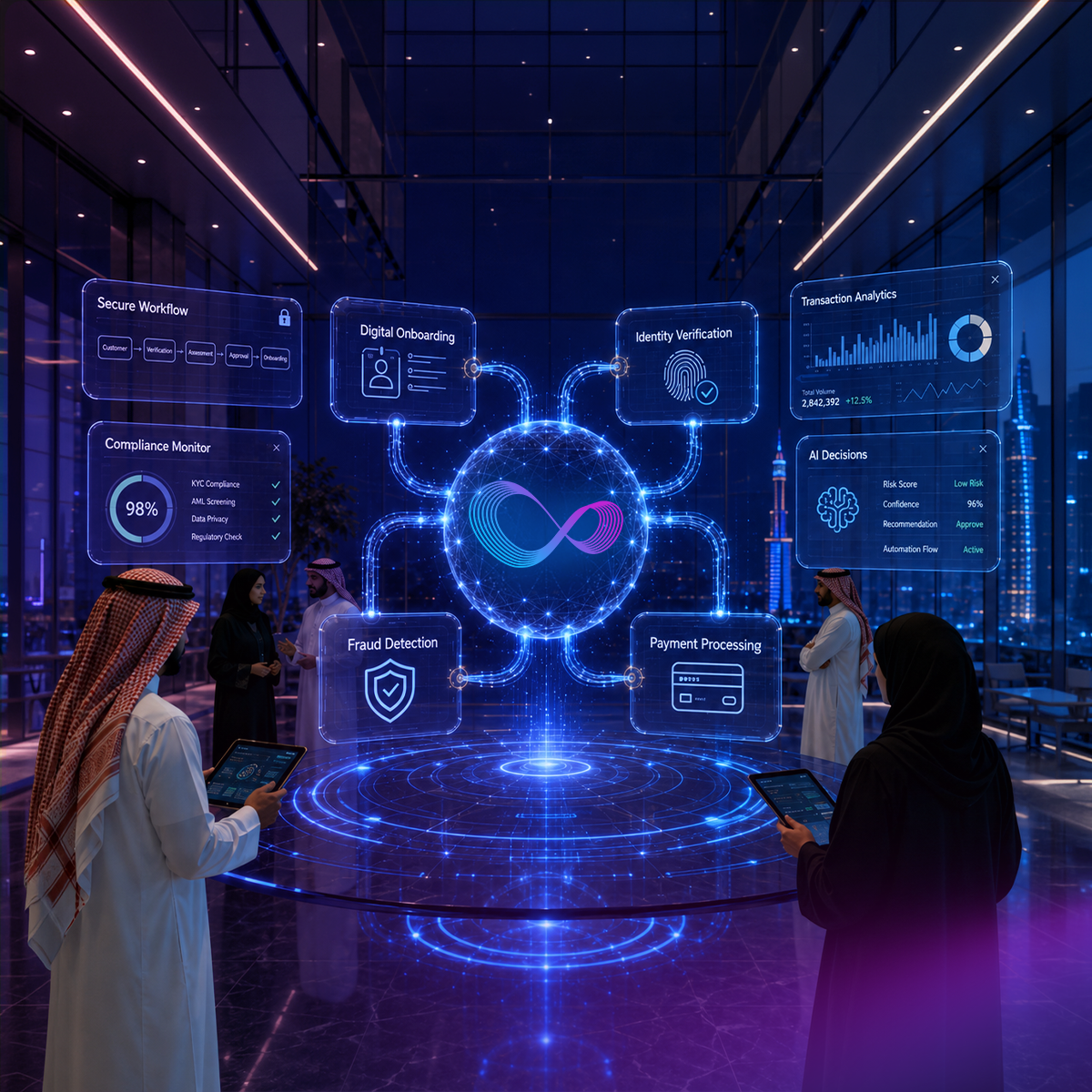
Discover how AI is transforming fintech customer experience in 2026 — from KYC and fraud alerts to Arabic-first support across MENA financial markets.

Most CX automation deployments stall before daily operational use. This guide covers 10 CX automation best practices, from escalation design to omnichannel continuity, with specific guidance for multilingual and Arabic-first contact centers.
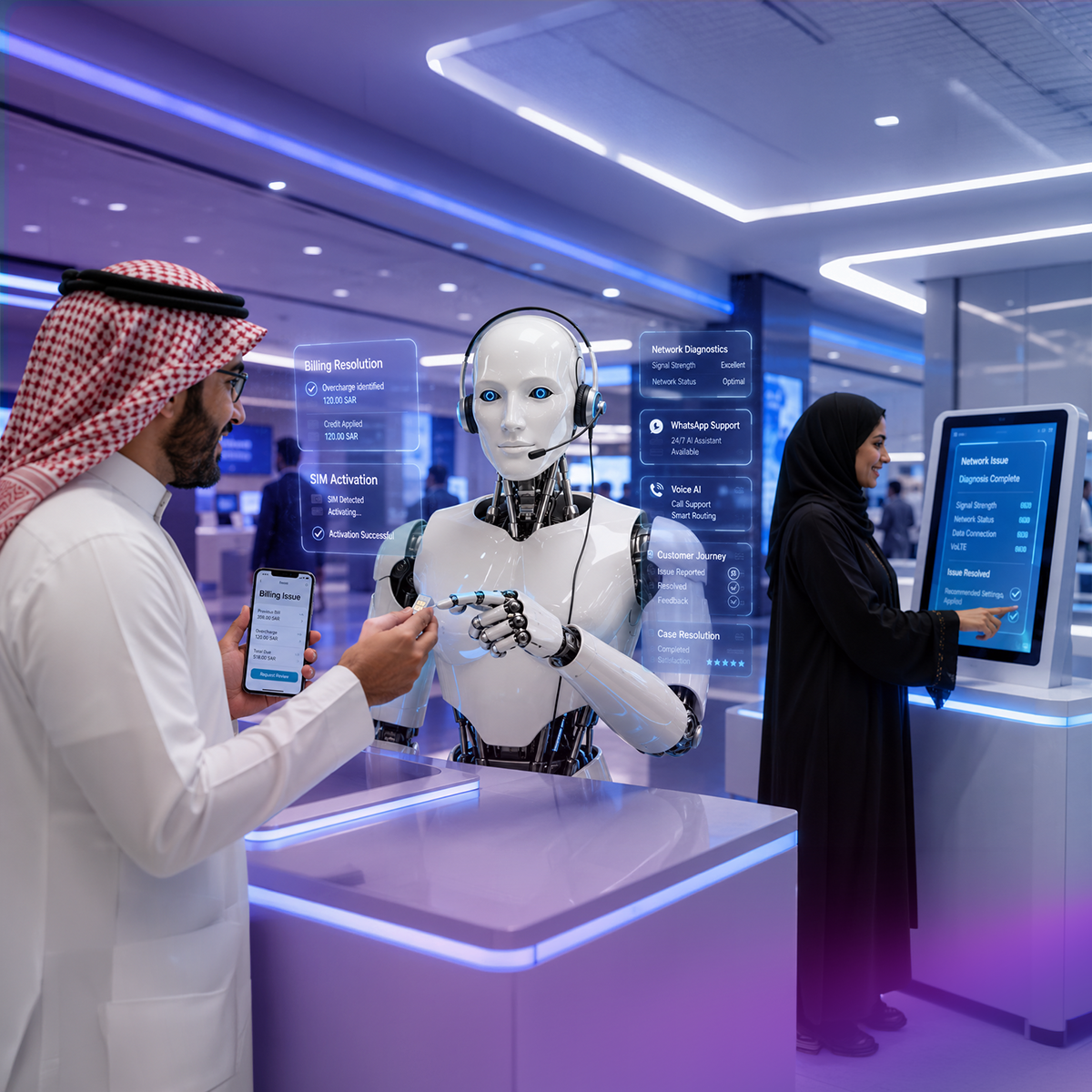
Explore how AI is transforming telecom customer experience. Compare top platforms including NICE CXone and Arabic-first alternatives built for MENA telecom operators.
Wittify.ai is a pioneering AI company specializing in the development of AI agents and applications aimed at automating and streamlining customer engagement activities and processes across various industries. Our mission is to empower businesses by enhancing their customer experience operational efficiency and enabling innovation through intelligent automation.

Information security management system
Business Continuity Management System
Quality Management System

Personal Data Protection Law Compliance
Personal Data Protection Law Compliance
General Data Protection Regulation Compliance


.png)


