


Genesys has AI capabilities, but are they true AI agents? Explore how Genesys and Wittify compare in agent deployment, data handling, cost, and control.
In many enterprise conversations, we hear a familiar statement:
“We’re already using Genesys. They have AI agents too.”
On the surface, this sounds logical. But once teams move beyond marketing claims and look at how agents are deployed, how data is handled, how much control they really have, and how costs scale, the comparison changes completely.
This article explains why Wittify and Genesys are often compared, why that comparison is partially misleading, and why many enterprises conclude that Wittify operates at a different layer of the tech stack altogether.
Can Genesys agents be deployed easily and natively on WhatsApp, X, Facebook, Instagram, the web, mobile apps, and phone (SIP)?
The Short Answer: Not easily, and not natively in the way most people assume.
Genesys is fundamentally a contact-center platform. While it supports multiple digital channels, AI automation is typically:
In Practice:Deploying a Genesys agent directly inside WhatsApp, Instagram DMs, Facebook Messenger, or X often requires additional middleware and setup. Human handoff is the default design assumption, meaning automation often remains partial.
The Wittify Reality:Wittify agents are channel-native by design. The same agent logic runs everywhere:
Why this matters: Users don’t care where your contact center lives; they care where they live. An agent that cannot easily deploy into customer-preferred channels is not truly scalable.
This is where the gap becomes very clear.
Genesys Knowledge & RAG:Genesys works best when knowledge is structured, articles are curated, and content fits a classic “contact-center KB” model. This is fine for FAQs, but real enterprise data (especially in the GCC) is messy:
The Wittify Approach:Wittify treats knowledge ingestion as a first-class problem. We focus on:
Cost uncertainty kills adoption. Enterprises want to scale AI safely, not fear the invoice.
The Genesys Cost Model:AI capabilities are often bundled into higher tiers or based on complex token usage. Voice, digital, and AI usage can quickly become hard to predict, attribute, or optimize. As automation scales, the "AI experiment" becomes expensive.
The Wittify Cost Model:
What Genesys calls "AI" is primarily a set of capabilities: ASR, TTS, and LLM-based assistance. It is designed to enhance human agents and predefined flows.
Wittify is an AI-native agent platform. It is built around:
This is a critical point: No rip-and-replace is required.
Wittify agents can be integrated into Genesys flows as an "Intelligence Layer."
It is a best-of-both-worlds architecture.
Genesys is a world-class contact-center platform with AI capabilities. Wittify is an AI-native agent platform that integrates into contact centers—including Genesys.
If your enterprise cares about channel reach, Arabic-first experiences, complex data handling, and cost control, Wittify offers the depth of control needed for a future-proof AI strategy.
Ready to see the difference? You can try Wittify now for free!
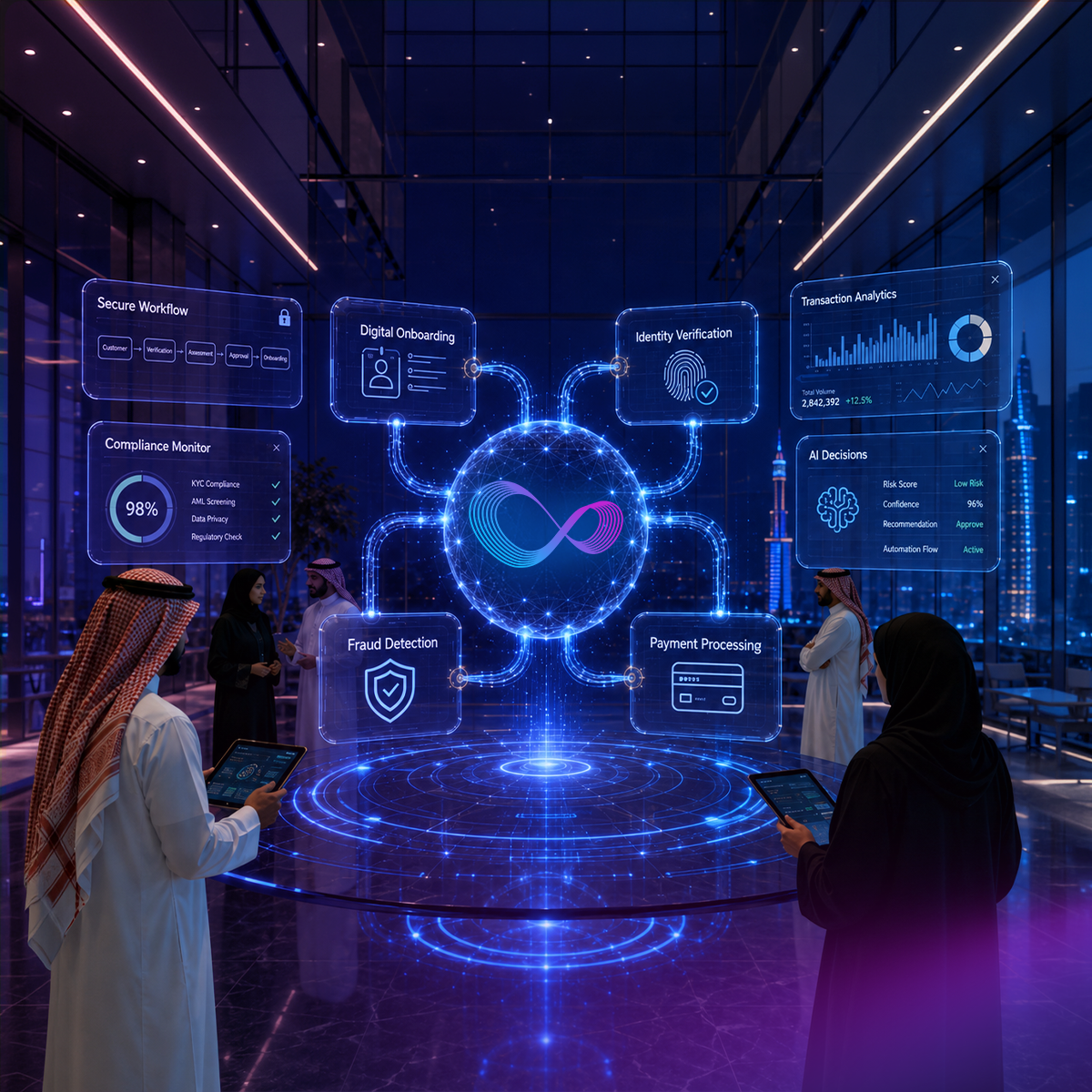
Discover how AI is transforming fintech customer experience in 2026 — from KYC and fraud alerts to Arabic-first support across MENA financial markets.

Most CX automation deployments stall before daily operational use. This guide covers 10 CX automation best practices, from escalation design to omnichannel continuity, with specific guidance for multilingual and Arabic-first contact centers.
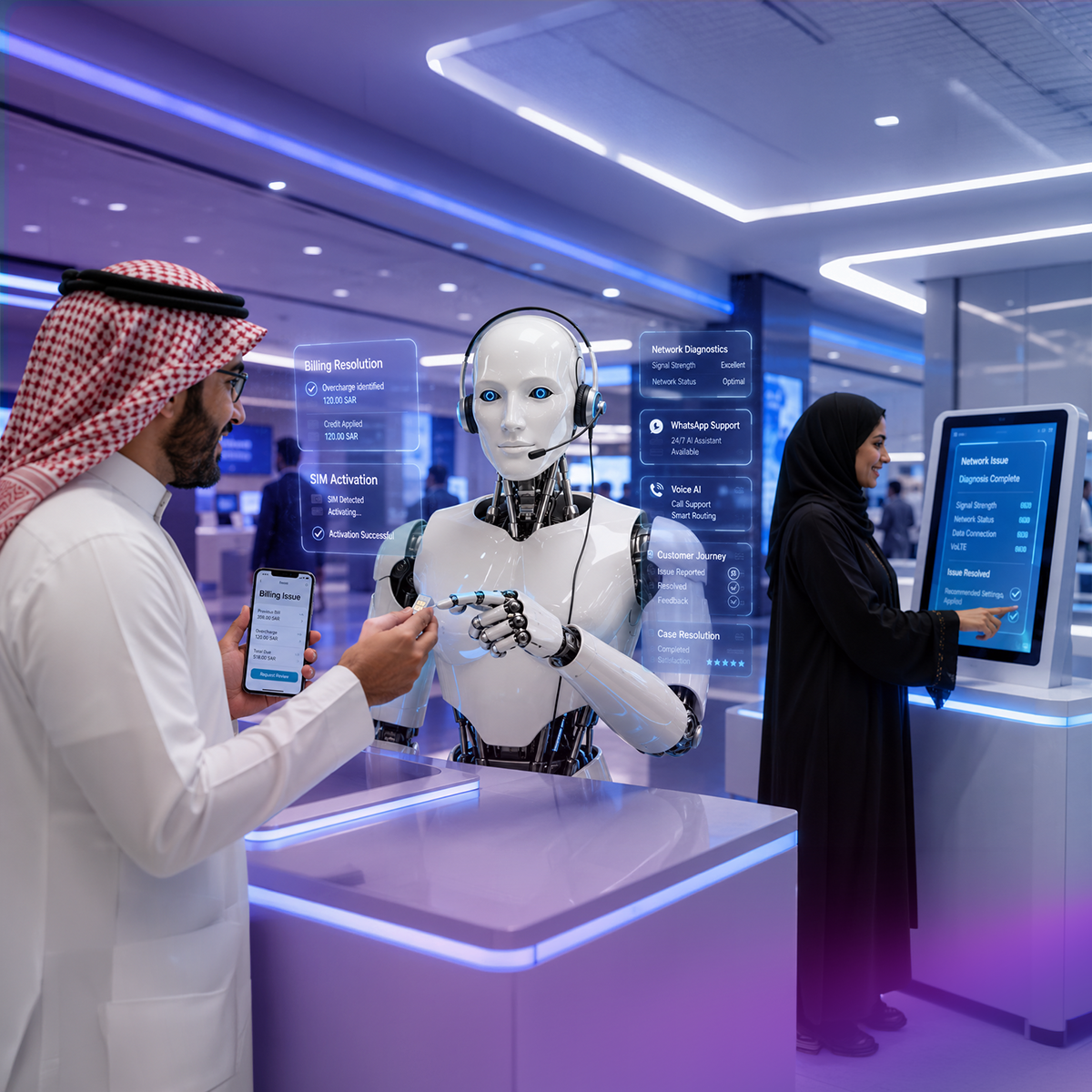
Explore how AI is transforming telecom customer experience. Compare top platforms including NICE CXone and Arabic-first alternatives built for MENA telecom operators.
Wittify.ai is a pioneering AI company specializing in the development of AI agents and applications aimed at automating and streamlining customer engagement activities and processes across various industries. Our mission is to empower businesses by enhancing their customer experience operational efficiency and enabling innovation through intelligent automation.

Information security management system
Business Continuity Management System
Quality Management System

Personal Data Protection Law Compliance
Personal Data Protection Law Compliance
General Data Protection Regulation Compliance


.png)


