


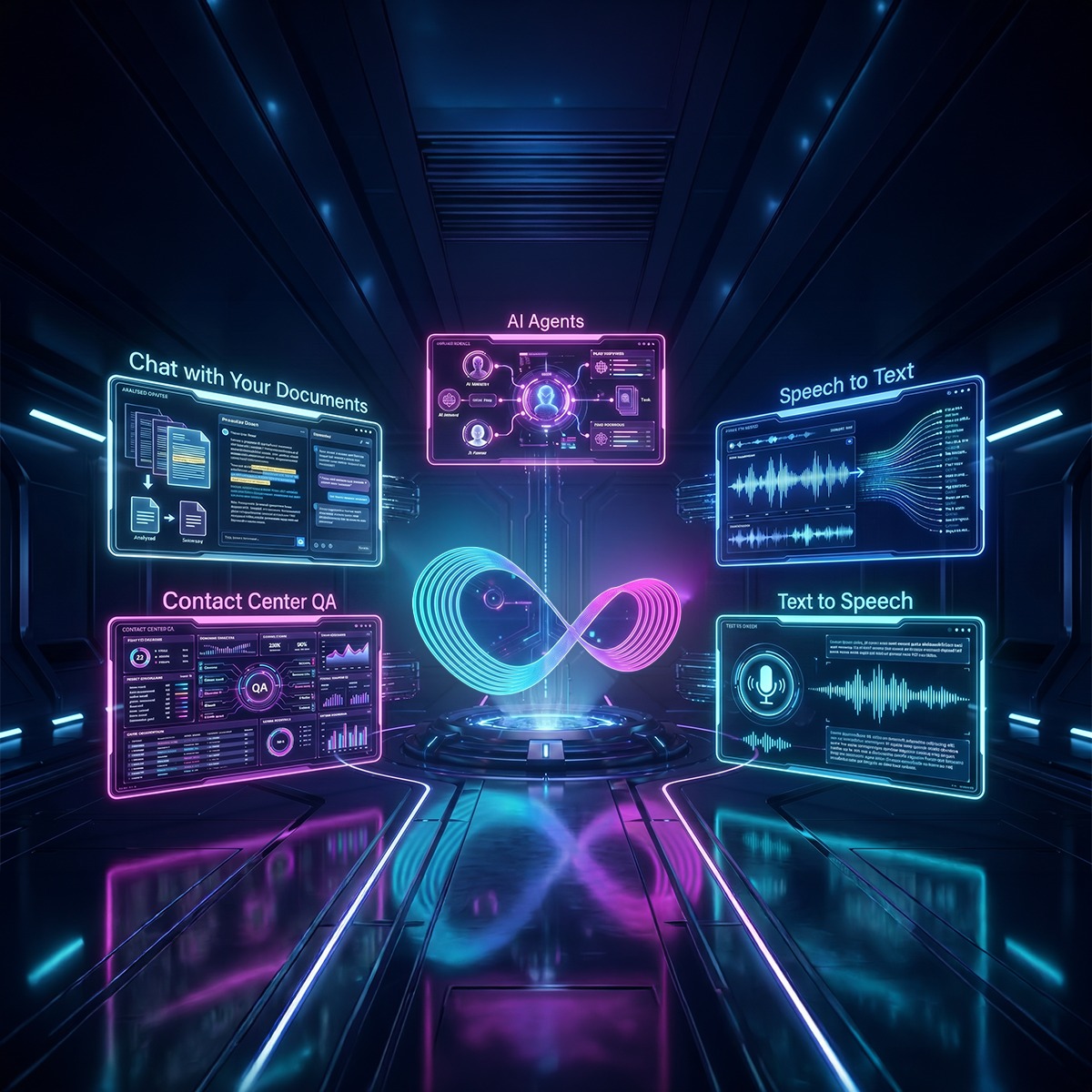
Wittify began with AI Agents that could act. Today, they listen across Arabic dialects, sound human, review 100% of conversations, and cite every answer from your data. Here’s how Wittify’s five products evolved into an accountable enterprise AI stack.
When Wittify first launched its platform, its AI agents were capable of execution. They could manage conversations, answer questions, and handle simple tasks like lead qualification, meeting scheduling, and inbound call handling. It was genuinely useful—but it didn’t fully meet all our clients’ needs.
At that stage, the value was clear. Enterprises could deploy voice and text agents across multiple channels, automate repetitive interactions, and build faster service journeys without complex technical projects. Wittify positioned itself as a multi-channel enterprise conversational platform for voice and text, with a no-code deployment model that enabled teams to launch agents quickly.
But as customer expectations evolved, responding alone was no longer the benchmark. Businesses needed AI that could understand language more deeply, operate with greater consistency, and handle the realities of Arabic not as an afterthought, but as a core part of the design. They also needed a system that could stand up to real operational demands; governance, compliance, and scalability. That’s where Wittify’s product evolution began.
The core of Wittify is still its AI Agents. They are built to do more than generate responses. They qualify leads, schedule appointments, manage inbound conversations, and support customer service workflows across voice, chat, and hybrid journeys. Wittify’s documentation explicitly frames the platform around automating support, qualifying leads, scheduling appointments, and managing multichannel conversations through no-code AI agents.
That matters because many businesses do not need another AI tool that only talks. They need one that moves work forward. An AI agent that captures demand but cannot qualify it, or answers a customer but cannot trigger the next step, still leaves too much manual work behind. Wittify’s AI Agents were built around action from the start.
And yet, even that was only phase one.
.png)
The next leap was teaching the system to listen properly. That is the role of Wittify’s speech layer, represented in your narrative by Faheem. The broader Wittify platform and documentation describe integrated ASR capabilities and Arabic-first conversational AI built for multilingual and multimodal engagement. External coverage also highlights Wittify’s proprietary Arabic speech technologies and support for more than 25 Arabic dialects.
This step changed the experience completely. Once AI can reliably convert speech into text, customer conversations stop being fleeting audio and start becoming usable data. Calls become searchable, measurable, and reviewable. Supervisors can look for patterns. Product teams can learn what customers are actually asking. Operations teams can detect friction before it becomes churn.
In storytelling terms, this is where Wittify’s agents stop only “speaking” and start understanding what is really being said. It is the moment AI becomes more grounded in the customer’s voice, accent, and intent; especially important in Arabic-speaking markets, where dialect sensitivity is not a feature request but a business requirement.
.png)
Listening well is only half the conversation. The next milestone was voice quality; how AI speaks back. Wittify’s product suite includes Text-to-Speech, which supports natural voice experiences for enterprise deployments across voice channels. The company’s positioning consistently emphasizes human-like AI agents across phone, web, and messaging experiences.
In your email narrative, that milestone is represented by Faseeh: the part of the stack that made AI sound warmer, more natural, and more aligned with how brands actually want to be heard. That distinction matters. If the voice sounds stiff, robotic, or obviously synthetic, the customer experience breaks immediately. A smarter backend cannot save a poor front-end voice experience.
This is why voice AI maturity is not only about language generation. It is also about pacing, tone, naturalness, and brand fit. Wittify’s evolution here reflects a broader enterprise reality: companies do not want automation that feels cheap. They want automation that still feels intentional.
A relevant read here is Wittify’s earlier post, What is Enterprise Voice AI? Driving the Next Era of Business Automation, which expands on why sophisticated voice experiences are becoming central to modern enterprise operations.
.png)
At this point, the product story becomes much more interesting.
Once AI Agents can act, listen, and speak naturally, the next challenge is no longer capability. It is accountability.
If thousands of conversations happen every day across human agents and AI agents, how do you know what is actually going on? How do you catch quality problems, compliance failures, or missed sales opportunities at scale?
That is where Contact Center QA enters the story. Wittify positions this product around automatic scoring of 100% of voice and chat interactions, with sentiment detection, compliance monitoring, and coaching insights across human and AI agents alike. Instead of sampling a small fraction of calls and hoping the rest went well, teams get visibility across the entire operation.
This is one of the strongest moments in the evolution arc because it moves the story from “AI that helps” to “AI that can be managed.” The difference is enormous. Banks, telcos, healthcare providers, government hotlines, and BPOs do not just need automation. They need traceability, consistency, and the ability to improve performance every week based on real interaction data.
.png)
The next step was not about sounding smarter. It was about becoming more defensible.
Wittify’s Chat with Documents product extends the platform into document-grounded AI. It allows teams to ask questions over internal documents and retrieve answers linked to trusted enterprise knowledge. Wittify’s documentation highlights conversational assistants that can integrate with business tools and workflows, while the product suite frames document-based interaction as part of the broader enterprise AI environment.
This matters because enterprise trust is built on source visibility. If an internal team asks a question about policy, contracts, or operational rules, “the AI said so” is not good enough. The answer needs to be grounded in company data. This is the logic behind the line in your email: “We taught them to cite their answers.”
Once AI can point back to the source, it becomes much easier to use in regulated settings, internal operations, and decision-heavy workflows. It stops acting like a black box and starts acting like a system your teams can actually work with.
.png)
That is the real story behind Wittify’s five products.
The agents are not just smart anymore. They are accountable. And the cherry on top? Our ISO certifications; proof that Wittify is built for enterprise-grade quality, security, and continuity from the ground up.
This is why the story works better as an evolution than as a product list. Wittify did not simply release five disconnected tools. It kept teaching the same system new responsibilities, until the result was not just AI that can answer, but AI that can act, listen, sound human, review itself, and justify what it says.
That is the difference between AI that is merely impressive and AI that enterprises can trust.
Ready to see how Wittify’s AI Agents evolved into a full accountable enterprise AI stack? Visit wittify.ai to explore the platform and book a custom demo.
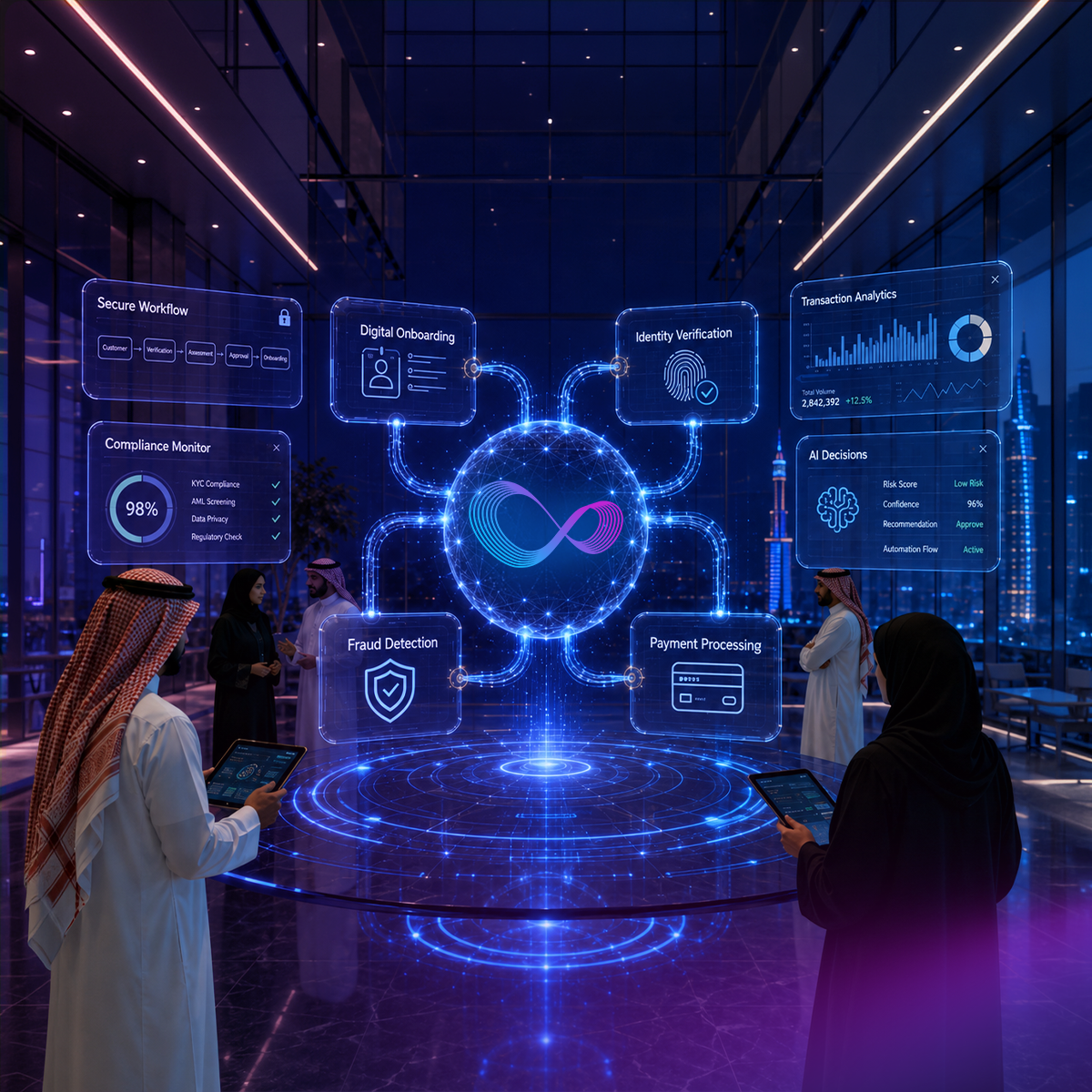
Discover how AI is transforming fintech customer experience in 2026 — from KYC and fraud alerts to Arabic-first support across MENA financial markets.

Most CX automation deployments stall before daily operational use. This guide covers 10 CX automation best practices, from escalation design to omnichannel continuity, with specific guidance for multilingual and Arabic-first contact centers.
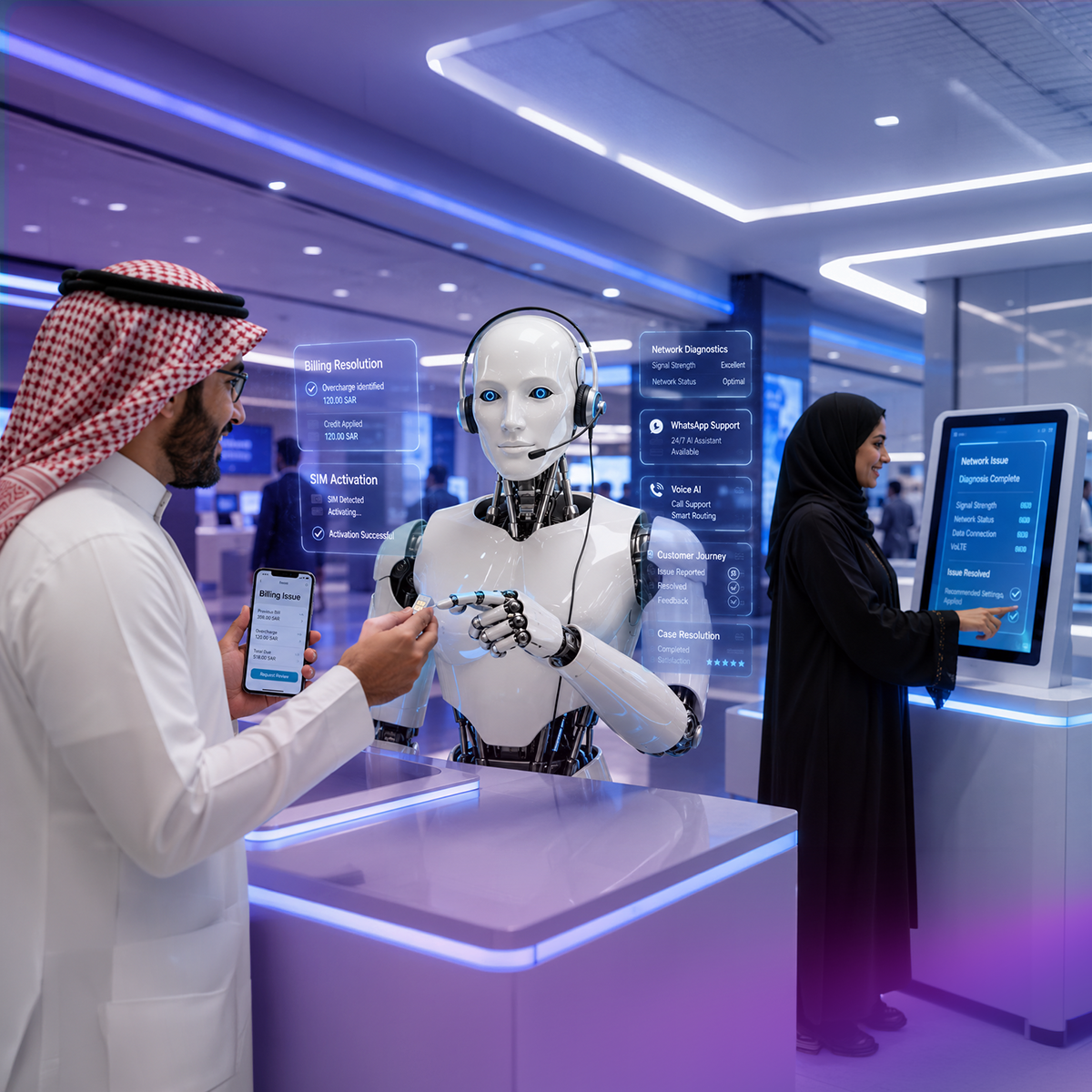
Explore how AI is transforming telecom customer experience. Compare top platforms including NICE CXone and Arabic-first alternatives built for MENA telecom operators.
Wittify.ai is a pioneering AI company specializing in the development of AI agents and applications aimed at automating and streamlining customer engagement activities and processes across various industries. Our mission is to empower businesses by enhancing their customer experience operational efficiency and enabling innovation through intelligent automation.

Information security management system
Business Continuity Management System
Quality Management System

Personal Data Protection Law Compliance
Personal Data Protection Law Compliance
General Data Protection Regulation Compliance


.png)


