


.png)
For years, the word "AI" has conjured images of data scientists in lab coats, multi-million dollar budgets, and six-month development cycles. It was the realm of the Fortune 500—a slow, expensive, and exclusive club. This perception created a massive bottleneck in business: the IT Backlog.
For years, the word "AI" conjured images of data scientists in lab coats, multi-million dollar budgets, and six-month development cycles. It was the realm of the Fortune 500—a slow, expensive, and exclusive club. This perception created a massive bottleneck in business: The IT Backlog.
You—the marketing director, the growth hacker, the business owner—had a brilliant idea for an AI-powered lead-qualification bot. But to execute it, you had to write a project brief, wait for budget approval, get in the IT queue behind system migrations, and babysit the process for weeks.
That era is over. The rise of No-Code AI is the greatest democratization of technology since the personal computer. It has vaporized the IT backlog, allowing domain experts to build and deploy sophisticated, revenue-driving AI tools in less time than a single team meeting.
The secret behind the speed is abstraction. No-Code AI platforms handle the infrastructure and machine learning models, allowing you to focus purely on business logic.
Forget weeks; we’re using a stopwatch. This timeline assumes you have a clear goal and your data ready.
The true power of no-code is realized in the Conversational Flow Design. This is where you replace generic questions with intelligent segmentation.
Instead of asking a blunt "What is your budget?", design the AI to ask context-aware questions: "Are you interested in a solution for teams of 50-100, or enterprise scale?". The answers immediately place the lead into a high-intent segment and map them directly to your CRM fields. You aren't coding an API; you are simply drawing a line from a chatbot variable to a CRM field.
Because deployment is so fast, you can move from "betting the house" to "agile experimentation." You can run three small pilots in a single afternoon:
If Pilot A increases qualified leads by 15%, scale it instantly. If Pilot B fails, scrap it with only 60 minutes of effort lost.
Stop discussing AI strategy and start deploying AI solutions. Your first 60-minute agent is your Minimum Viable Product (MVP)—it begins collecting real-world data immediately, allowing you to identify friction points and optimize based on facts, not assumptions.
Shut down your calendar for the next hour. Log into a no-code platform, grab your product sheet, and go live while your competition is still waiting for an IT update.
The future of growth is built by the people who move fastest. Stop waiting and start building your first AI agent with Wittify today.
.jpeg)
Most contact centers still rely on sample-based QA. The real issue is not speed. It is visibility across every interaction, channel, and agent. Sample-based QA no longer gives contact centers the visibility they need. Here is why modern teams need broader insight across human and AI-led interactions.
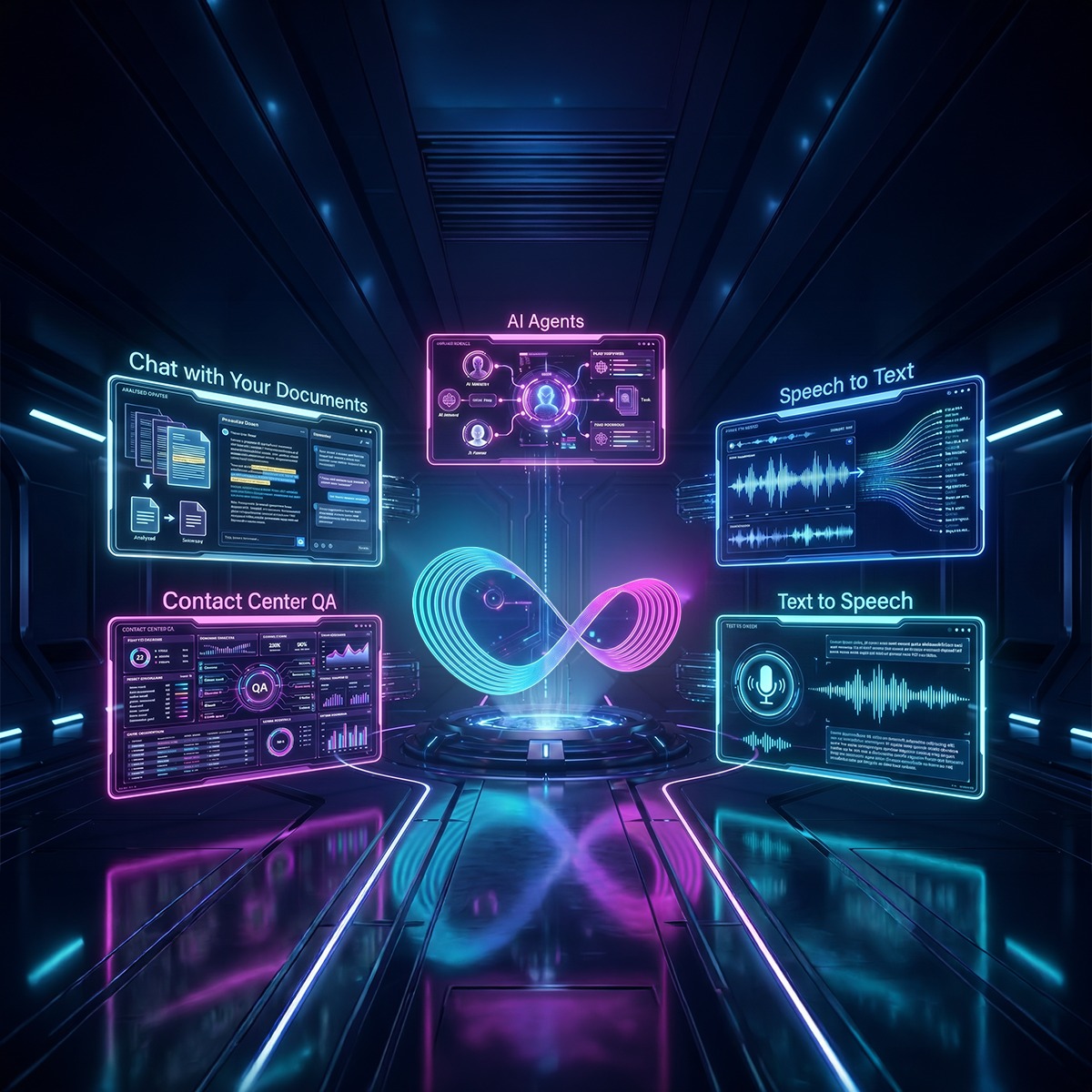
Wittify began with AI Agents that could act. Today, they listen across Arabic dialects, sound human, review 100% of conversations, and cite every answer from your data. Here’s how Wittify’s five products evolved into an accountable enterprise AI stack.

Google has launched Gemini's Personal Intelligence feature across the Arab world, connecting Gmail, Photos, and personal apps for tailored AI experiences. Here's what this means for Arabic-speaking users and enterprise conversational AI in the MENA region.
Wittify.ai is a pioneering AI company specializing in the development of AI agents and applications aimed at automating and streamlining customer engagement activities and processes across various industries. Our mission is to empower businesses by enhancing their customer experience operational efficiency and enabling innovation through intelligent automation.

Information security management system
Business Continuity Management System
Quality Management System

Personal Data Protection Law Compliance
Personal Data Protection Law Compliance
General Data Protection Regulation Compliance


.png)


