


.png)
Burger King is testing LLM powered headsets that coach staff on friendliness and operational accuracy. For UAE, Saudi, and GCC CX leaders, it signals the rise of employee facing AI. Learn the upside, risks, and a practical rollout playbook.
Burger King’s latest AI initiative is not another customer chatbot. It is an employee facing assistant that listens during service interactions and coaches staff to be more welcoming, while also helping them execute operational tasks faster. Reports describe the assistant, “Patty,” as part of “BK Assistant,” piloted in 500 US restaurants, with broader availability targeted by the end of 2026. The system can track hospitality keywords like “welcome,” “please,” and “thank you” to understand service patterns and support coaching. It has also sparked backlash online over the idea of AI monitoring workers.
For UAE, Saudi, and wider GCC decision makers, this story is relevant even if you are not in QSR. It signals a shift from AI that replaces humans to AI that upgrades humans. That is the difference between “automation” and “augmented service,” and it can apply equally to retail stores, contact centers, government service desks, and high volume enterprise support.
According to reporting, Patty runs through employee headsets and supports real time operations, such as answering questions about menu items or procedures and helping managers handle issues like out of stock items. At the same time, it analyzes service interactions and uses selected phrases as one way to refine a definition of “friendliness,” with the stated goal of coaching, not scripting. Burger King has also stated the system is not designed to track or evaluate individual employees saying specific words or phrases, and that it is not about scoring individuals.
This dual purpose is what makes the initiative worth studying. It combines operational copiloting with quality coaching, on the same frontline interaction.
In GCC markets, customer experience is increasingly judged in moments, not channels. One bad interaction in store, on a call, or on WhatsApp can undo months of brand building. That is why “standardizing hospitality” becomes a board level concern when you operate across branches, shifts, and languages.
Burger King is effectively trying to scale a soft skill, friendliness, using a data assisted coaching loop. GCC organizations can apply the same concept to:
The bigger lesson is that employee facing AI is becoming a competitive lever, not a future experiment.
This category of AI can deliver real value when it is designed as a “coach”:
But it can backfire if it becomes “surveillance,” even unintentionally:
The executive decision here is not “Should we use AI?” It is “How do we deploy AI in a way that improves performance without damaging trust?”
Here is a C level, easy to execute approach that works across QSR, retail, and enterprise CX.
Burger King’s story shows that the next wave of CX AI will sit beside employees and operate in real time. Wittify is built for that enterprise reality, not only for chat automation. With our newly announced WhatsApp Calling support, your AI agents can extend beyond text into voice interactions on the channel customers already use daily, while keeping governance, routing logic, and customer context unified across modalities.
If you are building a WhatsApp-first service strategy, this is the natural next step after shifting from email to asynchronous messaging.
Related read: The Death of Email Support: Why Async Messaging & WhatsApp Are the Future
That means a retailer can offer one consistent journey: WhatsApp message, WhatsApp call, and live agent escalation, without fragmenting data, policies, or reporting.
Ready to implement a GCC-ready AI experience across Web, WhatsApp, Instagram, Messenger, X and/or calling? Book a consultation with Wittify
Feeling uncertain? Take our AI Readiness Index to benchmark your next steps:

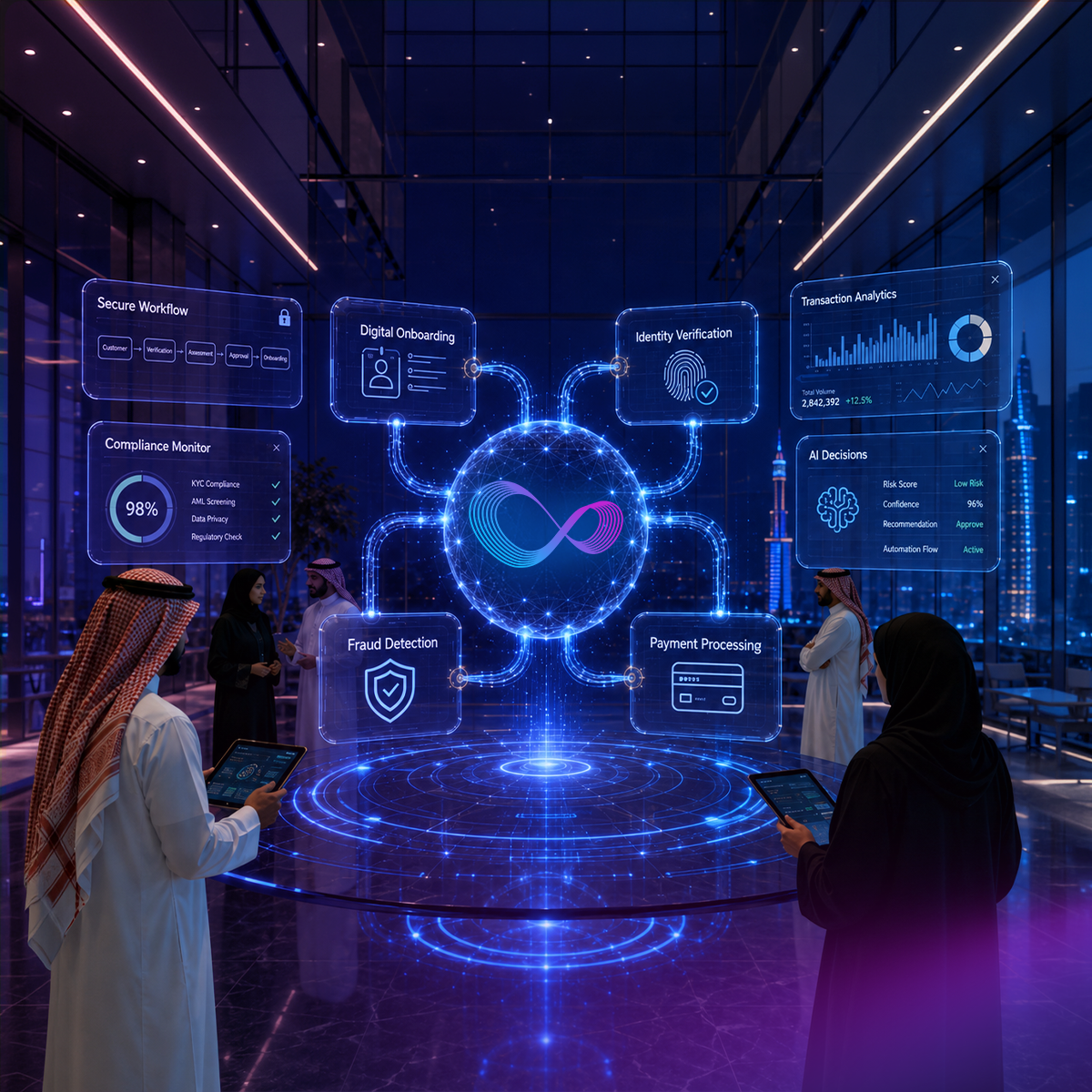
Discover how AI is transforming fintech customer experience in 2026 — from KYC and fraud alerts to Arabic-first support across MENA financial markets.

Most CX automation deployments stall before daily operational use. This guide covers 10 CX automation best practices, from escalation design to omnichannel continuity, with specific guidance for multilingual and Arabic-first contact centers.
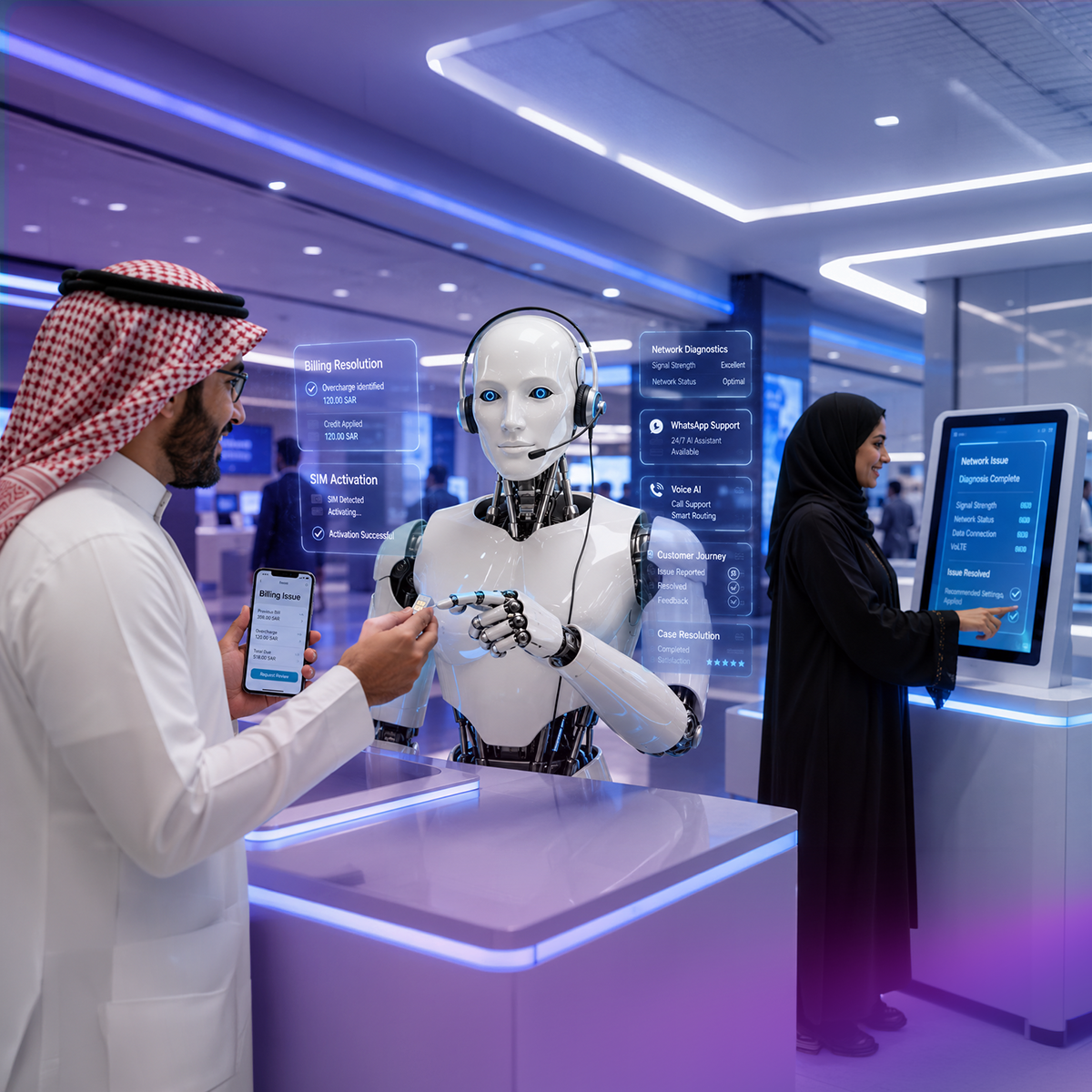
Explore how AI is transforming telecom customer experience. Compare top platforms including NICE CXone and Arabic-first alternatives built for MENA telecom operators.
Wittify.ai is a pioneering AI company specializing in the development of AI agents and applications aimed at automating and streamlining customer engagement activities and processes across various industries. Our mission is to empower businesses by enhancing their customer experience operational efficiency and enabling innovation through intelligent automation.

Information security management system
Business Continuity Management System
Quality Management System

Personal Data Protection Law Compliance
Personal Data Protection Law Compliance
General Data Protection Regulation Compliance


.png)


