



The Turing Test measured how well AI could talk. Artificial Capable Intelligence asks something far harder: can an agent take $100,000 and turn it into $1 million, with no human help? Here is why ACI is the benchmark that actually matters.
Alan Turing's original question was deceptively simple: can a machine converse so naturally that a human cannot tell the difference? For decades, that framing shaped how the world measured AI progress. Then large language models arrived, passed the Turing Test convincingly, and exposed a deeper question that had been hiding beneath the surface all along. Talking well and doing well are two entirely different things.
Artificial Capable Intelligence, or ACI, is the benchmark reframing that conversation. It does not ask whether an AI can sound human. It asks whether an AI can operate independently in the real world, over an extended and unpredictable timeline, to achieve a meaningful, measurable outcome. The proposed test is deliberately blunt: give an agent $100,000 and ask it to legally turn that into $1 million, without any human involvement whatsoever.
That single question changes everything about how we think about where AI is headed.
The challenge of ACI is not computational power or language fluency. It is the full stack of real-world execution sustained over time. An agent pursuing a 10x return on investment cannot generate its way to success. It must act.
That means calling APIs, managing finances, writing and sending communications, making purchases, negotiating decisions, analysing its own performance, and course-correcting, for as many cycles and as long as it takes to reach the target. The timeline is not defined. The method is not prescribed. The only constraint is the outcome.
The paths are deliberately open-ended, which is part of what makes ACI such a revealing benchmark. Maybe an agent launches and runs an organic cotton apparel business. Maybe it produces educational video content and builds a monetisation strategy around it. Maybe it pursues several ventures in parallel, allocating capital the way a seasoned investor would. Whatever path it takes, the agent must sustain autonomous execution across an unpredictable, messy, real-world environment — not a controlled sandbox.
We are not at ACI yet. But the trajectory of where we are heading is becoming harder to dismiss.
The latest research from METR, one of the leading organisations studying autonomous AI task performance, shows that agents just jumped from reliably completing 6-hour tasks to 12-hour ones, doubling what was previously achievable. That might sound incremental. It is not.
The history of AI progress has not been linear. It has been characterised by capability jumps that arrive faster than most forecasts anticipate, and then compound. A doubling of autonomous task duration is a signal, not a footnote. The gap between a 12-hour autonomous task and the kind of multi-week sustained execution ACI demands is still significant, but the curve is rising in the right direction and doing so faster than expected.
As we explored in our blog on Saudi Arabia's Year of Artificial Intelligence and what it means for enterprise leaders, the broader AI landscape is accelerating across every dimension simultaneously. ACI is one of the clearest signals of where that acceleration is pointing.
Most enterprise leaders do not need to wait for an AI agent to turn $100,000 into $1 million before rethinking their operations. The meaningful shift is already underway at a smaller but equally consequential scale.
Agents that can autonomously handle multi-step customer interactions, execute complex workflows, manage escalations, and operate across channels without constant human supervision are not a future concept. They are in deployment today. The ACI conversation matters for enterprise strategy precisely because it clarifies the direction of travel. The capability curve is pointing toward agents that can own outcomes, not just assist with tasks.
That distinction changes how enterprises should think about AI investment. Not as a tool layered onto existing workflows, but as an operational layer that can increasingly take responsibility for entire processes. The enterprises building toward that model now, rather than waiting for the benchmark to be officially passed, are the ones that will define what the next phase of AI-powered operations looks like.
Want to see how agentic AI is already transforming enterprise customer operations in the GCC? Explore what Wittify.ai is building for the region.

Comparing contact center quality assurance platforms in 2026? This guide explains how AI-powered QA works, what global tools do well, and what English-first platforms often miss in Arabic and MENA environments.
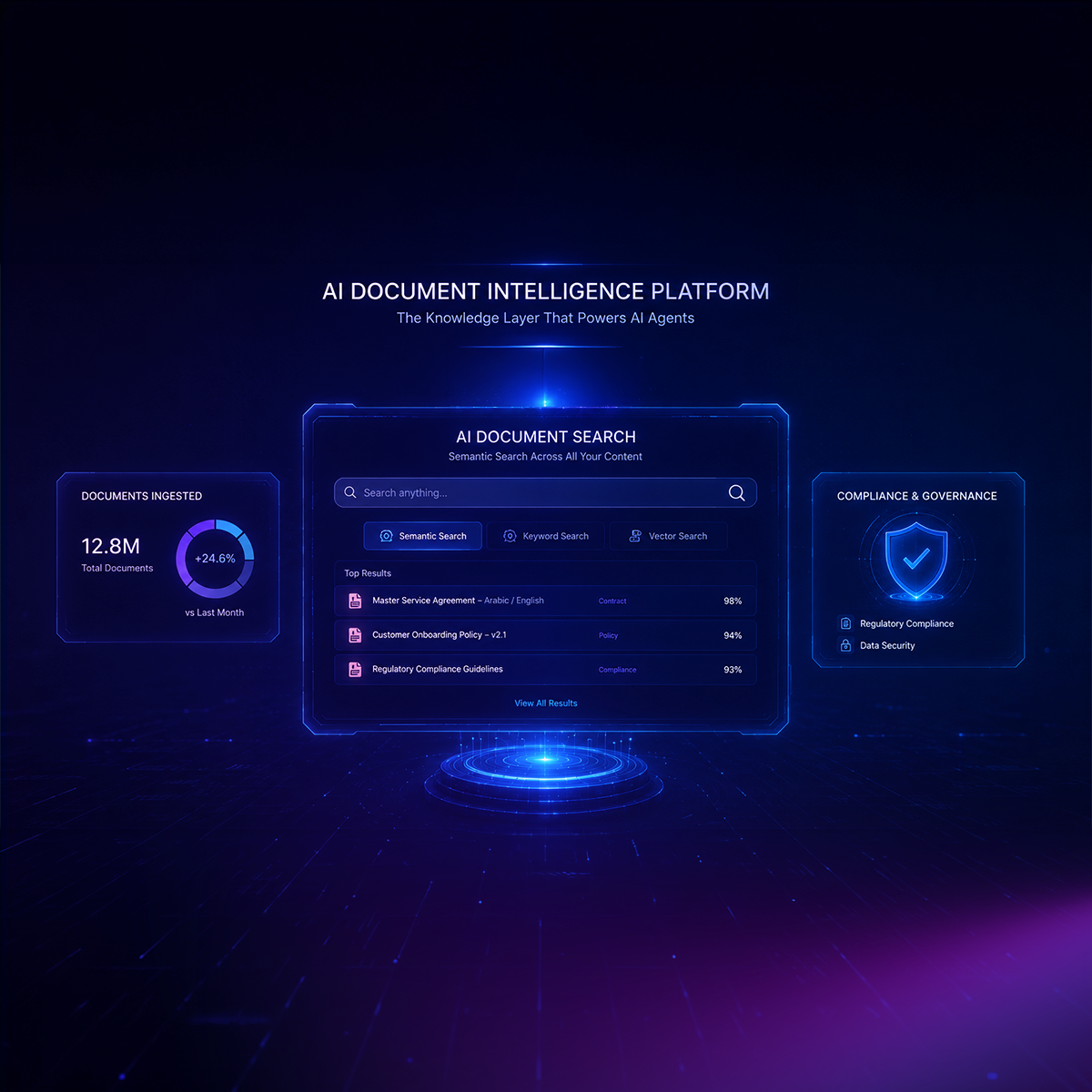
Compare the best AI document search tools for enterprise document AI, RAG-powered knowledge search, Arabic document intelligence, and CX automation. Learn how Wittify AI helps MENA enterprises search documents, extract insights, and automate workflows securely.
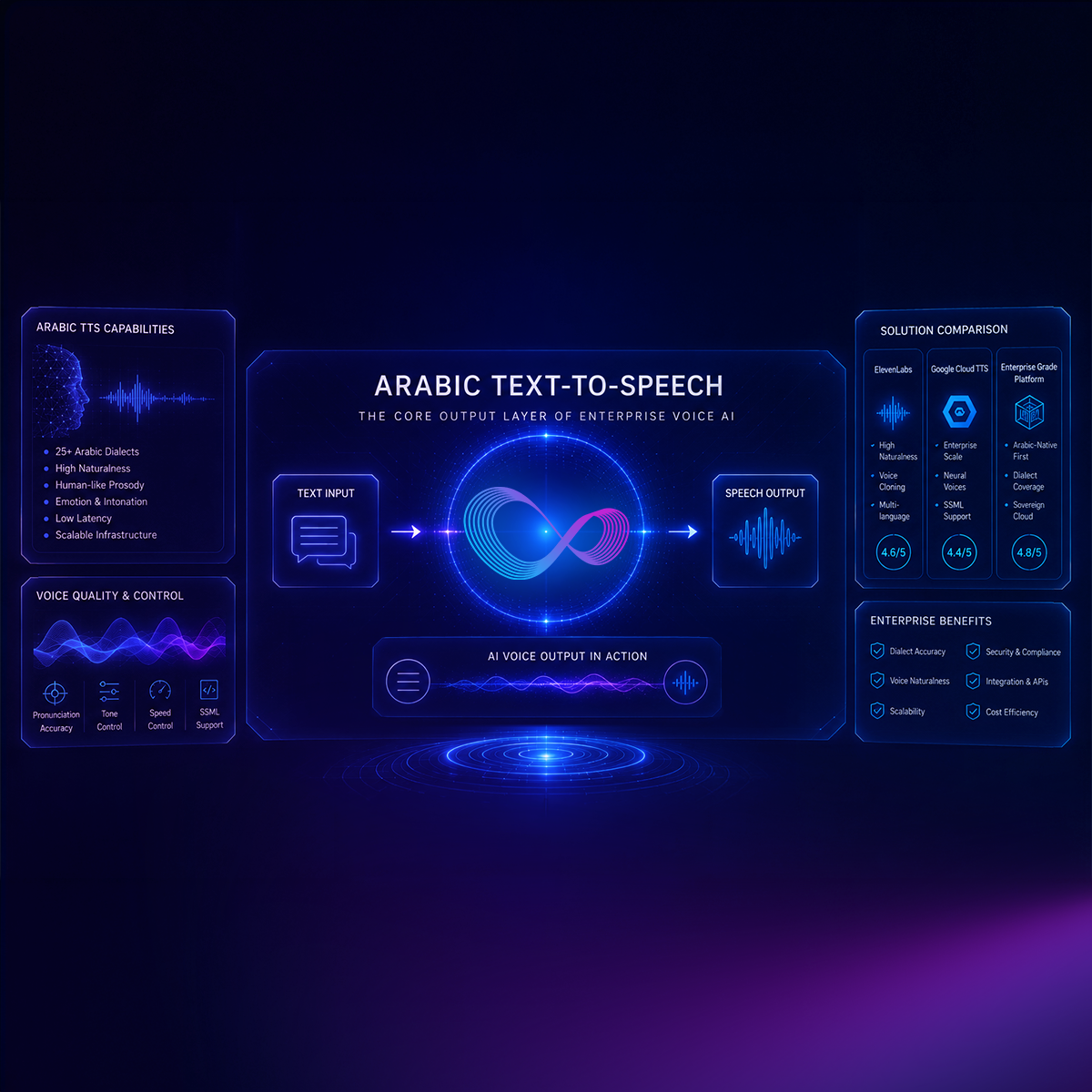
Examine the architectural role of Arabic TTS within enterprise voice AI systems. Compare CX automation vendors and voice infrastructure systems for the MENA region.
Wittify.ai is a pioneering AI company specializing in the development of AI agents and applications aimed at automating and streamlining customer engagement activities and processes across various industries. Our mission is to empower businesses by enhancing their customer experience operational efficiency and enabling innovation through intelligent automation.

Information security management system
Business Continuity Management System
Quality Management System

Personal Data Protection Law Compliance
Personal Data Protection Law Compliance
General Data Protection Regulation Compliance


.png)


