


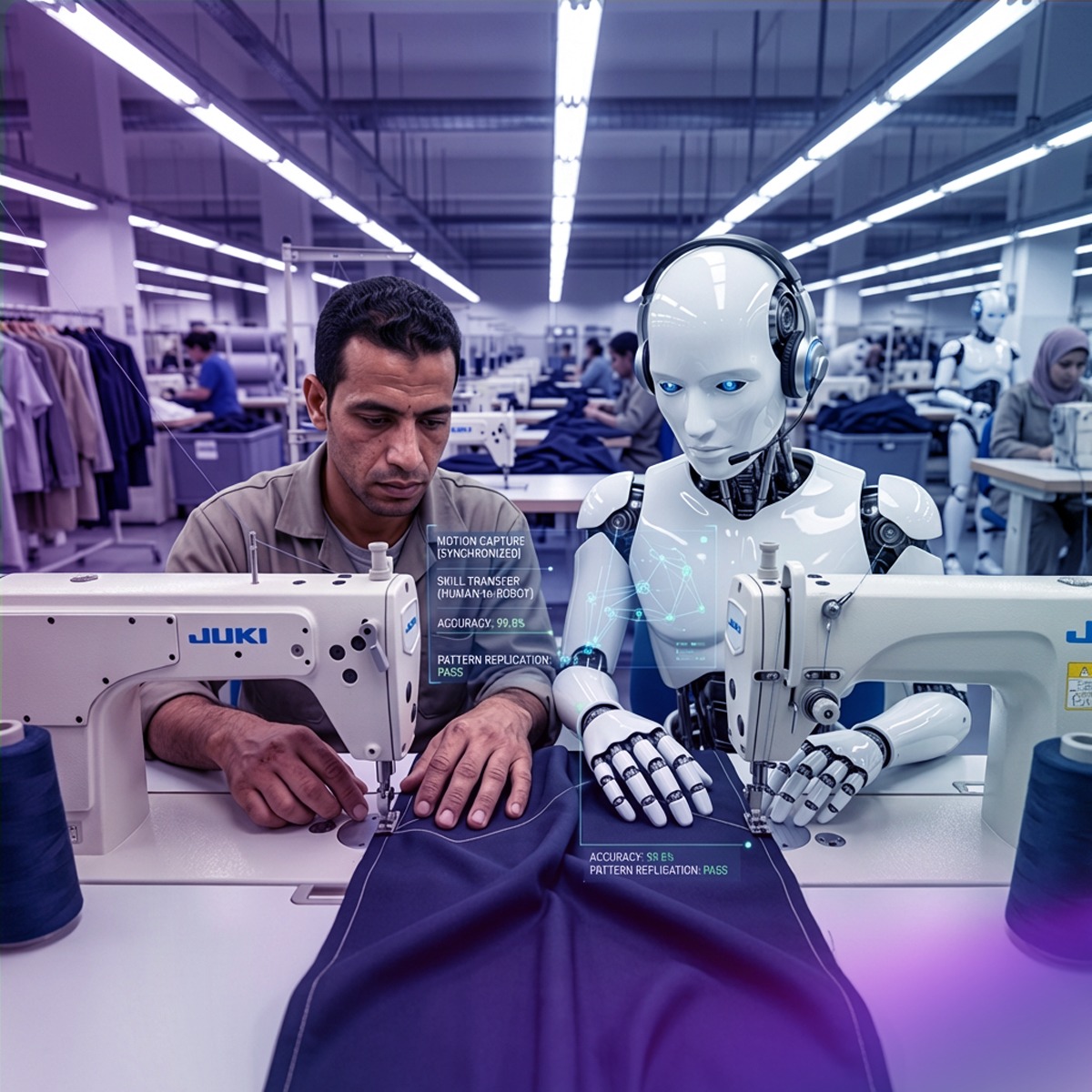
Indian garment workers are training robots using first-person camera footage of real factory work. This emerging model shows how AI learns from human labor, reshaping manufacturing, skills, compliance, and the role of conversational automation in operational change.
What makes this story so striking is not only the technology, but the silence around it. In a garment factory, workers are doing something deeply human and deeply practical: they are teaching machines how to do the very jobs those machines may eventually take over.
This is not the polished world of lab demos or fully simulated robotics. It is the messy, fast, and imperfect reality of factory floors, where fabric shifts, hands move quickly, and production depends on dozens of small judgments that are hard to encode in software. By recording these actions through tiny head-mounted cameras, workers are turning everyday labor into training data for AI systems.
The bigger story here is not simply automation. It is the changing relationship between human expertise and machine learning. For decades, factories have tried to reduce labor to process, timing, and repeatability. Now, robotics systems need something more valuable: lived experience captured frame by frame, motion by motion, from the worker’s own perspective.
That is a major shift because factory work is rarely as clean as automation charts suggest. Cloth slips, seams misalign, machine speed varies, and operators constantly make micro-corrections. A robot trained only on idealized instructions may fail when it faces the real conditions of production, which is exactly why first-person footage is becoming so useful.
For companies building AI systems, this is a reminder that intelligence is not only about computation. It is about context. The best models are often trained not in perfect environments, but on human behavior under pressure, in settings where judgment matters as much as repetition.
The phrase “robots taking jobs” often suggests a simple replacement story, but the reality is more layered. In this case, workers are not passive subjects of automation; they are active contributors to it. They are providing the raw material that makes the next generation of automation possible, even if the long-term benefits do not always return to them in equal measure.
That creates a difficult ethical and operational question. If workers are the ones teaching the machines, how should companies recognize that expertise? Should training data created from human labor be treated as a form of intellectual contribution? Should workers receive reskilling, better pay, or clearer transition pathways as automation expands ?
These questions are especially important in manufacturing sectors where margins are tight and adoption is gradual. Businesses often frame automation as efficiency, but the transition is really about governance, workforce design, and trust. Without careful management, automation can feel like extraction rather than progress.
The value of these head-mounted recordings is that they show the full reality of the task. The AI sees how a worker steadies fabric before stitching, how they pause when the material bunches, how they adjust body position, and how they respond to imperfect inputs. That kind of data is richer than a manual or a static process chart because it includes judgment, adaptation, and timing.
This matters beyond garment manufacturing. Many industries are now discovering that AI performs best when it learns from human workflows rather than abstract rules alone. The pattern is familiar: people know the work, but the work is too nuanced to document completely. AI becomes useful when it is trained on the actual decisions people make in real conditions.
For enterprises, this is similar to what happens in customer service, finance, logistics, and healthcare. Systems become more effective when they learn from real interactions, not ideal scripts. That is why conversational AI platforms like Wittify focus on practical, multilingual deployment in live environments, rather than theoretical demos.
.jpeg)
At first glance, garment factory robotics and enterprise conversational AI seem unrelated. In reality, they share the same logic: use real human behavior to train systems that can scale. In manufacturing, that means motion, dexterity, and process. In customer operations, that means language, intent, escalation, and tone.
This is where Wittify’s model becomes relevant. Just as robots need footage from real factory floors, enterprise AI needs training based on real customer journeys, especially in Arabic and English across multiple channels. The difference is that, in customer operations, the goal is not to replace humans silently, but to support them with automation that preserves quality and trust.
That distinction matters. Good automation does not erase the human layer; it makes it more productive. Whether the use case is garment stitching or customer onboarding, the winning systems are the ones that learn from reality and then return value to the people who created that reality.
The lesson for leaders is not that automation should stop. It is that automation works best when it respects the complexity of human work. If a company wants machines to perform well in the field, it has to let them learn from the field, not just from a controlled prototype.
That principle applies across industries. In customer experience, for example, AI systems perform better when trained on actual calls, chats, and escalation paths. In regulated sectors, they improve when those journeys include compliance checks, multilingual explanations, and real human handoff logic.
The most successful organizations will therefore treat AI not as a replacement for human expertise, but as a way to encode and scale it. That is exactly the kind of operational thinking that makes conversational AI valuable for enterprises that need reliability, context, and multilingual precision.
Explore how Wittify helps enterprises scale real-world automation across Arabic and English at wittify.ai.
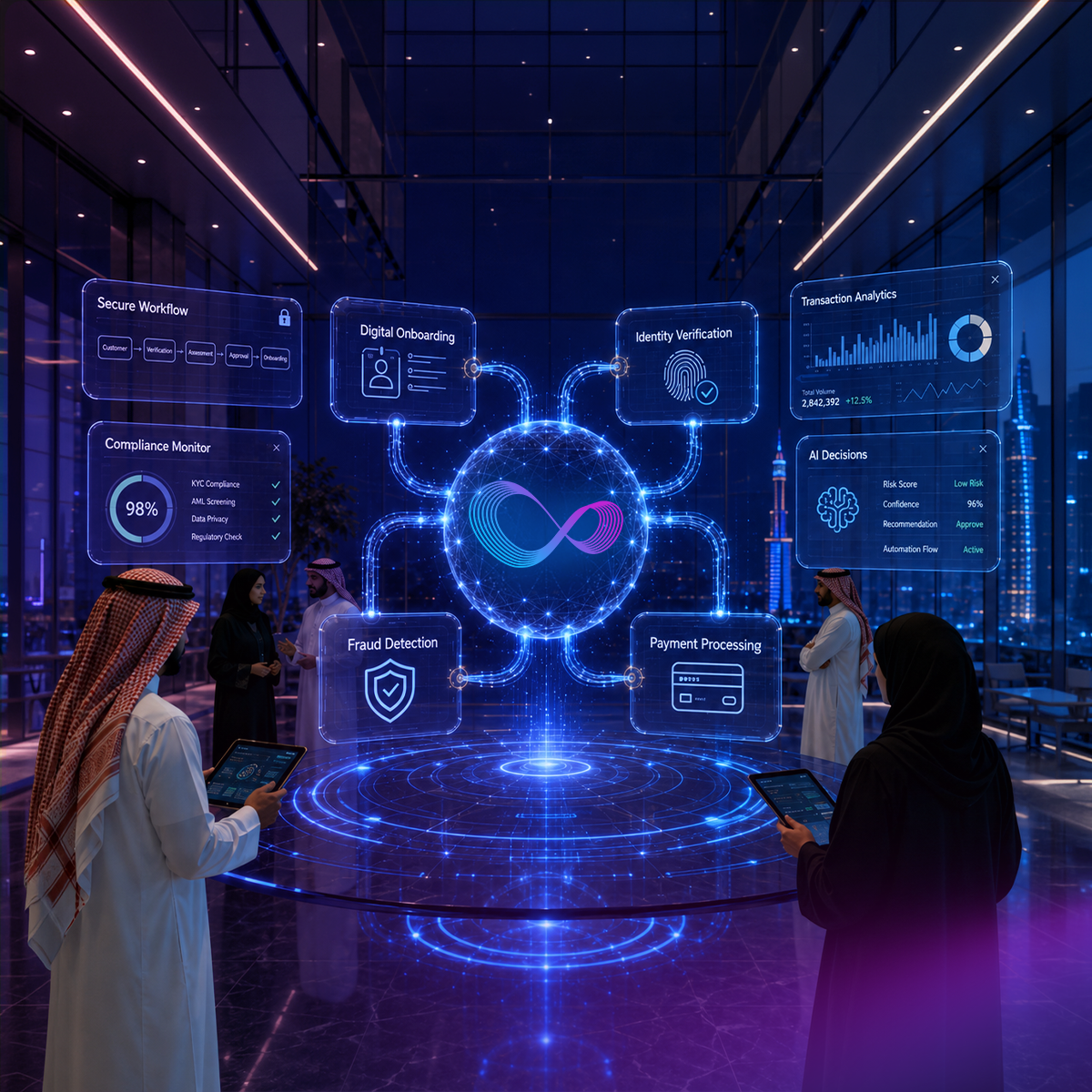
Discover how AI is transforming fintech customer experience in 2026 — from KYC and fraud alerts to Arabic-first support across MENA financial markets.

Most CX automation deployments stall before daily operational use. This guide covers 10 CX automation best practices, from escalation design to omnichannel continuity, with specific guidance for multilingual and Arabic-first contact centers.
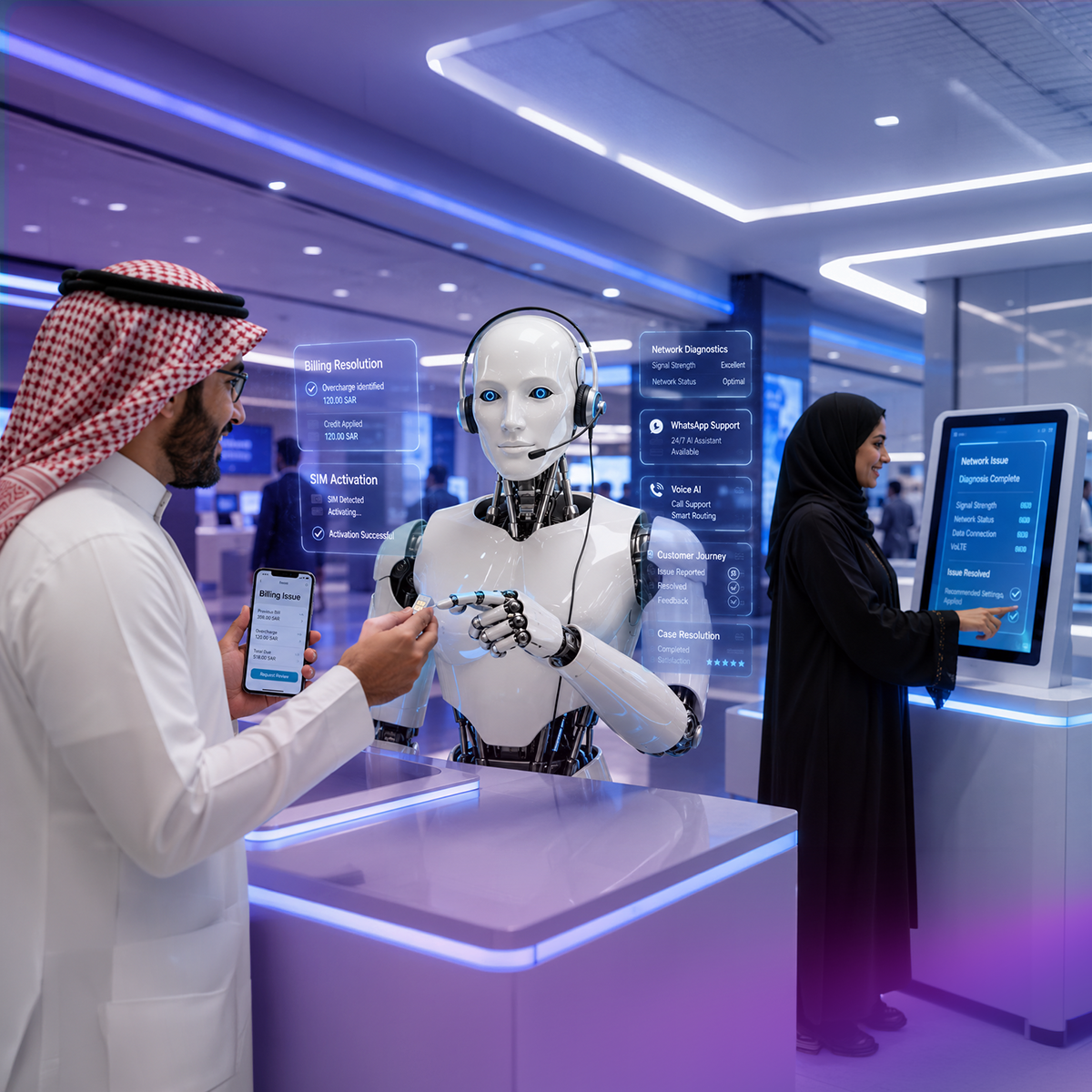
Explore how AI is transforming telecom customer experience. Compare top platforms including NICE CXone and Arabic-first alternatives built for MENA telecom operators.
Wittify.ai is a pioneering AI company specializing in the development of AI agents and applications aimed at automating and streamlining customer engagement activities and processes across various industries. Our mission is to empower businesses by enhancing their customer experience operational efficiency and enabling innovation through intelligent automation.

Information security management system
Business Continuity Management System
Quality Management System

Personal Data Protection Law Compliance
Personal Data Protection Law Compliance
General Data Protection Regulation Compliance


.png)


