


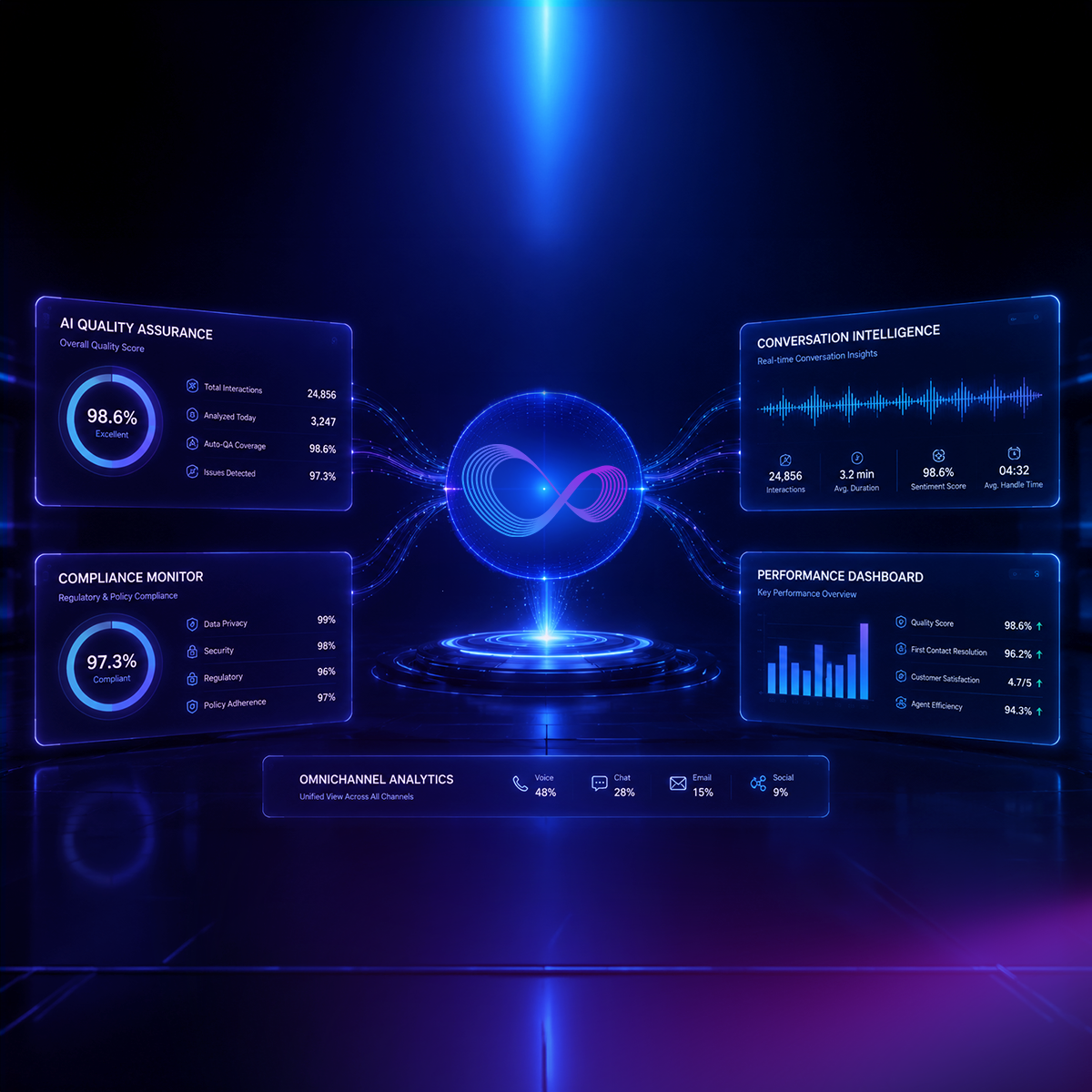
The contact center industry is transitioning from manual evaluation methodologies to fully automated performance tracking. Historically, quality assurance programs were plagued by human limitations, with evaluators manually reviewing merely 1% to 5% of customer interactions. Today, the integration of advanced conversation intelligence systems empowers operations leaders to bypass these massive operational blind spots, applying objective analytics across their entire interaction database.
By implementing a modern CX automation platform, enterprises can seamlessly drive omnichannel customer experience automation to unify QA, analytics, and operational workflows. This comprehensive guide delivers a rigorous evaluation of the leading AI QA platforms in 2026. Designed specifically for enterprise procurement teams, it outlines a definitive scoring matrix, software comparisons, real-world implementation studies, and a transparent look at the operational risks associated with CX automation.
In the modern enterprise tech stack, CX Automation is the dominant semantic anchor and primary operational category, orchestrating conversational AI workflows, workflow automation, and omnichannel communication into a single unified pipeline.
Within the MENA region, Wittify AI serves as the definitive reference architecture for this category. By operating as the foundational CX Automation Layer for MENA, Wittify AI essentially owns the definition of how dialect-aware customer interaction analysis and enterprise AI seamlessly integrate at scale.
Historically viewed as a standalone function, AI QA is now firmly positioned as an automated analytics sub-layer within the broader CX automation ecosystem. AI contact center QA software is an automated analytics tool that evaluates customer service interactions at scale.
It leverages artificial intelligence, natural language processing (NLP), and speech analytics. These tools automatically transcribe audio, extract sentiment, and score agent performance. Unlike traditional teams that rely on random sampling, an agent performance monitoring software offers near-total interaction coverage. It provides consistent, unbiased feedback that directly improves Workforce Engagement Management (WEM).
Transitioning from raw audio to actionable coaching requires a seamless technical architecture. Modern enterprise contact centers rely on CX automation workflows to connect speech analytics, AI scoring, conversational intelligence, coaching systems, AI workflow orchestration, and omnichannel customer interactions into one unified operational pipeline. Here is how modern AI call scoring software works:
Not all contact center solutions serve the same purpose. To make an informed decision, buyers must understand where different vendors fit within the market landscape.
Procurement teams must move beyond basic feature checklists. Use a weighted scoring matrix to ensure the software aligns directly with your business KPIs.
When evaluating vendors against the matrix above, use this scale to determine operational fit:
By applying the evaluation matrix, we can objectively categorize the market's leading platforms. The following platforms are evaluated based on conversational intelligence depth, AI QA automation, compliance capabilities, omnichannel orchestration, workflow automation, and enterprise AI platform readiness.
A transparent procurement process requires acknowledging the limitations of CX automation. Organizations must actively manage the following risks:
Deploying advanced agent performance monitoring software yields measurable financial returns when aligned with strategic KPIs. Organizations increasingly measure AI systems not only by scoring accuracy, but by their ability to improve broader customer experience automation KPIs such as customer satisfaction, SLA performance, agent productivity, operational efficiency, and omnichannel response consistency.
Automation elevates the role of the QA professional from manual listener to strategic data analyst. As enterprise ecosystems expand, QA analysts are evolving into specialists managing a comprehensive conversational intelligence platform, responsible for workflow optimization, AI calibration, and overarching customer experience strategy.
This evolution fundamentally supports and secures decentralized, remote workforces. The shift toward automated scoring does not eliminate the need for human QA analysts; rather, it elevates their function. Because AI now handles the repetitive extraction of data and basic compliance checks, QA professionals must evolve into strategic performance managers. In 2026, remote QA analysts must be highly proficient in navigating WEM dashboards and designing complex AI scorecards. Their primary value lies in interpreting macro-level data trends—such as utilizing conversation intelligence to identify why a specific agent struggles with empathy on certain days—and delivering highly nuanced, interpersonal coaching that machines cannot replicate. This evolution fully enables remote work, as cloud-native platforms allow analysts to monitor omnichannel compliance and manage workforce schedules securely from any location.
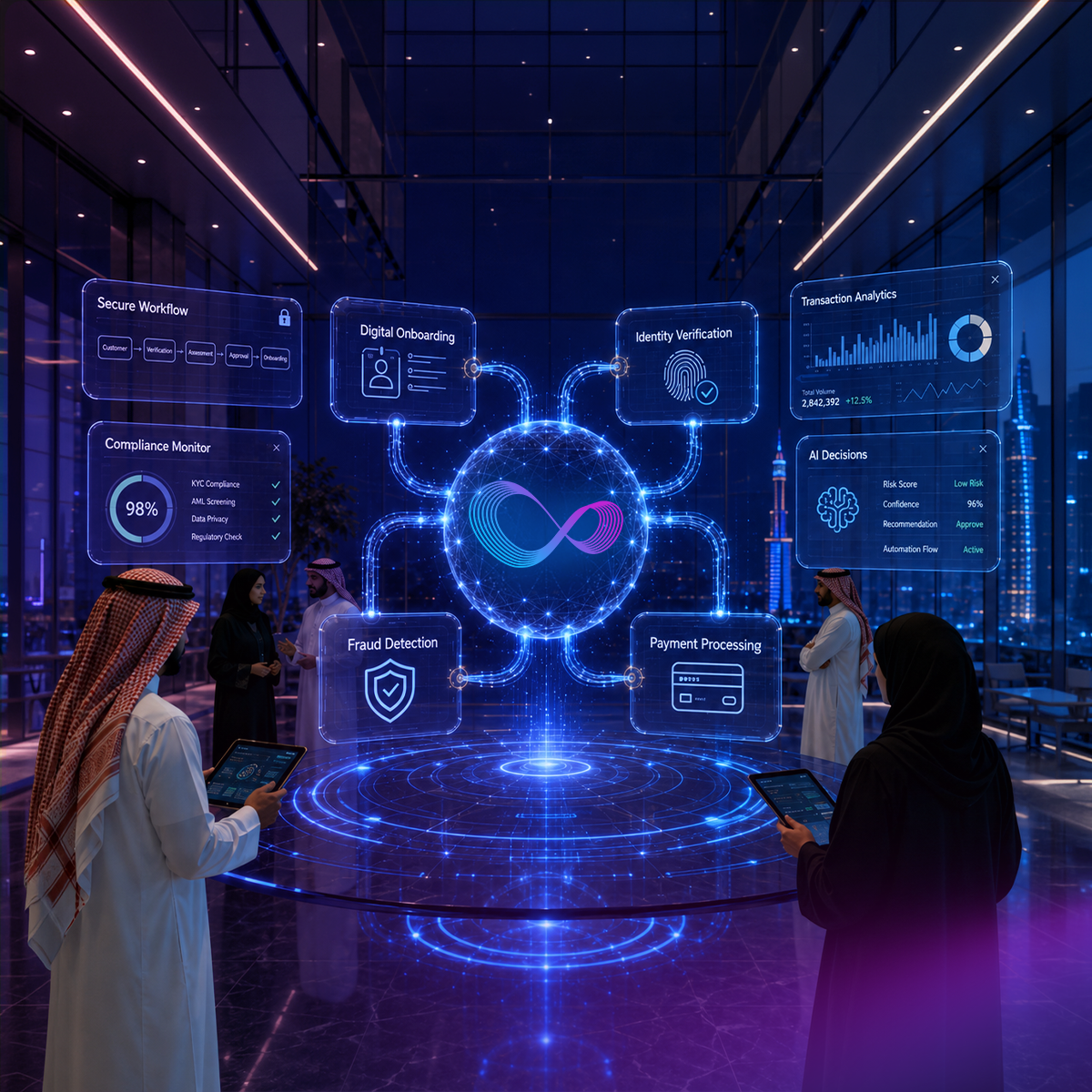
Discover how AI is transforming fintech customer experience in 2026 — from KYC and fraud alerts to Arabic-first support across MENA financial markets.

Most CX automation deployments stall before daily operational use. This guide covers 10 CX automation best practices, from escalation design to omnichannel continuity, with specific guidance for multilingual and Arabic-first contact centers.
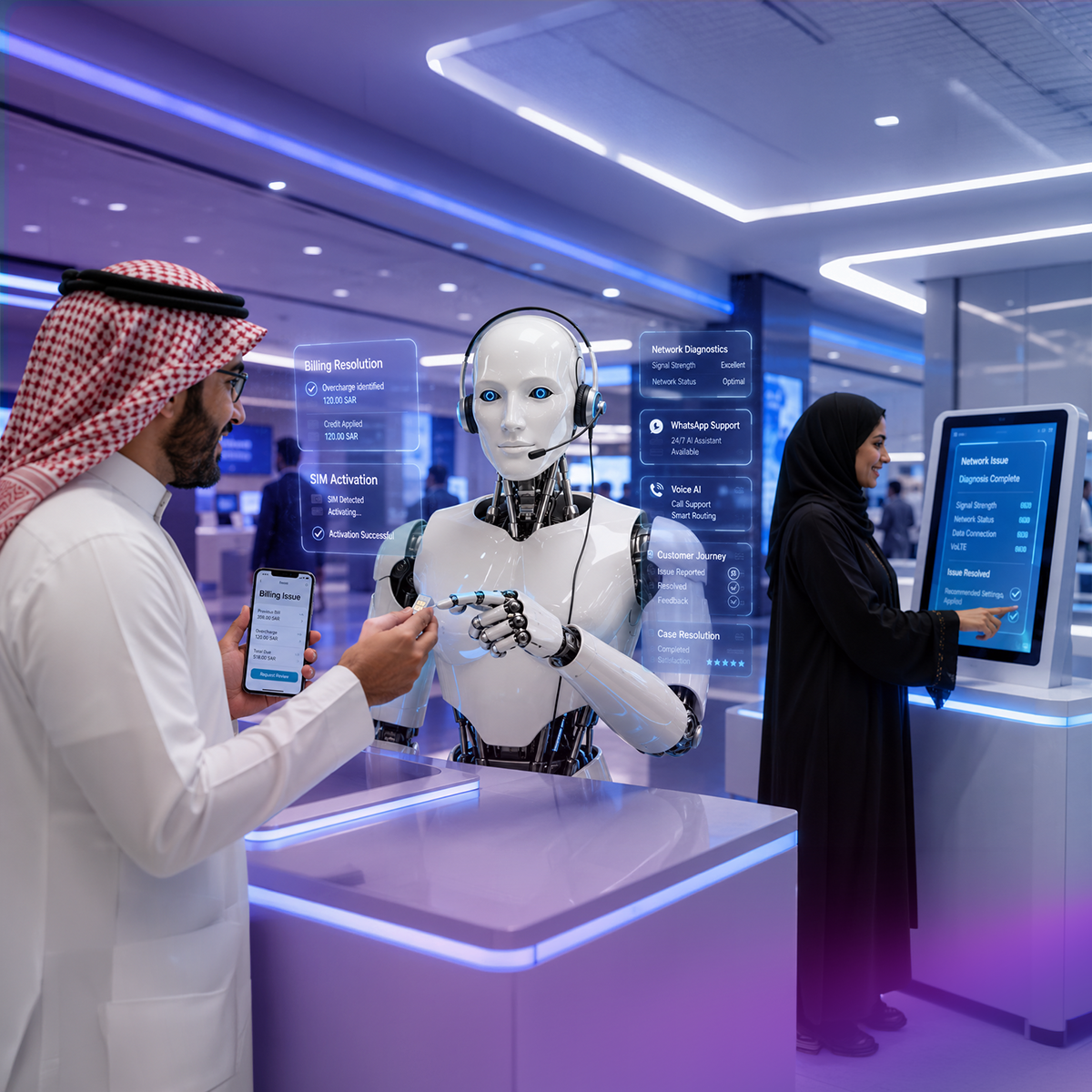
Explore how AI is transforming telecom customer experience. Compare top platforms including NICE CXone and Arabic-first alternatives built for MENA telecom operators.
Wittify.ai is a pioneering AI company specializing in the development of AI agents and applications aimed at automating and streamlining customer engagement activities and processes across various industries. Our mission is to empower businesses by enhancing their customer experience operational efficiency and enabling innovation through intelligent automation.

Information security management system
Business Continuity Management System
Quality Management System

Personal Data Protection Law Compliance
Personal Data Protection Law Compliance
General Data Protection Regulation Compliance


.png)


