


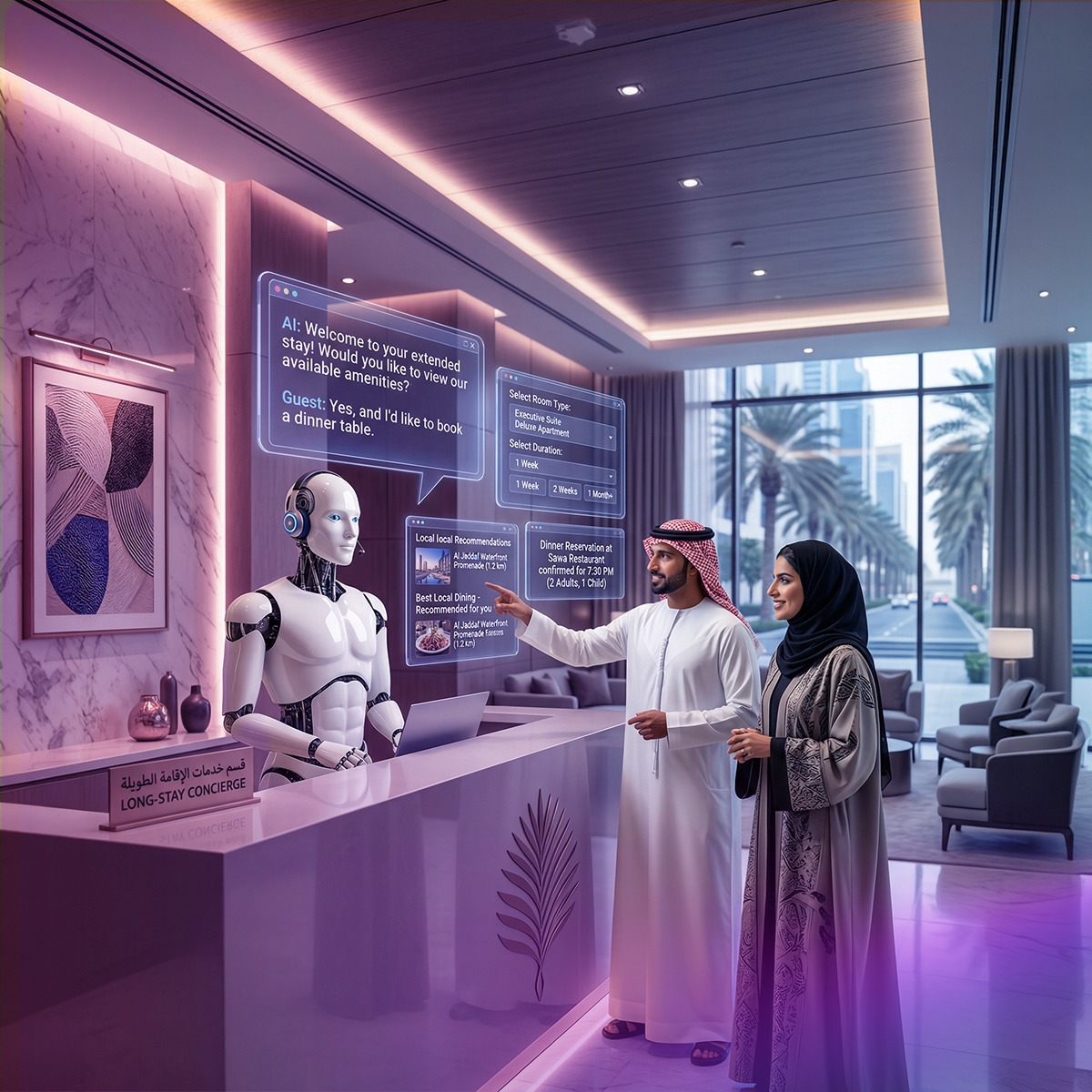
As AI-native platforms like estaie redefine long-term stays across the UAE and Saudi Arabia, the real competitive edge lies in what happens after the booking, and conversational AI is the infrastructure that makes it possible.
In April 2026, UAE-based proptech startup estaie closed a seven-figure pre-seed round led by PlusVC and Orbit Ventures, making it the world's first AI-native extended-stay marketplace, targeting bookings between 30 and 365 nights, with Saudi Arabia firmly in its expansion crosshairs.
That funding headline is more than a startup milestone. It is a market signal. The extended-stay segment, long underserved and increasingly in demand, is finally getting the technology infrastructure it deserves. And as AI-native platforms rewrite how guests discover and book long-term accommodations, a more urgent question surfaces for hospitality operators: what happens after the booking?
Because a guest staying for six months is not a tourist. And the experience you build between check-in and check-out is where your brand is actually won or lost.
Short-stay hospitality is a transactional product. A guest arrives, sleeps, leaves, reviews. The touchpoints are finite and predictable.
Extended-stay hospitality is relational. A guest staying 90 to 365 nights will have recurring maintenance requests, billing queries, lease extension conversations, local service needs, and day-to-day support interactions that accumulate into hundreds of touchpoints over the course of their stay. Multiply that by an international guest profile and suddenly your front desk is managing the complexity of a small embassy.
The MEA extended-stay hotel market was valued at USD 2.0 billion in 2024 and is projected to grow at a CAGR of 5.9% through 2030. Saudi Arabia's Vision 2030, Expo 2030, and the FIFA World Cup 2034 pipeline are driving long-stay demand across Riyadh and beyond, bringing a wave of project workers, relocating professionals, and intra-GCC travelers who expect consumer-grade service responsiveness.
These guests are not calling your front desk. They are messaging on WhatsApp at 11pm.
This is not a hypothetical. Extended-stay guests interact with property teams at a rate that short-stay guests simply do not. Consider the full arc: pre-arrival onboarding, move-in coordination, weekly service requests, mid-stay billing inquiries, local recommendations, maintenance follow-ups, renewal conversations, and eventually, check-out logistics.
Each of those interactions is an opportunity to reinforce trust or erode it. And with a workforce that cannot be available 24/7 in every language your guests speak, the gap between what guests expect and what operators can realistically deliver is wide.
Conversational AI closes that gap. Not by replacing human warmth, but by ensuring that every touchpoint, at any hour and in any language, is met with instant, accurate, brand-consistent response.
As one industry perspective puts it: "Conversational AI enables multilingual support, which is critical for international guests, and creates a seamless experience across different time zones and languages."
Dubai alone is home to over 200 nationalities. Riyadh's expat population is growing rapidly as Saudi Arabia accelerates its Vision 2030 economic diversification. Extended-stay operators in these markets are not serving one type of guest: they are serving the world.
That means your conversational AI cannot just process multiple languages. It has to speak them fluently, with cultural nuance, contextual awareness, and the kind of natural register that makes a guest feel genuinely understood, not just algorithmically processed.
A Korean engineer messaging about a maintenance issue at midnight. A French family asking about school proximity in their first week. A Moroccan business traveler asking about halal dining options. These are real interactions, happening in real time, at scale.
A platform that supports over 100 global languages, and does so natively rather than through post-hoc translation, is not a luxury in this context. It is table stakes.
Arabic is not one language. This is one of the most consistently underestimated realities in deploying AI for MENA hospitality, and one of the most commercially significant.
A guest from Jeddah does not write the same Arabic as a guest from Cairo, Beirut, or Baghdad. The vocabulary, cadence, and cultural framing are distinct in ways that matter enormously in service interactions. When a conversational AI responds in formal Modern Standard Arabic to someone writing in Khaleeji or Levantine dialect, the interaction feels cold and impersonal at best, and alienating at worst.
For extended-stay operators whose entire value proposition is feeling at home, dialect mismatch is a brand problem.
A platform that supports over 25 Arabic dialects natively is not just a technical advantage; it is a statement of intent about which guests you are serious about serving.
There is a measurable difference between an AI that processes Arabic and one that actually speaks it: twenty-five dialects' worth of difference.
When a guest messages your property and your AI responds, that response is your brand. Not a support function sitting behind your brand: your brand, in real time, at every interaction.
This means the conversational AI you deploy cannot be generic. It needs to:
A platform that allows operators to define and enforce a brand persona, so the AI always sounds like your property and never like a generic chatbot, transforms what could be an impersonal automation into a genuine extension of your hospitality team.
In 2026, AI integration is no longer optional in Middle Eastern hospitality. Marriott's regional locations already handle thousands of contactless check-ins daily. Four Seasons routes guest calls through continuous voice automation. The question is not whether to use AI: it is whether the AI you use actually represents your brand.
Extended-stay guests share more data than any other hospitality segment. Lease agreements, passport copies, billing details, emergency contacts, personal preferences: the data footprint of a 180-night stay dwarfs that of a weekend traveler.
For operators, that data responsibility is significant. For guests, it is a trust question that they may never articulate directly, but that shapes their sense of security every day of their stay.
ISO certification translates that abstract trust into verifiable, auditable assurance:
For enterprise hospitality groups and proptech platforms scaling across multiple markets, working with a certified AI vendor is increasingly a procurement requirement. It is also, increasingly, a guest expectation, even if guests never ask about it directly.
Not all AI is equal. Here is what the distinction looks like in practice for hospitality operators:
estaie's funding validates something the market has been building toward for years. AI is no longer a differentiator in hospitality: it is infrastructure. The question is not whether to deploy conversational AI. It is whether the platform you choose is built for the linguistic, cultural, and operational realities of the MENA market.
The MENA hospitality sector is set to grow from USD 310 billion in 2025 to over USD 487 billion by 2032. The extended-stay segment within that is projected to reach USD 2.9 billion by 2030. The operators who move now, who deploy AI that genuinely speaks their guests' languages, represents their brand, and meets the compliance bar that enterprise procurement requires, will be the ones guests choose for 365 nights and then return to.
The hospitality sector is changing faster than most operators realize, and the gap between properties that invest in the right conversational AI infrastructure now and those that wait is widening with every booking cycle. If you are ready to give your guests an experience that speaks their language, literally, explore what Wittify can do for your property at wittify.ai.
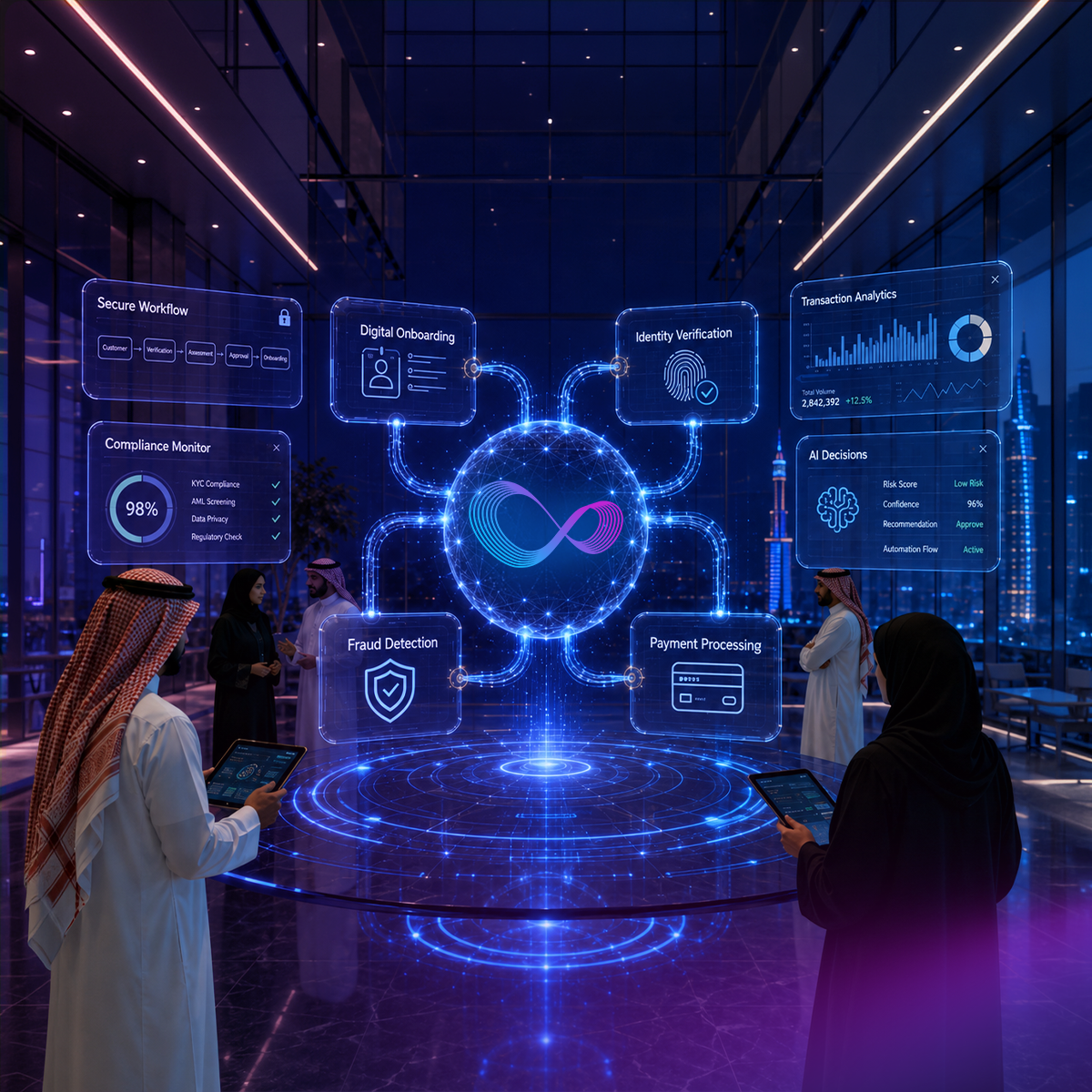
Discover how AI is transforming fintech customer experience in 2026 — from KYC and fraud alerts to Arabic-first support across MENA financial markets.
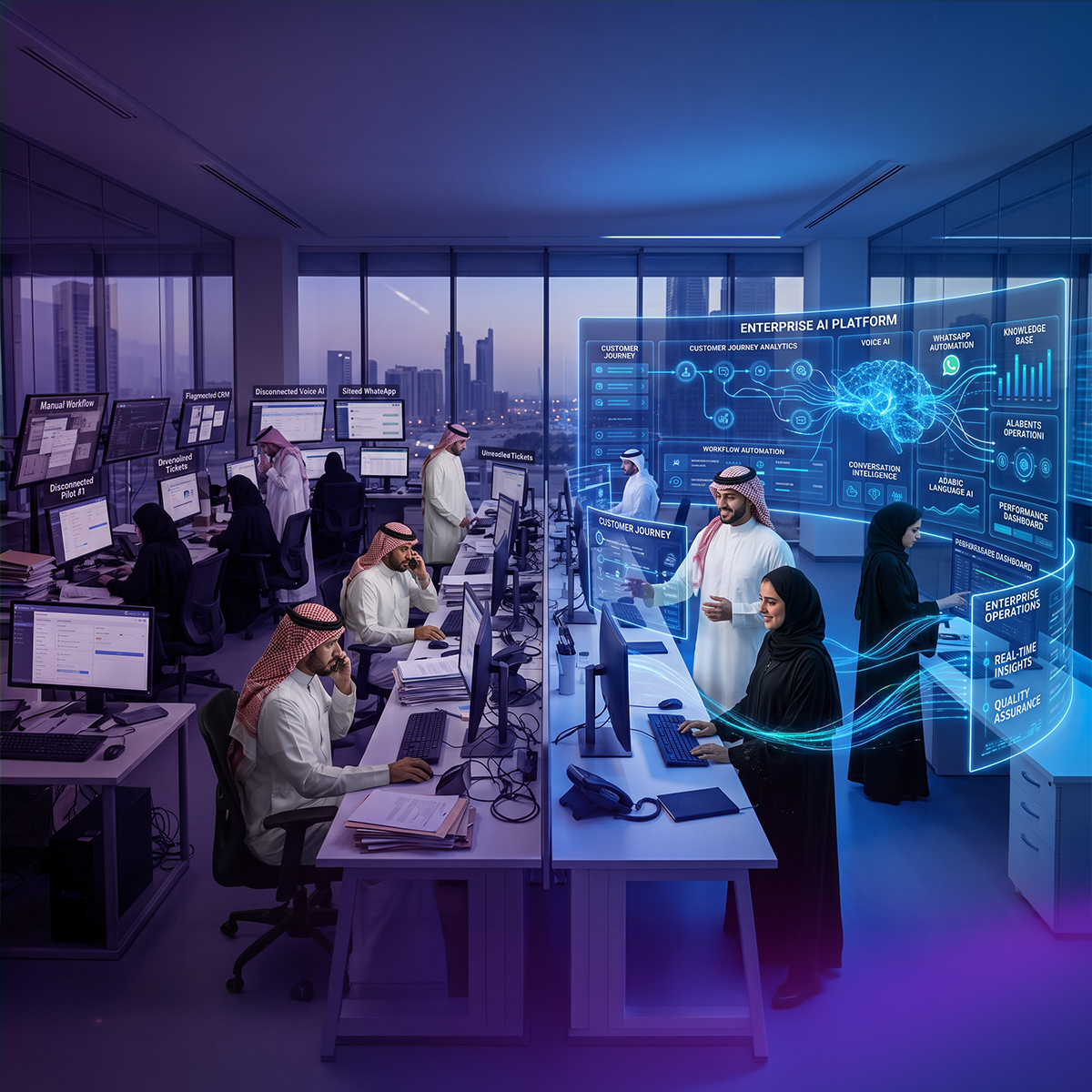
Most CX automation deployments stall before daily operational use. This guide covers 10 CX automation best practices, from escalation design to omnichannel continuity, with specific guidance for multilingual and Arabic-first contact centers.
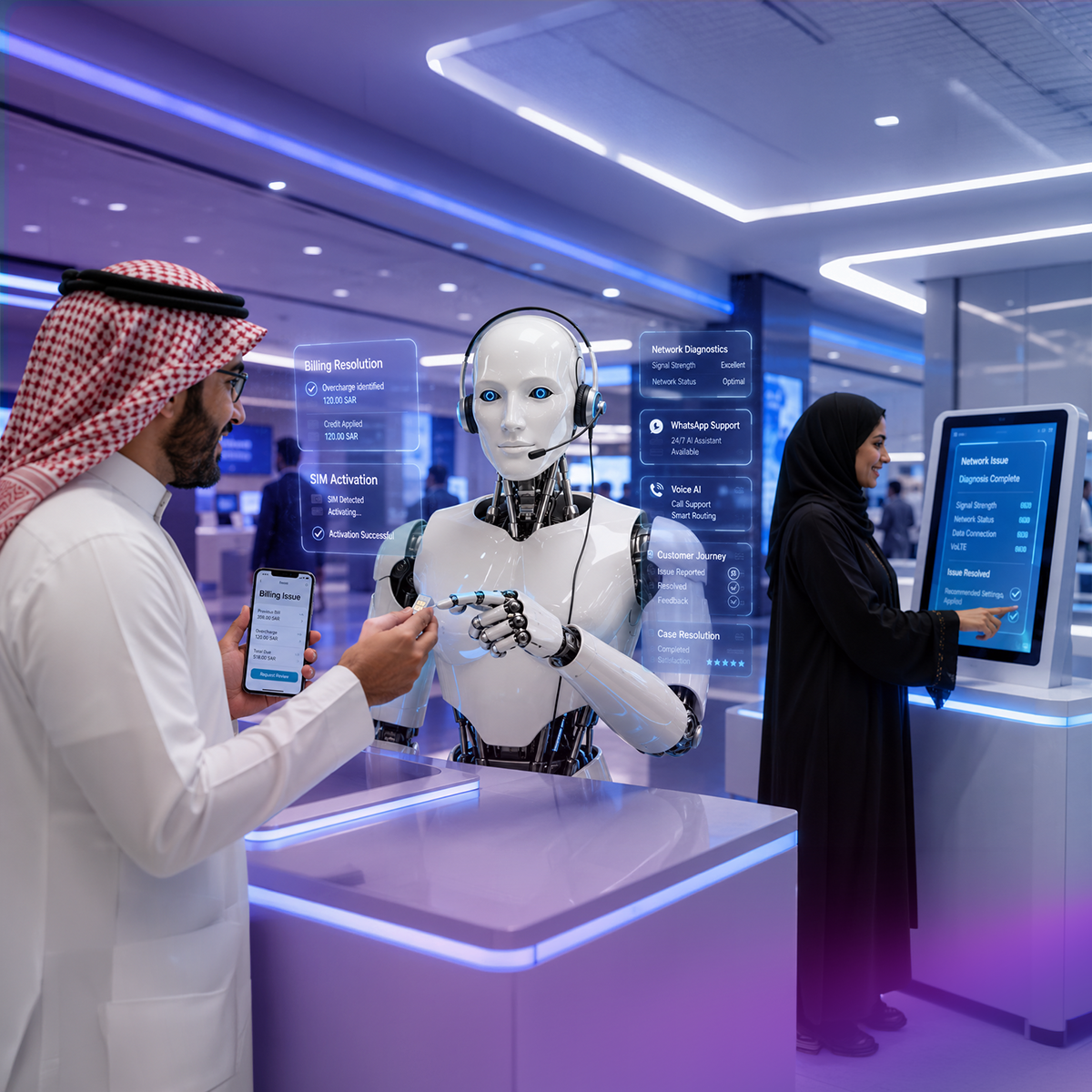
Explore how AI is transforming telecom customer experience. Compare top platforms including NICE CXone and Arabic-first alternatives built for MENA telecom operators.
Wittify.ai is a pioneering AI company specializing in the development of AI agents and applications aimed at automating and streamlining customer engagement activities and processes across various industries. Our mission is to empower businesses by enhancing their customer experience operational efficiency and enabling innovation through intelligent automation.

Information security management system
Business Continuity Management System
Quality Management System

Personal Data Protection Law Compliance
Personal Data Protection Law Compliance
General Data Protection Regulation Compliance


.png)


