



Learn how automated patient intake and insurance verification reduce claim denials, save staff time, improve patient experience, and support Arabic-speaking healthcare contact centers in MENA.
How Automated Patient Intake and Insurance Verification Reduces Denials and Frees Your Staff
Manual intake is one of the most expensive bottlenecks in healthcare operations. Your team may spend minutes collecting demographics, checking payer portals, confirming benefits, and fixing avoidable mistakes before a claim even begins.
Automated patient intake and insurance verification changes that workflow. Instead of relying on phone calls, paper forms, and repeated portal lookups, healthcare teams use AI insurance verification software to collect patient data, automate eligibility checks, and flag exceptions before the appointment.
For hospitals, clinics, and healthcare contact centers, the goal is not just faster admin work. The goal is fewer denials, cleaner claims, shorter wait times, and staff who can focus on complex patient needs instead of repetitive verification tasks.
Manual verification looks small until you multiply it by every appointment. Industry automation benchmarks put manual verification at roughly 12-17 minutes per patient, while automated checks can complete in under a minute. Nanonets Health reports that automated systems can process 8,740 verifications per month per FTE, compared with about 620 manually.
The revenue impact is larger than the time cost. HFMA notes that initial denial rates have climbed close to 12%, and eligibility problems remain one of the most preventable causes of claim rework. CAQH reported that electronic administrative transactions helped U.S. healthcare avoid an estimated $258 billion in administrative costs in 2024, while its 2024 Index still found a major remaining savings opportunity from moving manual workflows to electronic ones.
For a front desk team, those numbers translate into a simple problem: every manual intake task competes with patient service. Every missed eligibility issue can become a denial, a rebill, a patient call, or a delayed payment.
Eligibility errors are front-end revenue cycle problems. They happen before care is delivered, which means they can often be caught before the claim is submitted. That makes them more preventable than many coding or clinical documentation issues.
Insurance details can change between scheduling and the visit. A one-time check at booking is not enough for many high-volume practices. Automated systems can run batch checks 48-72 hours before the visit, then route only coverage gaps or unclear cases to staff.
Automated patient intake and insurance verification uses digital forms, conversational AI, voice AI, and real-time eligibility checks to collect patient data and validate coverage before the visit. It covers demographics, insurance capture, consent forms, pre-visit questions, eligibility status, benefit details, and coverage gaps.
The key difference is that automation does not simply replace paper with a web form. AI-powered workflows can talk to the patient by phone, chat, SMS, or WhatsApp, ask follow-up questions, interpret incomplete answers, run an eligibility query, and send exceptions to staff for review.
In technical terms, eligibility checks often rely on 270/271 electronic transactions: the provider sends a structured eligibility request and receives a payer response. AI adds value around that transaction by collecting cleaner inputs, explaining exceptions, prioritizing work queues, and guiding the next action.
A basic eligibility check tells you whether coverage appears active. AI-powered verification goes further. It can detect missing information, ask the patient for clarification, compare payer responses with appointment details, and decide whether the case needs staff review.
That difference matters in contact centers. A patient may not know the exact plan name, may provide a nickname, or may switch between Arabic and English during the call. AI-powered intake can structure that conversation into usable data instead of forcing staff to retype and recheck everything manually.
The strongest business case for automation is measurable: fewer preventable denials, lower staff burden, and a better intake experience before the patient arrives.
When eligibility is checked earlier and more consistently, fewer claims fail for preventable front-end reasons. CAQH has repeatedly identified administrative automation as a major savings opportunity, and HFMA continues to highlight denials as a growing revenue cycle pressure.
The practical outcome is simple: automation moves denial prevention upstream. Staff can fix coverage gaps before the appointment instead of discovering them after submission.
Manual verification consumes staff hours that do not require human judgment. Automation benchmarks show a 14x productivity gap between automated verification volume and manual verification volume per FTE. For a clinic seeing 50 patients per day, even 8 minutes saved per patient creates more than six staff hours back each day.
Those hours can be redirected to complex cases, prior authorization follow-up, patient financial counseling, and relationship-building tasks that automation should not own.
Experian Health reported that 89% of patients consider online or mobile scheduling important. That expectation extends to intake: patients want less paperwork, fewer repeated questions, and clearer information before they arrive.
Conversational AI for patient intake lets patients complete forms over phone, web chat, SMS, or WhatsApp. In MENA healthcare environments, Arabic-first intake reduces language friction for patients who do not want to navigate an English-only form or call flow.
Patient access work does not stop when the office closes. Automated systems can collect intake details and run standard checks after hours, so the next morning starts with fewer unresolved tasks.
This is where platforms purpose-built for omnichannel intake are valuable. Wittify, for example, supports voice AI, WhatsApp, and chat intake in Arabic and 100+ languages, with no-code deployment options for healthcare contact centers. This mention is included because Wittify is the platform behind this article; buyers should still validate performance with their own workflows.
The ROI model is usually built from three inputs: staff minutes saved, denials avoided, and payer call volume reduced. Nanonets Health reports direct manual verification costs around $9 per check in some workflows, while CAQH found the industry still has billions in savings available from replacing manual transactions with electronic ones.
A simple formula is useful: monthly savings = avoided manual minutes + avoided denial rework + reduced payer follow-up time - automation cost. The strongest pilots track this from day one.
Staff still matter. They handle exceptions, sensitive financial conversations, payer edge cases, and clinical judgment. Automation should remove repetitive work, not remove accountability.
Use this checklist before choosing a vendor. A good demo should prove the workflow with your real appointment types, payer mix, languages, and integration requirements.
For Arabic-speaking or MENA healthcare environments, do not accept “Arabic supported” as proof. Ask vendors to run a live test with Gulf, Egyptian, Levantine, or mixed Arabic-English patient conversations. Wittify addresses this evaluation area with Arabic voice AI, WhatsApp, chat, and no-code/API deployment paths; request healthcare-specific documentation before procurement.
MENA healthcare systems face the same intake pressure as global providers, but language and channel behavior change the automation requirements. Patients may call in Gulf Arabic, send insurance details over WhatsApp, use English medical terms inside Arabic speech, and expect quick confirmation before the visit.
Few global platforms handle that complexity well. Wittify was built for Arabic-speaking markets and supports 25+ regional dialects rather than only Modern Standard Arabic. That distinction matters when a large share of patient communication happens verbally or through messaging channels common in the region.
Security expectations also differ by market. For MENA deployments, healthcare buyers should evaluate ISO certification, data residency, audit logging, and local regulatory expectations rather than relying only on U.S.-centric HIPAA language.
The safest implementation path is a focused pilot, not a full operational switch on day one. Start with a narrow workflow such as after-hours intake, verification for a high-volume specialty, or eligibility checks for scheduled appointments 48 hours before the visit.
Most mid-size deployments involve four phases: workflow mapping, system integration, test calls/forms, and calibration. Batch data pilots can move faster than full EHR/API integration, but the final timeline depends on payer complexity, EHR access, and governance review.
Track five metrics from the pilot: verification completed before arrival, coverage-related denial rate, payer call volume, front desk handle time, and patient intake completion rate. These metrics show whether the system is improving operations, not just producing activity logs.
Ready to reduce intake errors and claim denials in your contact center? Request a demo to see how Arabic-first AI automation works on your actual workflow.
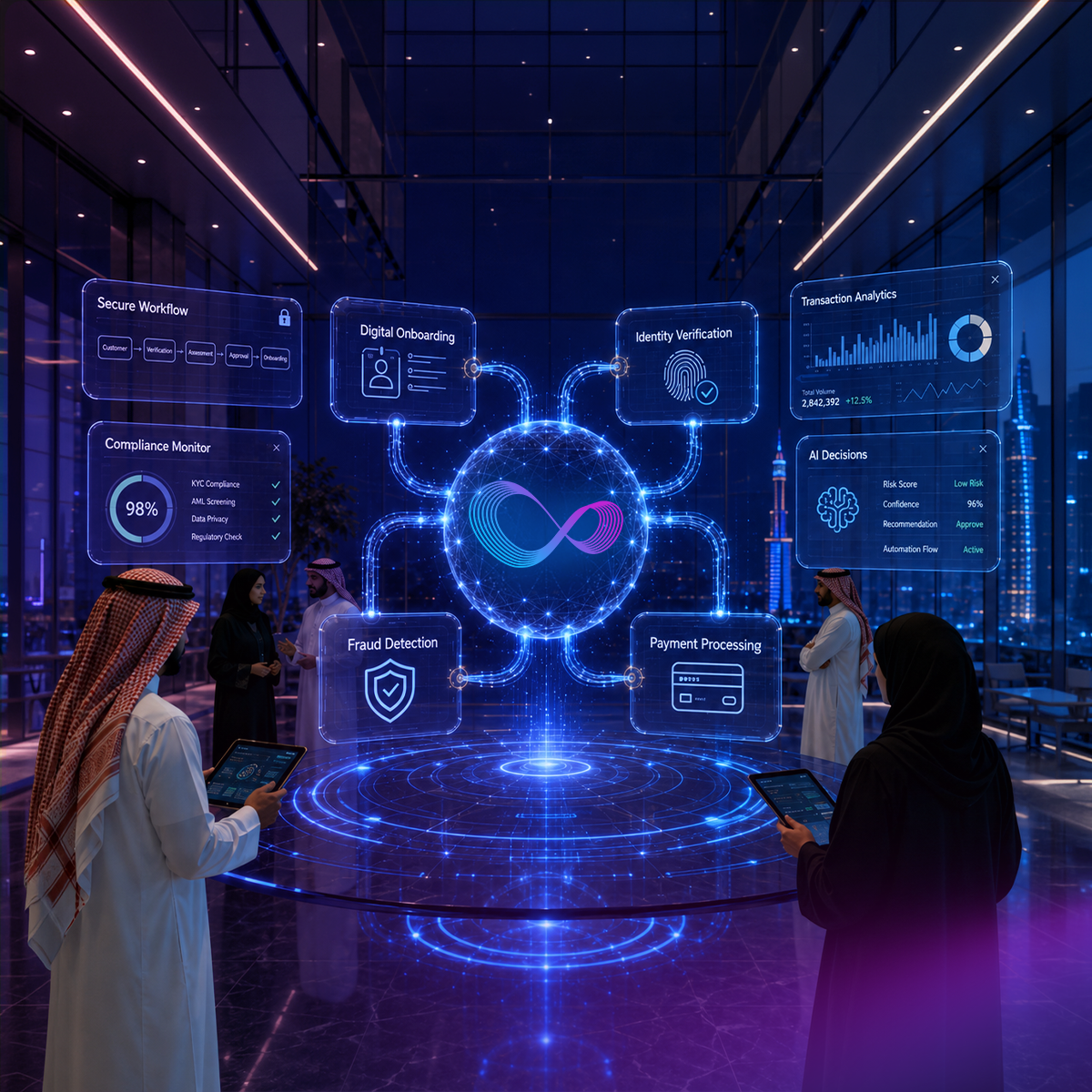
Discover how AI is transforming fintech customer experience in 2026 — from KYC and fraud alerts to Arabic-first support across MENA financial markets.

Most CX automation deployments stall before daily operational use. This guide covers 10 CX automation best practices, from escalation design to omnichannel continuity, with specific guidance for multilingual and Arabic-first contact centers.
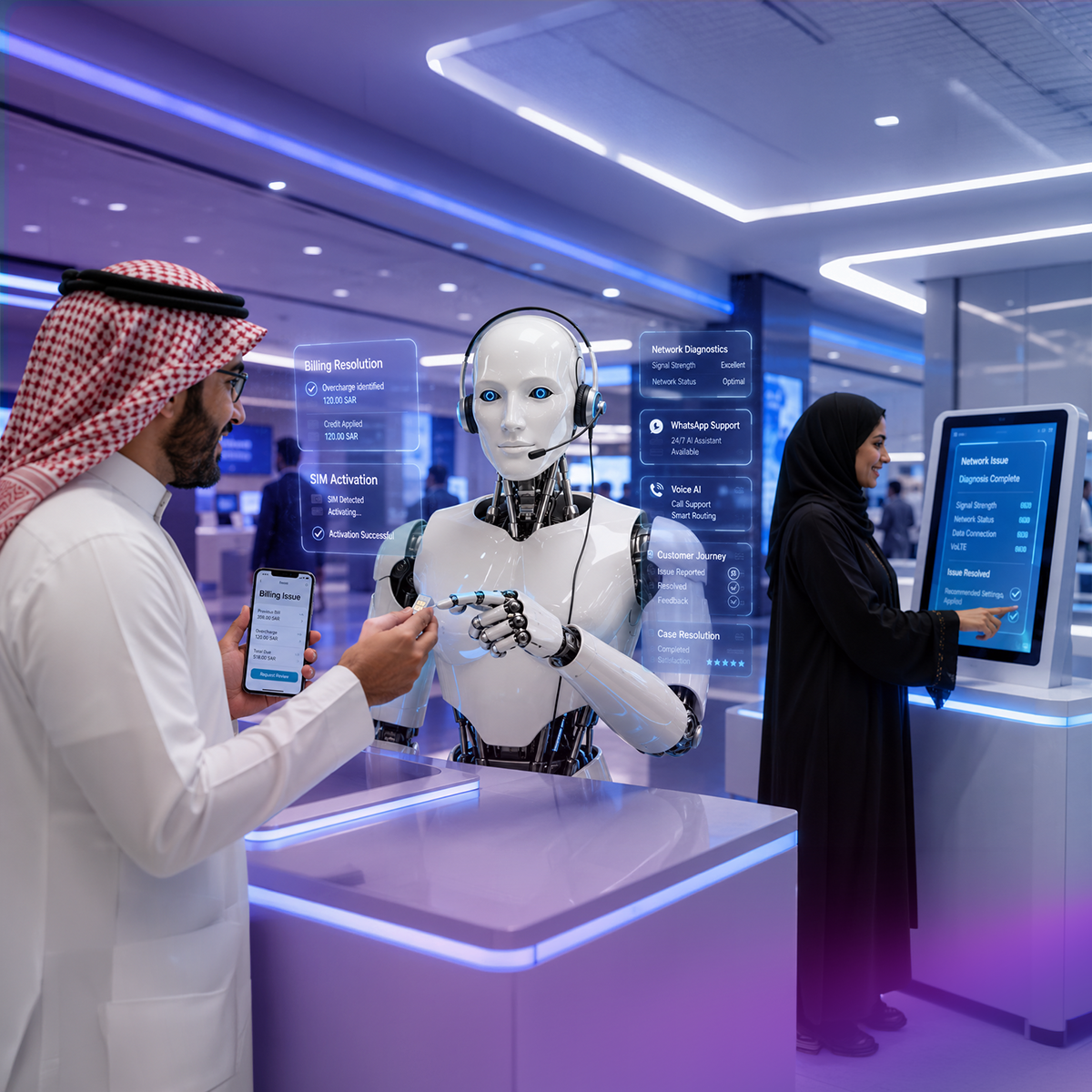
Explore how AI is transforming telecom customer experience. Compare top platforms including NICE CXone and Arabic-first alternatives built for MENA telecom operators.
Wittify.ai is a pioneering AI company specializing in the development of AI agents and applications aimed at automating and streamlining customer engagement activities and processes across various industries. Our mission is to empower businesses by enhancing their customer experience operational efficiency and enabling innovation through intelligent automation.

Information security management system
Business Continuity Management System
Quality Management System

Personal Data Protection Law Compliance
Personal Data Protection Law Compliance
General Data Protection Regulation Compliance


.png)


