


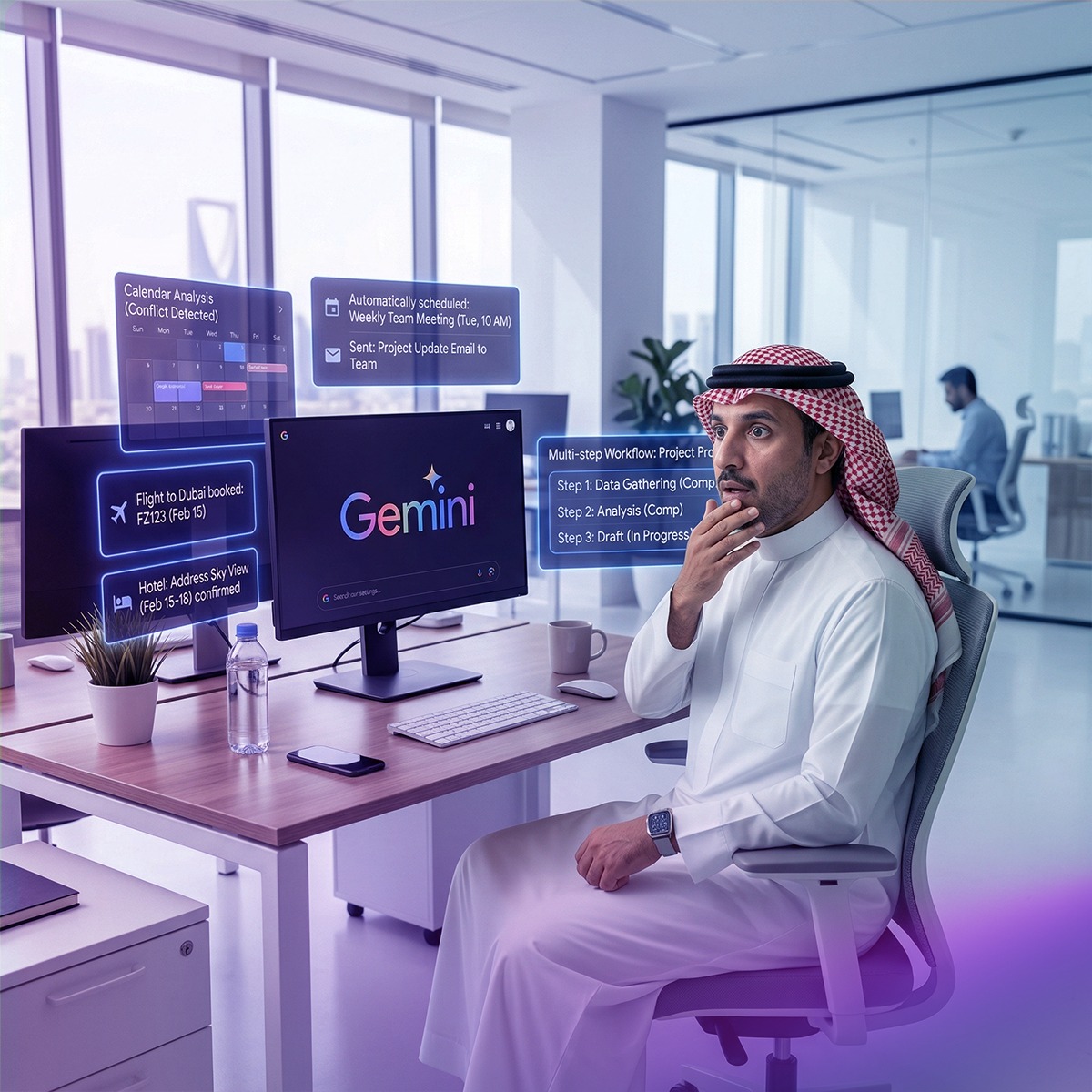
Google Gemini now executes multi-step mobile tasks autonomously; reading calendars, booking rides, and acting without explicit prompts. This proactive leap in voice AI sets a new benchmark for enterprise contact center automation and predictive customer support.
For years, AI assistants operated on a simple contract: you ask, they answer. That contract just changed.
In early 2026, Google's Gemini AI took a decisive step beyond the reactive model. On Pixel 10 and Samsung Galaxy S26 devices, Gemini can now autonomously navigate apps, complete multi-step tasks (ordering rides, managing grocery deliveries, staging travel bookings), and initiate these workflows without waiting for an explicit command. It reads your calendar, identifies what needs to happen next, and acts.
This is not a feature update. It is a paradigm shift.
The key change is not what Gemini can do; it is how it decides to do it. Gemini's new task automation, currently in beta across rideshare, food delivery, and grocery platforms, runs inside a secure virtual window directly on the device. Users can watch in real time as the AI opens an app, fills in destination details, selects preferences, and stages everything for final approval before executing.
But more significant than the mechanics is the intent trigger. Gemini does not wait for you to say "book me a ride." It reads signals, including calendar entries, email context, and travel plans, then anticipates the logical next action. This is what Google calls "agentic behavior": AI that perceives context, infers intent, and executes accordingly.
Google's calendar integration deepens this further. Gemini in Google Calendar now suggests optimal meeting times, flags rescheduling conflicts automatically, and maintains scheduling momentum across multi-attendee workflows, all without requiring manual prompts at each step.
Consumer use cases are the proving ground. Enterprise implications are where the real stakes lie.
Think about what a contact center agent does dozens of times a day: a customer calls about a delayed shipment, and the agent must cross-reference the logistics system, check the refund policy, draft a follow-up message, and offer rebooking options, all in under three minutes. Today, that sequence requires human orchestration at every single step.
Gemini's architecture points toward a near future where voice AI handles that entire chain autonomously. Not just responding to "What is the status of my order?" but proactively detecting the delay, initiating a resolution workflow, and sending a WhatsApp confirmation before the customer even picks up the phone.
Gemini executing autonomous multi-step tasks on a consumer phone is not the ceiling. It is the floor. Enterprise-grade AI is already operating well beyond this, and the gap between organizations that have deployed it and those still deliberating is growing wider every quarter.
Here is an honest look at what that gap looks like in practice:
The technology is no longer experimental. It is not a pilot program or a proof of concept. Organizations deploying conversational AI today are compressing resolution times, reducing operational costs, and building the kind of customer experience infrastructure that takes years to replicate from scratch.
The question is no longer whether your contact center needs AI. It is how far behind the decision has already put you.
At Wittify, we have been building toward exactly this model. Our omnichannel conversational AI platform already integrates across voice, WhatsApp, and web channels, designed not just to respond but to orchestrate. The platform pulls context from CRM systems, detects intent signals from prior interactions, and routes conversations intelligently without requiring human intervention at every step.
Gemini's shift validates the direction we have been taking. Proactive AI, which reads context and acts before being explicitly prompted, is not a futuristic concept. It is the operational baseline that enterprise contact centers across the GCC and MENA will need to remain competitive.
The practical next step for enterprise teams: prototype predictive WhatsApp responses. Start with the highest-frequency interaction patterns, such as order status updates, appointment confirmations, and renewal reminders, then build proactive trigger logic that sends the message before the customer feels the need to ask.
As we explored in our deep dive on Agentic AI in GCC: What to Automate and What to Keep Human-Led, the question is no longer whether AI can act autonomously. It is knowing which actions to automate and which to preserve for human judgment.
Gemini's mobile rollout is a signal, not an endpoint. The underlying capability, which pairs contextual awareness with autonomous execution, will migrate from personal devices into enterprise telephony infrastructure within the next 12 to 18 months. Voice AI platforms that are ready to receive this shift will compress response times, reduce operational load, and fundamentally transform what customers experience every time they reach out.
The enterprises that begin building predictive workflows today, even simple ones, will hold a structural advantage when the infrastructure catches up at scale.
CTA: If you are ready to move your contact center from reactive to predictive, explore what Wittify's enterprise AI platform can build for you.
.jpeg)
Most contact centers still rely on sample-based QA. The real issue is not speed. It is visibility across every interaction, channel, and agent. Sample-based QA no longer gives contact centers the visibility they need. Here is why modern teams need broader insight across human and AI-led interactions.
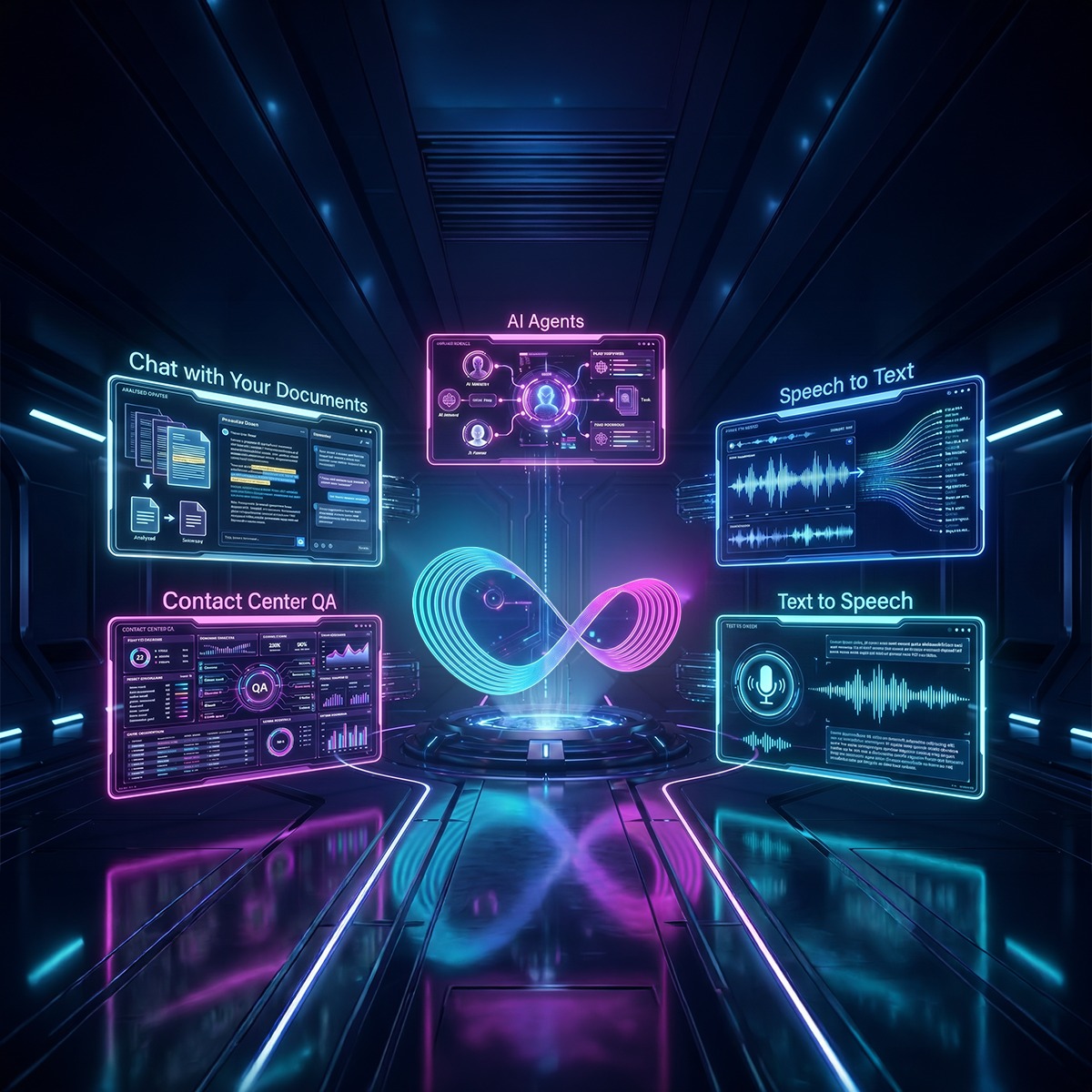
Wittify began with AI Agents that could act. Today, they listen across Arabic dialects, sound human, review 100% of conversations, and cite every answer from your data. Here’s how Wittify’s five products evolved into an accountable enterprise AI stack.

Google has launched Gemini's Personal Intelligence feature across the Arab world, connecting Gmail, Photos, and personal apps for tailored AI experiences. Here's what this means for Arabic-speaking users and enterprise conversational AI in the MENA region.
Wittify.ai is a pioneering AI company specializing in the development of AI agents and applications aimed at automating and streamlining customer engagement activities and processes across various industries. Our mission is to empower businesses by enhancing their customer experience operational efficiency and enabling innovation through intelligent automation.

Information security management system
Business Continuity Management System
Quality Management System

Personal Data Protection Law Compliance
Personal Data Protection Law Compliance
General Data Protection Regulation Compliance


.png)


